
Using Local Stone for Resin Driveways
Using local stone for resin driveways enhances durability and adds a unique look that matches your home’s style. It reduces transport emissions, which supports sustainability and showcases local craftsmanship. A well-chosen aggregate mix can improve drainage and slip resistance, benefiting the environment. With options for custom colours and textures, you can create a striking driveway that lasts. Explore the many advantages that local stone can offer for your project.
Key Takeaways
- Local stone aggregates boost the strength of resin driveways, making them tough against heavy traffic and wear over time.
- The distinct colours and textures of local stones offer design options that fit well with regional styles.
- Choosing local stone cuts down on transport emissions, promoting sustainable building practices and supporting the local economy.
- Well-installed resin driveways featuring local stone can last anywhere from 15 to 30 years, providing great long-term value.
- Permeable surfaces created from local aggregates enhance water drainage, reducing runoff and benefiting local ecosystems.
Benefits of Using Local Stone

When choosing a driveway solution, the advantages of using local stone in resin driveways are clear. Local stone aggregates offer excellent durability, standing up to heavy traffic without cracking or weathering easily. Their natural hardness often surpasses that of many imported alternatives. Additionally, the exceptional durability of local stones brings a unique, authentic look that complements the regional landscape, allowing your driveway to blend seamlessly with its surroundings. The variety in colour and texture opens up exciting design options while supporting local craftsmanship. Furthermore, using local stone contributes to sustainable construction practices, reducing the carbon footprint associated with transporting materials over long distances.
Environmental Impact of Local Sourcing
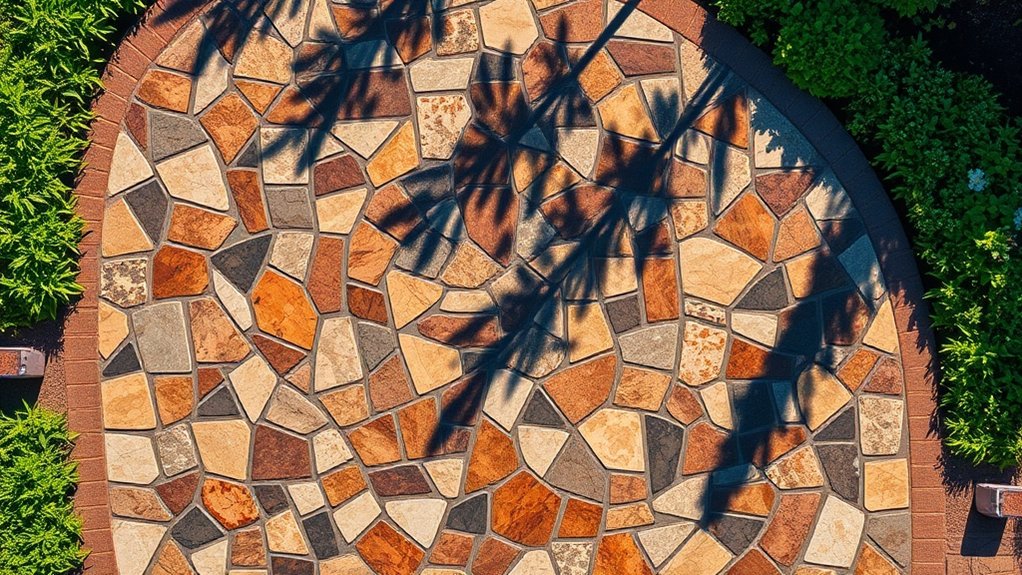
Choosing local stone for your resin driveway not only improves your property’s appearance but also benefits the environment. By sourcing materials nearby, you reduce transport distances, which cuts down on greenhouse gas emissions. This approach supports the local economy, creating jobs and encouraging sustainable quarry practices. Many local quarries use eco-friendly methods, such as renewable energy and water-efficient systems, to lower energy consumption. Additionally, responsible quarrying practices align with Sustainable Urban Drainage Systems principles, helping to protect biodiversity and reduce environmental disruption. By opting for local sourcing, you’re not just paving a driveway; you’re playing a part in a sustainable future by minimising waste, conserving resources, and enhancing local air quality. Sustainable sourcing practices ensure that the materials you choose are extracted with care for the environment and local communities.
Every decision counts, and choosing local makes a real difference.
Understanding Aggregate Composition
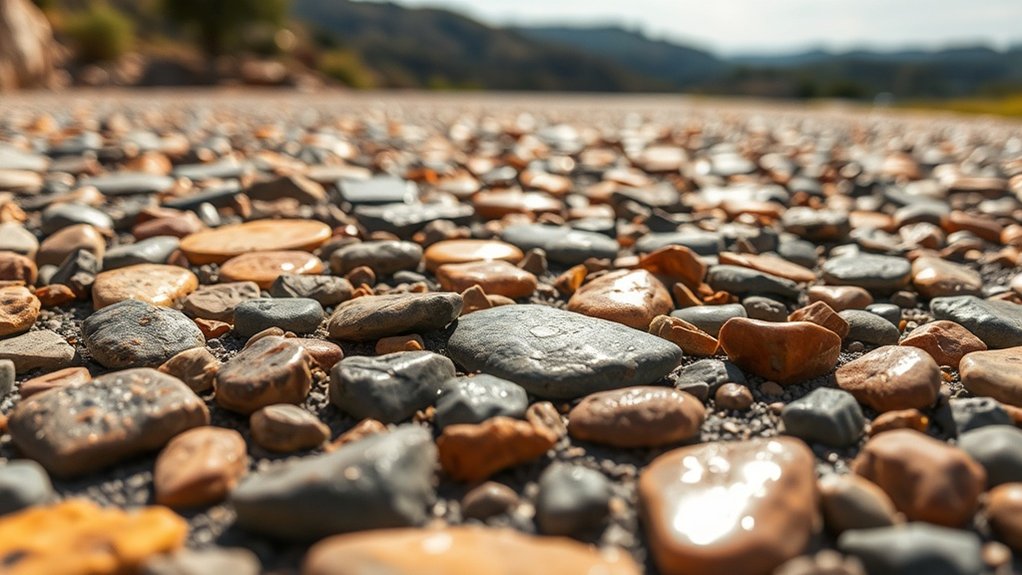
Understanding the composition of aggregates is essential for creating a durable and attractive resin driveway. Aggregate types vary from fine particles under 1mm to larger sizes up to 10mm, with 2-5mm aggregates being the most popular for both performance and aesthetics. Using materials like granite or crushed glass can improve strength and slip resistance. Additionally, the permeability of resin bound driveways allows for water drainage, which further enhances their durability. Ensure aggregates are thoroughly dried to below 0.5% humidity for optimal resin adhesion. A balanced mix, typically containing 6.9–7.05% resin by weight, ensures maximum durability. The choice of stone aggregates is crucial for achieving longevity and preventing water accumulation.
Drainage and Sustainability Features
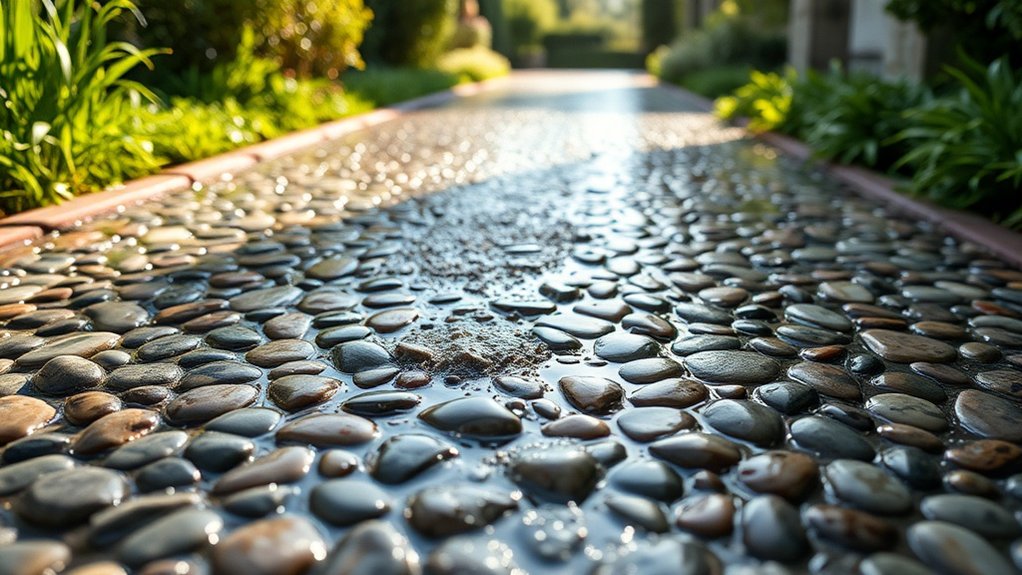
Choosing a porous surface for your resin driveway not only improves its appearance but also aids groundwater recharge.
The coarse, angular local stones allow water to seep through, reducing runoff and supporting local ecosystems.
Porous Surface Benefits
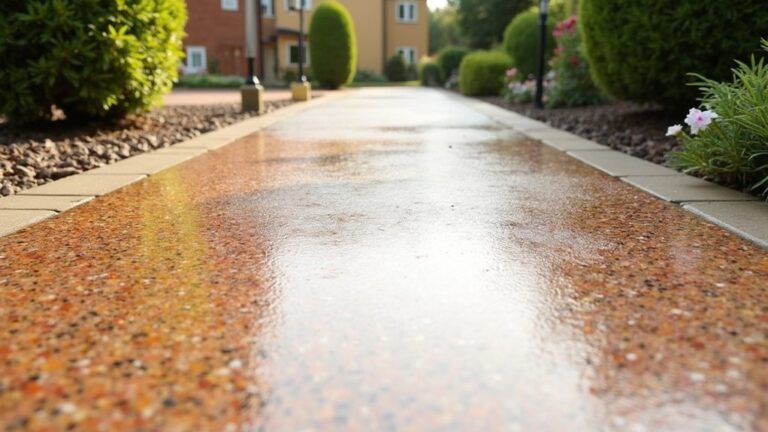
The porous surface of resin-bound local stone driveways offers notable benefits for drainage and sustainability.
Here are some key advantages:
- Effective Water Drainage: Rainwater can easily seep through, helping to reduce surface runoff and the risk of flooding.
- Durable Permeability: Unlike tarmac, these surfaces retain their drainage efficiency over time, preventing blockages.
- Reduced Maintenance Costs: With less need for additional drainage systems, installation is simpler and more cost-effective.
- Positive Environmental Impact: Natural water absorption supports healthier ecosystems and helps to mitigate urban flooding.
By choosing a porous driveway, you enhance your home’s appearance while also contributing to a more sustainable environment.
It’s a practical and eco-friendly decision.
Groundwater Recharge Enhancement
While many surfaces simply divert water away, resin-bound driveways made from local stone actively enhance groundwater recharge, which is vital for sustainable urban living.
By allowing rainwater to seep through natural gaps in the aggregates, these driveways can achieve permeability rates of up to 95%. This means water penetrates directly into the soil, promoting groundwater sustainability and supporting aquifer health.
Effective infiltration reduces surface runoff, lowering the risk of flooding during storms and benefiting local ecosystems. It also helps maintain soil moisture, which is advantageous for nearby plants.
Durability and Performance Expectations

When you choose a resin driveway, you can expect it to last up to 25 years if you use quality materials and carry out regular maintenance.
Simple tasks like cleaning and resealing are crucial for protecting it against weather and traffic damage.
Lifespan and Maintenance
Understanding the lifespan and maintenance of resin driveways is crucial for ensuring they last. Typically, you can expect a resin driveway to last between 15 to 30 years, and proper upkeep can significantly extend this.
Here are some key maintenance practices to consider:
- Regular Cleaning: Keep the surface clear of leaves and dirt to prevent wear and tear.
- Timely Repairs: Fix any minor damage as soon as it occurs to avoid expensive repairs down the line.
- Occasional Resealing: Reseal your driveway occasionally to guard against UV damage and to keep it looking fresh.
- Routine Inspections: Regularly check for weather-related issues to catch problems early on.
Resistance to Damage
Proper maintenance not only prolongs the life of your resin driveway but also boosts its resistance to damage. The use of high-quality natural stone aggregates combined with UV-stable resin creates a flexible surface that can adjust to ground movement, reducing the likelihood of cracks.
This flexibility, along with the resin’s ability to bind materials, helps minimise erosion and loss of aggregates, ensuring your driveway lasts longer.
The surface performs well in varying temperatures and has a porous design that prevents water from pooling, allowing it to cope well with environmental stress.
Moreover, careful installation and the use of quality materials are crucial for maintaining durability under traffic loads.
Safety Standards and Slip Resistance

Ensuring safety standards in resin driveways is crucial, and achieving the right slip resistance is straightforward.
Here are some key points to consider:
- Pendulum Slip Test: Aim for a Pendulum Test Value (PTV) of 36 or higher to meet safety regulations.
- Aggregate Choice: Incorporate crushed glass aggregates to significantly improve PTV scores.
- Surface Texture: Use natural stones to create textured surfaces that enhance grip and safety.
- Drainage Solutions: Ensure the surface is permeable to prevent standing water, which can lead to slip risks.
Maintenance Requirements for Resin Driveways
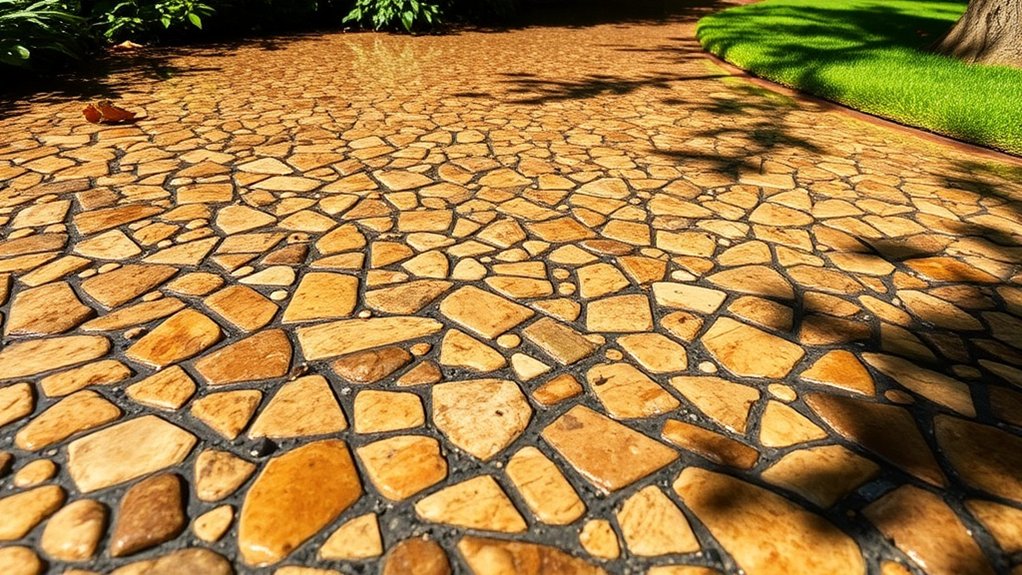
To keep your resin driveway in top condition, regular maintenance is key. Use a stiff-bristled broom or leaf blower each month to clear away debris and prevent moss and algae from taking hold.
Aim to give it a thorough clean 3-4 times a year with mild detergent and warm water, using a soft brush for best results. If necessary, a pressure washer can be used, but ensure the pressure is kept below 1500 psi to avoid damage.
For spills, act quickly by using cat litter or baking soda to absorb the mess. For older stains, a specialist degreaser can help.
Keep an eye on the edges for weeds and remove them manually, avoiding harsh chemicals. Regular maintenance not only keeps your driveway looking great, but also helps it last longer.
Aesthetic Appeal and Customization Options
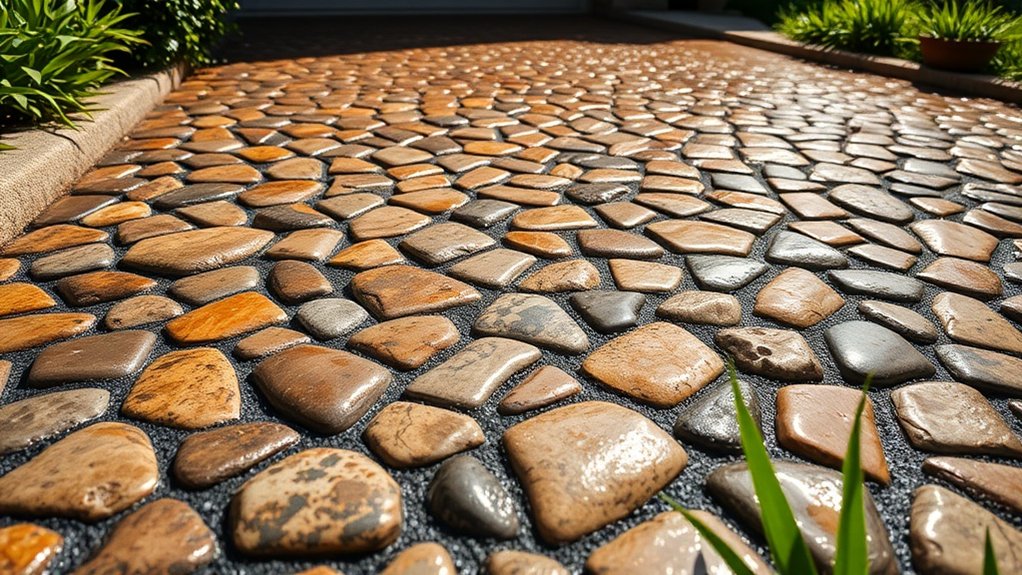
Maintaining your resin driveway not only ensures its durability but also enhances its appearance, creating an impressive visual impact.
By using local stone aggregates, you can personalise your driveway with various customisation options. Here are some ideas:
- Colour Blends: Combine different coloured aggregates for a unique look that matches your home.
- Geometric Patterns: Incorporate varying stone sizes to design modern shapes like hexagons or diamonds.
- Defined Borders: Use contrasting stones or metal trims to frame your driveway for added style.
- Natural Motifs: Imprint textures like leaves for a distinctive, organic touch.
These options enable you to craft a driveway that showcases your personality while harmonising with the surrounding landscape.
Versatile Applications for Local Stone Driveways
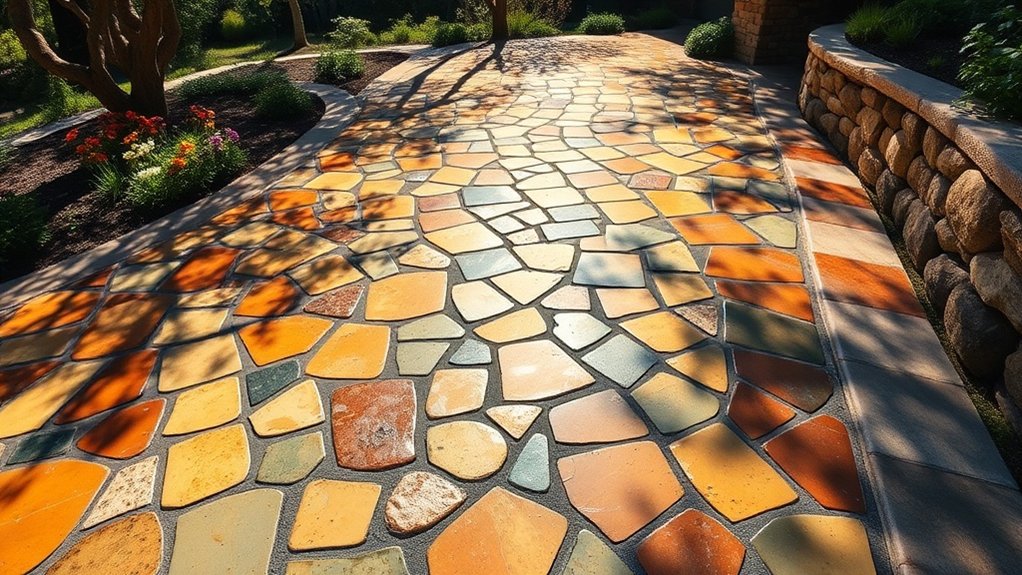
Local stone resin driveways are incredibly versatile, suitable for a variety of uses beyond just residential properties. They can be effectively applied in commercial parking areas, pedestrian pathways, and even public spaces, all while offering design flexibility.
One of the key benefits is that these driveways can be laid over existing surfaces, which reduces disruption—perfect for urban environments. Their weather-resistant properties ensure they last well in different climates, helping to lower maintenance costs.
The mix of local stones allows for customisation in texture and colour, adding to the visual appeal of your space. Additionally, with their permeable nature, these driveways meet Sustainable Urban Drainage Systems (SuDS) standards, aiding in effective stormwater management and promoting environmental sustainability.
Consider local stone resin driveways for innovative and eco-friendly solutions.
Frequently Asked Questions
How Do I Choose the Right Local Stone for My Driveway?
To select the right local stone for your driveway, assess the types of stone based on their durability and hardness. Consider colour options that complement your garden or home. It’s important to balance practicality with appearance to ensure a long-lasting and functional surface. For example, granite is a robust choice, while limestone offers a natural look.
What Is the Installation Process for Resin Driveways?
To install resin driveways, start by preparing the surface. This involves excavating the area and laying a solid sub-base. Next, mix the resin with aggregate, pour it onto the prepared surface, and spread it evenly. Finally, allow it to cure properly to achieve a durable and attractive finish.
Can Resin Driveways Be Installed in Cold Climates?
Yes, resin driveways can be installed in cold climates. When using the right techniques and freeze-resistant materials, they can withstand cold weather and freeze-thaw cycles. This helps ensure durability and reduces the risk of cracking, all while keeping a pleasing appearance.
How Long Does It Take to Install a Resin Driveway?
Installing a resin driveway usually takes around three to seven days, depending on the preparation and weather conditions. For instance, if your existing driveway needs extensive cleaning or repairs, it could take longer. Good planning and professional advice can help speed up the process, ensuring a long-lasting finish.
Are There Any Warranties Available for Resin Driveways?
Yes, resin driveways come with warranty options typically ranging from 5 to 20 years. To ensure you get the most out of your warranty, it’s important to follow the maintenance tips provided by your installer. This will help keep your driveway in good condition for years to come.
Conclusion
If you want to enhance your driveway while being eco-friendly, using local stone is a great option. Not only does it look good, but it also supports sustainability. Your driveway will stand out in the neighbourhood, and you’ll be doing your bit for the environment. Just a heads-up: if you share your idea with neighbours, don’t be surprised if they start looking for their own local stone!

How to effectively repair cracks in your concrete driveway hinges on understanding the right techniques; discover the essential steps to Read more

Should you choose a stamped concrete driveway? Discover the benefits and drawbacks that could shape your home's future appeal.

Compare resin and concrete driveways to discover which option provides superior durability and value, but the answer may surprise you.