

UK Regulations for Resin Driveways Explained
If you’re thinking about a resin driveway in the UK, it’s important to know the regulations. You may need planning permission for driveways larger than 5 square metres, whereas permeable resin bound options usually don’t require it. It’s essential to comply with Sustainable Drainage Systems (SuDS) regulations to manage surface water effectively. Regular maintenance is key to preventing legal issues. Hiring a professional for installation ensures compliance with these rules and enhances durability. Dive deeper to learn how to navigate local regulations and best practices for your driveway.
Key Takeaways
- If you’re considering a resin bonded driveway larger than 5 square metres, you’ll need to obtain planning permission. In contrast, resin bound driveways are typically exempt from this requirement as long as they are permeable.
- It’s crucial to comply with Sustainable Drainage Systems (SuDS) regulations to effectively manage surface water with your resin driveway.
- Regularly check in with your local council to ensure you’re following all planning and drainage regulations; this can help you avoid potential fines.
- Having your driveway professionally installed is key for meeting regulations, which impacts both its durability and legality.
- Don’t forget about regular maintenance! Activities like sweeping and applying sealant are important for extending the lifespan of your resin driveway and keeping it compliant with regulations.
Understanding Planning Permission for Resin Driveways
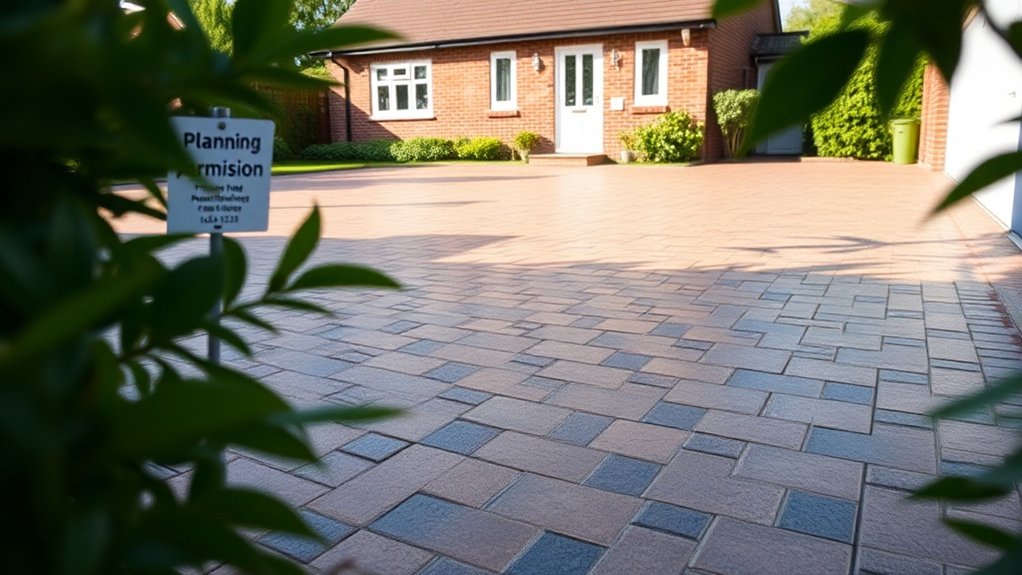
If you’re thinking about installing a resin driveway, it’s important to know the planning permission rules.
For a resin bonded driveway that covers more than 5 square metres, you’ll need to get permission from your local planning authority.
On the other hand, resin bound driveways are permeable and usually don’t require planning permission, as they meet the Sustainable Drainage Systems (SuDS) criteria. This permeability feature helps manage water runoff effectively, contributing to better drainage.
Under the General Permitted Development Order, permeable surfaces can be installed without permission, provided certain conditions are met.
It’s also worth noting that resin bound driveways do not require planning permission regardless of size, making them a more flexible option for homeowners.
Make sure you have accurate measurements and proof of ownership ready for your application.
Failing to follow these rules could lead to enforcement action, so it’s crucial to choose the right type of resin and stick to the planning authority’s guidelines to avoid any issues.
Building Regulations and Their Impact on Driveway Installations

Understanding building regulations is essential if you’re planning to install a resin driveway, as these rules dictate how your project must meet sustainable drainage practices.
Resin driveways must be permeable to comply with Sustainable Drainage Systems (SuDS) regulations, which help manage rainwater and reduce the risk of flooding. By choosing the right type of resin and using proper installation methods, you can ensure effective drainage and reduce surface runoff. This is particularly important because driveways prevent rainwater from soaking into the ground, increasing the need for proper drainage solutions. A well-installed resin driveway provides a weed-resistant surface that further enhances its durability and maintenance efficiency.
Before you start, check with your local council to see if you need a permit, especially if your driveway is larger than certain dimensions.
It’s also important to stay within your property boundaries to avoid any legal issues. Remember, regular maintenance is key to keeping your driveway effective in managing drainage and ensuring compliance with building regulations.
Environmental Considerations for Resin Driveways

When planning a resin driveway, it’s important to consider its environmental impact. Resin driveways are porous, allowing water to seep through and reducing surface runoff, which can help prevent flooding. They’re designed to comply with Sustainable Drainage Systems (SuDS), promoting natural water flow that benefits local ecosystems and eases pressure on public drainage systems. Before installation, check local regulations as they may have rules against impervious surfaces. Generally, resin has a lower environmental impact than traditional materials since it often uses recycled aggregates and eco-friendly binders. Additionally, proper knowledge of local environmental rules may affect installation decisions. Regular cleaning is essential to maintain permeability and ensure effective drainage, which aligns with sustainable practices. By keeping these factors in mind, you can ensure your driveway is environmentally friendly and compliant with regulations. Moreover, understanding permeable paving options can further enhance the sustainability of your driveway design.
Surface Water Management and Drainage Compliance

Managing surface water effectively is essential to ensure your resin driveway meets UK regulations. The Building Regulations (England and Wales) 2010 and Sustainable Drainage Systems (SuDS) policies require that most permeable surfaces, like resin driveways, assist in proper water management.
This permeability allows rainwater to soak into the ground, reducing surface runoff and the risk of flooding. If your driveway is over 5 square metres and impermeable, you’ll need proper drainage systems to manage surface water.
Following these regulations helps you avoid fines and protects local watercourses from pollution due to untreated runoff. Regularly checking in with your local council ensures your driveway complies with drainage requirements, supporting environmental sustainability.
Property Boundaries and Legal Ownership Issues

When planning your resin driveway, it’s vital to accurately determine your property boundaries to avoid any legal issues. Building your driveway within your boundaries prevents encroaching on your neighbours’ land, which could lead to boundary disputes and costly legal action.
Hiring a professional surveyor can help you pinpoint these boundaries with precision.
It’s also important to verify ownership, especially when applying for planning permission. Local councils typically require documents, like the title deed, to confirm that you own the property.
This verification streamlines the application process and reduces the risk of disputes over property rights.
Maintenance Responsibilities for Resin Driveways

Maintaining your resin driveway is crucial for keeping it looking good and ensuring its longevity. Regular upkeep prevents damage and costly repairs. Focus on two main areas: cleaning and weed prevention. Here’s a handy reference guide:
| Maintenance Task | Frequency |
|---|---|
| Regular Sweeping | Weekly (more often in autumn) |
| Manual Weed Removal | As needed |
| Deep Cleaning | 3-4 times a year |
| Crack Inspection | Regularly |
| Sealant Application | Once a year |
For cleaning, use a stiff-bristled broom or a leaf blower. While resin driveways are resistant to weeds, they aren’t completely weed-proof, so check for growth regularly and tackle it promptly. Following these simple practices will help keep your driveway in top condition.
Local Authority Consultation: Why It Matters

Maintaining your resin driveway goes beyond just regular upkeep; it’s crucial to understand local regulations before installation.
Each UK local authority has its own guidelines for driveway installations, so consulting your local council before starting work is essential. Some areas may require permits or have specific restrictions based on the size, materials, and drainage of your driveway.
Failing to consult can result in enforcement action or fines. For example, while permeable resin-bound driveways typically don’t need planning permission, impermeable resin-bonded driveways may require it if they exceed 5m².
Always check with your local authority to avoid costly mistakes and ensure compliance with local regulations.
Compliance With Sustainable Drainage Systems (Suds)

To comply with Sustainable Drainage Systems (SuDS) standards, your resin driveway needs to use permeable materials that allow water to soak through.
This approach not only helps manage surface water runoff but also aids in flood prevention and boosts local wildlife habitats.
SuDS Overview and Benefits
Urban development often leads to increased flooding and pollution, but Sustainable Drainage Systems (SuDS) offer a practical solution. SuDS work by mimicking natural drainage, managing surface water runoff, and reducing flood risk while improving water quality before it reaches local water bodies.
By incorporating green infrastructure, SuDS support urban biodiversity, providing habitats for various plants and animals. This not only helps the environment but also enhances flood management.
Additionally, SuDS promote groundwater recharge and facilitate rainwater harvesting, making them vital for sustainable water management.
These systems can transform public spaces, creating attractive areas for recreation and community engagement. Overall, SuDS represent a significant step forward in urban planning, balancing environmental protection with community benefits.
Drainage Compliance Requirements
Understanding drainage compliance for resin driveways is crucial for UK homeowners.
Resin-bound driveways are permeable, allowing water to seep through and managing runoff effectively. If you’re installing an impermeable surface larger than 5m², you’ll need to add drainage solutions, such as channel drains.
Local councils may also require permits to ensure you comply with Sustainable Drainage Systems (SuDS). This is vital for preventing flooding and supporting sustainability, as it reduces surface water runoff and aids groundwater recharge.
Always check your local regulations to avoid fines and ensure your installation meets all drainage standards, helping to prevent drainage issues down the line.
Restrictions for Listed Buildings and Conservation Areas

Installing a resin driveway in a listed building or conservation area requires careful planning due to specific regulations aimed at preserving historical character and visual appeal.
Always consult your local planning authority (LPA) before starting, as they enforce strict guidelines.
Here are key points to consider:
- You’ll need special permission for any external changes.
- It’s crucial that the driveway complements the surrounding environment.
- Even permeable resin driveways may need approval in these areas.
- Failure to comply can lead to enforcement action from the council.
- Opt for colours and textures that blend well with the local area for a better chance of acceptance.
The Importance of Professional Installation and Compliance

Choosing professional installation for your resin driveway ensures that the work is carried out by skilled experts who comply with all relevant regulations.
This not only helps you avoid potential legal complications but also improves the durability and performance of your driveway over time.
Expertise in Installation
Professional installation of resin driveways is vital for both aesthetic appeal and compliance with UK regulations. The expertise in installation significantly affects the durability and legality of your driveway.
- Knowing when planning permission is required is key.
- Understanding local council regulations helps avoid legal issues.
- Being familiar with SuDS compliance ensures proper water drainage.
- Using the right installation techniques improves long-term performance.
- Keeping abreast of regulatory changes is essential for ongoing compliance.
Hiring professionals guarantees adherence to health and safety laws, proper substrate preparation, and accurate resin-to-aggregate mixing ratios.
This not only helps you avoid potential fines but also ensures your driveway remains functional and attractive for years to come.
Regulatory Compliance Assurance
Ensuring regulatory compliance is essential for the successful installation of resin driveways, as it affects both legality and functionality. By keeping up with regulatory updates and implementing strong compliance strategies, you can reduce risks linked to installation, such as legal disputes or fines.
| Aspect of Compliance | Importance |
|---|---|
| Permit Requirements | Avoids legal issues and fines |
| Environmental Standards | Ensures proper drainage and safety |
| Property Boundary Laws | Prevents disputes |
Professional installation guarantees compliance with these regulations, while also enhancing the driveway’s durability and performance. Hiring certified professionals ensures that all local requirements are met, protecting your investment and fostering good relations with your neighbours.
Long-term Performance Benefits
When investing in a resin driveway, it’s vital to recognise the long-term performance benefits of professional installation. Proper installation ensures durability and cost-effectiveness.
Here’s why you should opt for professional services:
- A minimum sub-base depth of 220mm prevents movement.
- Correct resin-to-aggregate mix ratios reduce early wear.
- Compliance with FeRFA guidelines ensures quality workmanship.
- Permeable designs help to reduce flooding risks and address environmental concerns.
- Regular inspections can prolong lifespan and maintain appearance.
Choosing not to hire professionals can jeopardise your driveway’s integrity, leading to cracks and expensive repairs.
Navigating Local Regulations for Resin Driveways

Before installing a resin driveway, it’s crucial to check with your local council about any required permits or planning permissions. Generally, if your resin driveway has a permeable surface, you won’t need planning permission. However, if it’s impermeable and exceeds 5m², you’ll need permission.
Local councils enforce regulations to manage surface water runoff, so ensure your driveway meets the standards for Sustainable Drainage Systems (SuDS) to prevent flooding.
To avoid disputes with neighbours, confirm your property boundaries with a surveyor. Encroaching on adjacent land can lead to legal issues, so stick closely to your property lines.
Engaging with your local council early on will help clarify specific rules regarding materials, size, and drainage, ensuring a smooth installation process and minimising the risk of fines or enforcement actions.
Frequently Asked Questions
Can I Install a Resin Driveway Myself Without Professional Help?
You can try installing a resin driveway yourself, but it’s important to know that accurate resin mixing and some technical skills are crucial. If you lack experience, you might struggle to achieve a strong, lasting finish, which could lead to problems down the line. For example, improper mixing can cause the surface to crack or wear unevenly. If you’re unsure, it may be worth considering professional help to ensure a quality result.
What Are the Typical Costs Associated With Resin Driveway Installation?
Resin driveway installation costs generally range from £60 to £120 per square metre. Several factors can affect the final price, such as the size of the driveway, the type of resin used, the choice of aggregate, any necessary groundwork, and local labour rates. For instance, a larger driveway or a more decorative resin could push costs higher.
How Long Does a Resin Driveway Usually Last?
A well-installed resin driveway can last between 15 to 25 years. Its durability depends on the quality of materials used and regular maintenance. With the right care, your driveway can remain strong and attractive over the years.
What Colors and Designs Are Available for Resin Driveways?
Resin driveways come in a variety of colours, from warm tones like terracotta and golden yellow to cool shades such as grey and blue. You can also choose vibrant hues like red or green. Design options include natural blends that mimic stone or bold patterns that make a statement, allowing you to personalise your driveway to enhance your home’s appeal.
Can Resin Driveways Be Repaired if Damaged?
Think of your resin driveway like a valued piece of art; if it gets scratched, there’s no need to panic. With the right repair methods and regular upkeep, you can restore its appearance and functionality, ensuring it remains in good condition for years to come.
Conclusion
In summary, understanding UK regulations for resin driveways is crucial for a successful installation. For example, a homeowner in Surrey faced hefty fines after installing a driveway without the necessary planning permission, underscoring the importance of compliance. By adhering to local regulations, considering environmental factors, and opting for professional installation, you can enjoy a stunning and legally compliant resin driveway that enhances your property while avoiding costly penalties. Always check your local requirements before laying that resin!

Compare resin and concrete driveways to discover which option provides superior durability and value, but the answer may surprise you.

The rise of resin-bound driveways is transforming outdoor aesthetics, but what hidden advantages might make them the perfect choice for Read more

Get the facts on resin vs. concrete driveways and discover which option could save you money in the long run. Read more