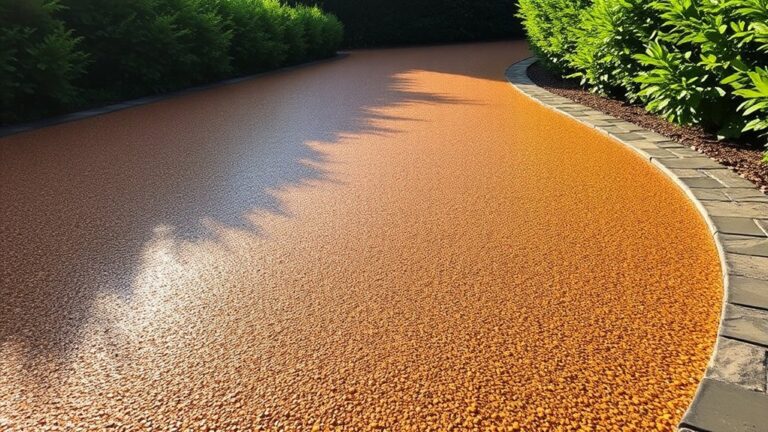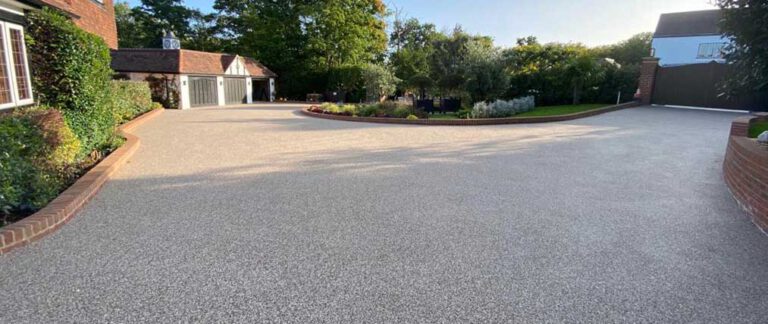

Can Resin Driveways Be Laid on Slopes in Nottingham?
Yes, resin driveways can be installed on slopes in Nottingham, provided the right techniques are used. It’s crucial to conduct a thorough site assessment to ensure effective drainage and to avoid problems like cracking or water pooling. Using a thicker resin and applying anti-slip finishes will improve safety, particularly on steeper slopes. Moreover, complying with SUDS regulations is important for environmental considerations. When planning your budget, remember to factor in costs for drainage installation. Stay tuned for more tips on successful installations and the latest trends.
Key Takeaways
Yes, resin driveways can be installed on slopes in Nottingham, provided there’s careful planning and assessment of the gradient and drainage.
It’s important to conduct a thorough site evaluation to spot any drainage problems and ensure the soil is stable on sloped areas. For steeper slopes, using a higher viscosity resin is advisable to stop it from flowing downhill and to keep the surface safe.
Adhering to local Sustainable Urban Drainage Systems (SUDS) regulations is crucial for managing rainwater effectively on sloped driveways.
To tackle the challenges posed by slopes, it’s best to hire professionals for installation. This will help ensure the driveway’s durability and reduce the chances of cracking or water pooling.
Understanding Resin-Bound Surfaces
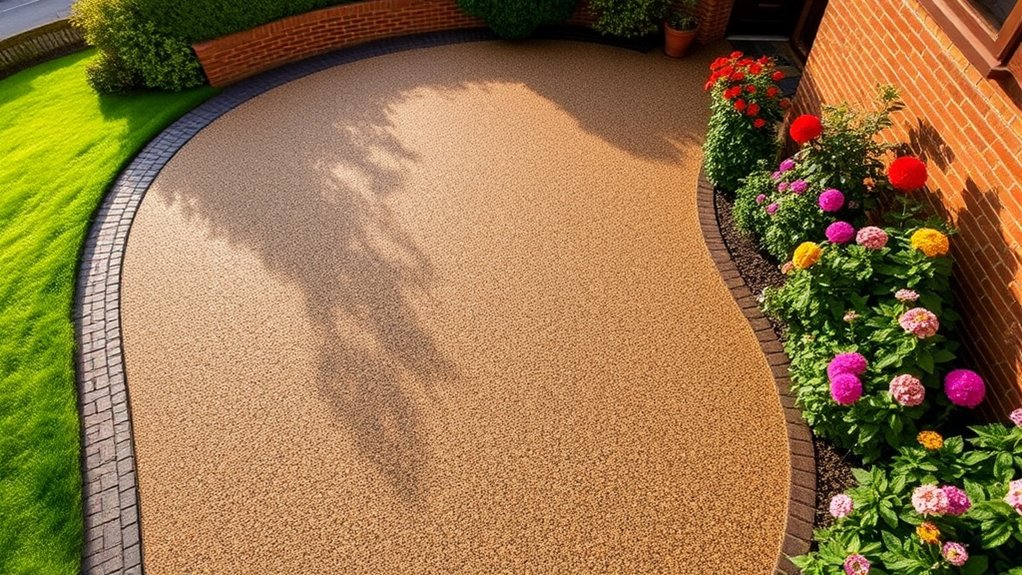
When it comes to driveways that blend functionality with visual appeal, resin-bound surfaces are an excellent option. The resin is a crucial component, combining clear resin with natural aggregates like 2-5mm and 1-3mm stones to create a smooth, porous finish. Maintaining the resin content between 6.9% and 7.05% ensures strong binding and durability. Choosing the right aggregates is important, as adding binding quartz can enhance strength and longevity. The UV-resistant properties of the resin also prevent discolouration, keeping your driveway looking fresh over time. Moreover, the design’s permeability allows for effective drainage, minimising flooding risks and complying with SUDS regulations. Incorporating suitable drainage channels during installation is essential to manage water effectively on sloped surfaces. Additionally, the weather resistance of resin driveways makes them suitable for Nottinghamshire’s variable climate, ensuring long-lasting performance. All these factors make resin-bound surfaces a practical yet attractive choice for sloped driveways in the UK.
The Importance of Proper Installation

Proper installation is crucial for resin driveways on slopes. It begins with a comprehensive site assessment to pinpoint any drainage issues and assess soil stability. Hiring a professional installer ensures that appropriate curing techniques are used, which directly impacts the durability and effectiveness of the surface. By concentrating on these aspects, you can significantly reduce risks such as water pooling and surface failure. For instance, a well-installed driveway not only looks good but also stands the test of time, saving you from costly repairs down the line. Additionally, the permeability of resin driveways allows for effective water drainage, further enhancing their suitability for sloped surfaces. Proper installation quality is essential, as it helps mitigate the effects of Nottingham’s climate on resin driveways.
Site Assessment Importance
A proper site assessment is crucial for ensuring the long-term performance of resin driveways, particularly on slopes in Nottingham. A thorough evaluation safeguards structural integrity and helps avoid issues like cracking or subsidence. By examining the condition of the substrate, drainage, and slope gradients, you can pinpoint necessary repairs and adjustments before installation. Conducting a site survey also allows for planning for the correct amounts of DALTEX dried aggregates and DALTEX UVR resin. Additionally, assessing the expansion and contraction of the underlying clay soil is vital for preventing future damage.
| Assessment Aspect | Importance |
|---|---|
| Sub-base Condition | Ensures stability and prevents reflective cracking |
| Drainage Evaluation | Stops water pooling and reduces slip hazards |
| Surface Preparation | Enhances resin adhesion and minimises debonding risk |
These steps not only improve durability but also elevate the overall appearance of your driveway, ensuring it lasts over time.
Professional Installer Necessity
Hiring a professional installer is crucial for achieving the best results with resin driveways on slopes in Nottingham. Their expertise ensures that every installation detail is handled correctly.
They address slope challenges by using advanced techniques for precise grading and drainage control. Professionals carefully select and mix resin and aggregate ratios suited to the slope’s angle, preventing issues like sagging.
Their understanding of edge restraints and substrate interactions helps prevent movement, while proper base specifications improve durability.
With a focus on safety and compliance, trained teams reduce risks and provide high-quality, long-lasting results that DIY attempts often miss.
Correct Curing Techniques
Neglecting proper curing techniques can lead to serious problems, especially with resin driveways on slopes.
It’s crucial to maintain a cure temperature between 5°C and 25°C for the best results. During the initial set, which lasts 8 to 24 hours, protect the surface from rain and direct sunlight. This prevents wash-off and ensures the resin achieves full strength.
Additionally, restrict foot traffic and vehicle access until the driveway is fully cured. By following these straightforward guidelines, you can improve the adhesion, durability, and longevity of your resin driveway, ensuring it can handle the challenges presented by sloped installations.
Anti-Slip Properties for Safety

When considering resin driveways on slopes, prioritising safety through anti-slip features is crucial, particularly in wet weather. A textured finish provides excellent grip compared to smoother surfaces.
Here are some key safety aspects to note:
- Textured aggregates offer natural traction.
- Angular stones interlock for improved grip.
- Anti-slip additives enhance traction without changing appearance.
- Slip-resistant properties remain effective in rain and snow.
- A robust bond endures vehicle weight on steep inclines.
These features ensure that your driveway remains safe and functional, regardless of the weather conditions.
Permeability and Drainage Benefits
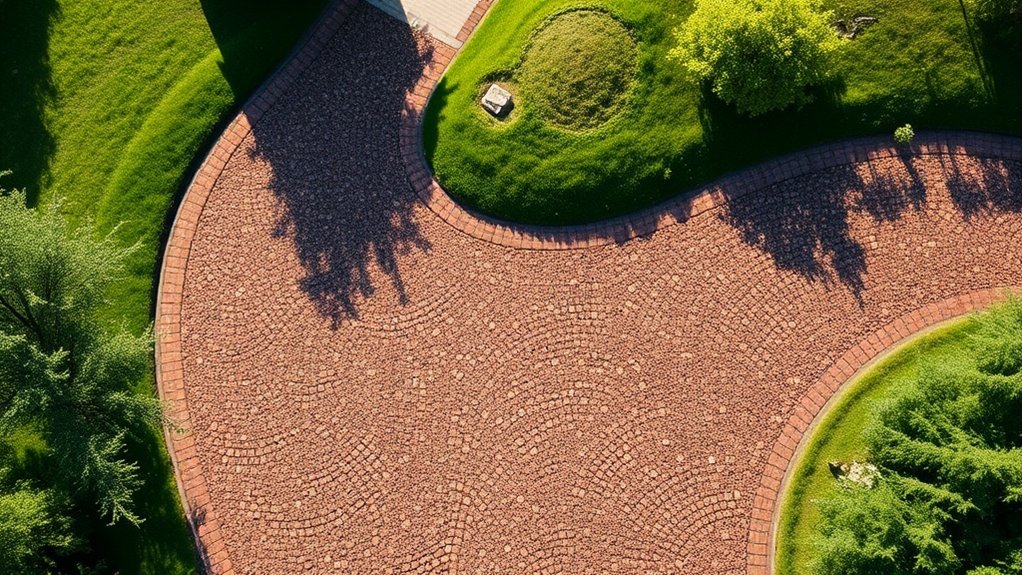
Understanding the permeability and drainage benefits of resin driveways on slopes can significantly improve your property’s functionality and sustainability. These surfaces allow rainwater to seep through, which reduces surface runoff and lowers the risk of flooding. By opting for permeable resin, you are implementing effective drainage solutions that meet the standards of Sustainable Urban Drainage Systems (SUDS).
| Benefit | Description |
|---|---|
| Runoff Reduction | Lowers surface runoff by 10% to 50% |
| Flood Mitigation | Delays stormwater peak times, easing pressure on local drainage systems |
| Groundwater Recharge | Aids local aquifers, improving water quality |
With the correct permeable systems in place, you can maintain void connectivity, ensuring long-lasting effectiveness in managing water flow on your sloped driveway.
Assessing Slope Suitability

Assessing the suitability of slopes for resin driveways requires a few key considerations to ensure safety and longevity. Here’s what to look out for:
- Gradient assessment: Ideally, slopes should be between 5% and 15% for standard installations.
- Slope stability: For steeper gradients, you might need structural features such as retaining walls.
- Sub-base preparation: Ensure that materials are well-compacted to avoid movement.
- Drainage considerations: Implement effective drainage solutions to handle increased water runoff.
- Product selection: Choose high-viscosity resins and anti-slip aggregates for better grip on slopes.
Keeping these factors in mind will help you achieve a durable and safe resin driveway.
Local Nottingham Installers for Resin Driveways

Choosing the right installer for your resin driveway in Nottingham is crucial, particularly when dealing with slopes. Local professionals understand the unique challenges and employ various techniques suitable for both residential and commercial projects. Here’s a quick overview to consider:
| Installer Type | Specialisation | Warranty Offered |
|---|---|---|
| Family-Run Teams | Resin-bound systems | 10-Year Guarantee |
| Regional Companies | Permeable resin options | Workmanship Guarantee |
| Custom Installers | Unique aesthetic patterns | Varies by project |
| Overlay Specialists | Overlays on existing surfaces | Survey required |
Opting for a local installer ensures you get customised solutions that enhance both the durability and appearance of your sloped driveway.
Durability and Maintenance Considerations

Choosing a resin driveway on a slope is a smart investment, as it can last over a decade with proper installation.
Its flexibility helps prevent cracking under normal conditions, reducing the frequency of repairs.
With a bit of regular upkeep, you can keep it looking good and functional, providing a durable surface that withstands the UK’s weather.
Long-lasting Material Benefits
Resin driveways aren’t just visually appealing; their long-lasting benefits come from their durability and low maintenance, particularly on slopes.
Here are some key advantages that enhance their longevity:
- Cracking resistance: The right mix of resin and aggregate provides a robust, bonded surface.
- UV stability: Aliphatic resins help prevent yellowing and degradation from sunlight.
- Weather resistance: Proper drainage allows installations to endure freeze-thaw cycles without failing.
- Load-bearing capacity: A solid sub-base ensures longevity under heavy traffic.
- Chemical resistance: Choosing the right resin formulations protects the surface from automotive oils and de-icers.
These benefits make resin driveways a smart choice for sloped areas, offering both beauty and durability.
Minimal Maintenance Requirements
Maintaining a resin driveway on a slope is straightforward due to its low upkeep needs. The permeable surface allows rainwater to drain effectively, minimising runoff and preventing erosion at the base of the slope.
Regular maintenance is easy: just sweep away debris and give it a power wash now and then to keep it looking good. For general grime, a garden hose will do the trick, but if you use salt or grit for ice, be sure to wash it off thoroughly afterwards.
The durability of resin means it resists cracking and loosening, even with traffic and ground movement. With minimal repairs needed and routine checks to spot any issues, you’ll have a low-maintenance driveway that remains attractive and practical—making it a sensible choice for sloped areas.
Installation Process Overview

To install resin driveways on slopes in Nottingham effectively, start with a thorough slope assessment. Measure the gradient and check the condition of the existing surface.
Then, follow these installation steps while keeping the slope in mind:
- Clear the area of debris and loose materials.
- Excavate to a depth of 150-200mm and lay a 150mm hardcore base.
- Add a 50-60mm porous asphalt or concrete foundation.
- Use geotextile membranes on steeper slopes for added stability.
- Mix higher viscosity resin to prevent downhill flow.
Environmental Compliance and Regulations

When installing resin driveways on slopes, it’s essential to comply with Sustainable Urban Drainage Systems (SUDS) regulations.
These guidelines ensure effective water management and align with UK Building Control standards, helping to reduce environmental impact.
By understanding these requirements, you can create a driveway that not only meets local regulations but also promotes sustainability.
For instance, using permeable materials allows rainwater to drain naturally, preventing flooding and waterlogging.
Sustainable Urban Drainage Systems
As urban areas develop, the need for effective Sustainable Urban Drainage Systems (SuDS) becomes clear, particularly in places like Nottingham where sloped resin driveways can complicate matters.
To ensure proper rainwater management and control erosion, keep these key points in mind:
- Follow the runoff destination hierarchy by prioritising infiltration and reuse.
- Use source control measures, such as permeable edging and filter strips, to manage water at the source.
- Ensure compliance with hydraulic control standards to handle extreme rainfall events.
- Carry out a water quality risk assessment to identify potential pollutants.
- Engage with local planning authorities early on to agree on suitable discharge locations.
These steps will help create a more resilient urban environment.
UK Building Control Compliance
Navigating UK building control compliance for resin driveways requires a clear grasp of environmental regulations for both permeable and non-permeable surfaces.
Generally, permeable surfaces don’t need planning permission. However, if you opt for a non-permeable surface that exceeds 5 m², you may need permission unless you can manage the runoff effectively.
When installing driveways on slopes, be aware of slope regulations. Gradients steeper than 1:6 may require special engineering solutions to ensure safety and stability.
Also, any changes that affect access could trigger building control requirements.
Always check your local guidelines, particularly if your property is in a conservation area.
Hiring professional installers is advisable as they can help ensure compliance and provide the necessary certification, protecting you from potential enforcement actions.
Environmental Impact Considerations
To effectively consider the environmental impact of resin driveways, it’s important to understand their interaction with local ecosystems and regulations. Here are some key aspects to keep in mind:
- Permeability allows rainwater to soak through, which helps reduce flood risks and meets Sustainable Drainage Systems (SuDS) requirements.
- Using sustainable materials, such as recycled aggregates, can lower the overall environmental impact and enhance eco-friendliness.
- Many local planning regulations often exempt permeable surfaces from stringent rules, giving you more flexibility.
- Obtaining environmental certifications is crucial for proving compliance to local authorities when installing your driveway.
- A proper installation not only boosts durability but also reduces waste and lowers your carbon footprint.
Cost Factors for Sloped Resin Driveways

When planning a resin driveway on a slope, it’s important to consider the various cost factors that can affect your budget. Slopes can pose challenges that lead to increased costs, particularly with steep gradients. Here’s a summary of the main cost considerations:
| Cost Factor | Estimated Increase | Notes |
|---|---|---|
| Labour Costs | 10–40% | More time is needed for safety |
| Material Costs | 5–15% | Anti-slip aggregates may be required |
| Drainage Installation | £150–£400 per unit | Necessary for proper surface runoff |
These factors can significantly raise your overall project cost. It’s crucial to take these challenges into account when planning your resin driveway installation.
Real-life Examples of Successful Installations

Successful installations of resin driveways on slopes in Nottingham showcase the importance of careful planning and execution.
These projects demonstrate how professionals address slope challenges while maintaining the aesthetic appeal of resin.
Key approaches include:
- Conducting thorough site assessments to evaluate slope gradients and drainage needs.
- Using concrete bases for added strength and to prevent substrate deformation.
- Applying anti-slip finishes to improve safety on inclines.
- Installing effective drainage systems to manage water runoff and avoid erosion.
- Adhering to local SuDS (Sustainable Drainage Systems) guidelines for eco-friendly practices.
These strategies ensure a durable, attractive, and safe resin driveway that can handle the demands of sloped areas.
Future Trends in Resin Driveway Installations

As the popularity of resin driveways rises, several key trends are emerging that will influence future installations. Homeowners are increasingly interested in colour customisation, looking for distinctive designs to boost their property’s curb appeal.
This shift will encourage installers to offer a wider range of colour options and tailored blends, which may present new challenges during installation.
The demand for skilled professionals is set to increase, particularly as proper base preparation is crucial for ensuring the longevity of resin driveways, which can last between 15 to 25 years.
Sustainability is also becoming a priority, with a growing interest in permeable solutions that comply with new regulations aimed at improving urban drainage.
Moreover, advancements in resin technology, such as lower VOC emissions and quicker curing times, are expected to enhance the efficiency of installations.
This means resin driveways won’t only be aesthetically pleasing but also practical, solidifying their status as a top choice for homeowners in the UK.
Frequently Asked Questions
What Types of Aggregates Can Be Used for Sloped Resin Driveways?
For sloped resin driveways, opt for angular aggregates to provide grip and stability on inclines. Permeable aggregates are essential for effective drainage, preventing water buildup. Additionally, consider using anti-slip additives to enhance traction. These selections ensure your driveway is durable and safe, improving its overall performance.
How Does Weather Affect the Installation Process of Resin Driveways?
Weather significantly impacts the installation of resin driveways. The best conditions are temperatures between 15–25°C, which ensure proper curing. High humidity can delay the process, making it essential to check the weather before and during installation. For instance, if it’s raining or very humid, it’s wise to postpone the work to avoid complications. Keeping an eye on the forecast helps ensure a successful installation.
Can Resin Driveways Be Customized in Color for Slopes?
Yes, resin driveways can be customised with a range of colour options, providing great design flexibility. By mixing aggregates, you can create unique patterns and colour schemes that not only enhance the look but also improve functionality on sloped surfaces. For example, a light-coloured resin can brighten up a dark area, while darker hues can help to hide dirt and stains.
What Is the Lifespan of a Resin Driveway on a Slope?
A well-installed resin driveway on a slope can last between 15 to 25 years. To ensure it stands the test of time, proper maintenance is key. This includes maintaining effective drainage and using quality materials, both of which significantly enhance the driveway’s durability and performance.
Are There Any Weight Limitations for Vehicles on Sloped Resin Driveways?
There are no specific weight limitations for vehicles on sloped resin driveways. Their robust design and stability enable them to handle heavy traffic without issue. Ensuring a proper installation is key, as strong adhesion is essential for performance on slopes. For instance, family cars, vans, and even larger vehicles can typically be accommodated without concern.
Conclusion
In summary, resin driveways can definitely be installed on slopes in Nottingham, and they can offer several advantages when done properly. Many homeowners have noticed improved safety and aesthetics following installation. By ensuring the slope is suitable and that proper drainage is in place, you can achieve a durable and attractive surface that adds value to your home. As resin technology continues to advance, we can expect even more innovative options for sloped driveways in the future.
{What is the Average Life Expectancy of a Resin Bound Driveway in Nottingham?|How long does a resin bound driveway last Read more

Compare resin and concrete driveways to discover which option provides superior durability and value, but the answer may surprise you.

The rise of resin-bound driveways is transforming outdoor aesthetics, but what hidden advantages might make them the perfect choice for Read more