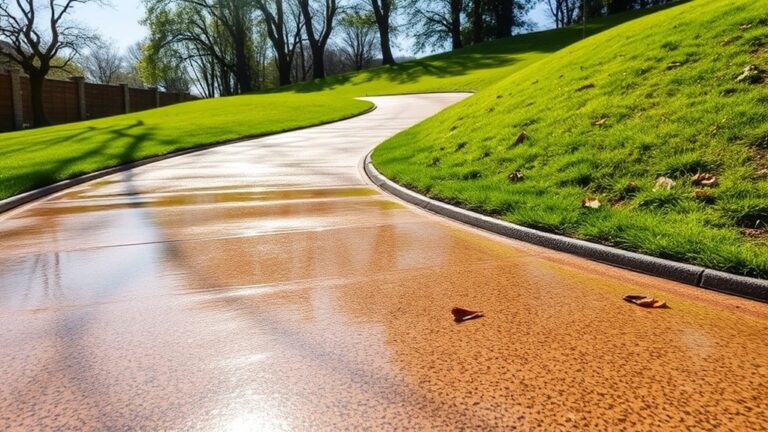

How to Fix Drainage Issues With Resin Driveways
To address drainage issues with resin driveways, first assess the underlying causes such as inadequate sub-base preparation or improper sloping. It’s essential to install drainage channels or soakaways to effectively redirect water. Maintaining a permeable surface is crucial for allowing groundwater recharge and preventing puddles. Regular inspections and maintenance will ensure the driveway lasts longer. By enhancing your drainage design, you’ll improve both the durability and functionality of your driveway. Explore best practices to ensure effective drainage solutions.
Key Takeaways
- Check the slope of your resin driveway; it should direct water away to stop any pooling.
- Install drainage channels at the edges to effectively catch and redirect surface water.
- Think about adding soakaways or French drains to handle excess water below ground and reduce flooding risks.
- Keep a solid sub-base and ensure it’s well compacted to avoid sinking or cracking that could disrupt drainage.
- Regularly inspect and clean your drainage channels to clear debris and maintain good water flow.
Understanding the Causes of Drainage Issues

When dealing with drainage issues on your resin driveway, it’s important to pinpoint the causes to resolve them effectively.
Often, poor sub-base preparation results in uneven sinking or cracking, which hampers water runoff. Using non-permeable materials can lead to water pooling rather than soaking into the surface. Additionally, incorrect compaction or inappropriate materials can undermine the base and worsen drainage problems. If the driveway isn’t sloped correctly during installation, it can obstruct water flow and create unsightly puddles. Insufficient drainage planning may overlook vital channels, while improper mixing of resin and aggregate can block drainage paths. To ensure your resin driveway performs well, prioritise proper sub-base preparation and installation techniques, as these are crucial for maintaining effective drainage. High surface porosity allows easy water drainage, making it vital for SUDS compliance. Implementing permeable paving solutions can greatly enhance water management and prevent future drainage issues.
Importance of Permeability in Resin Driveways
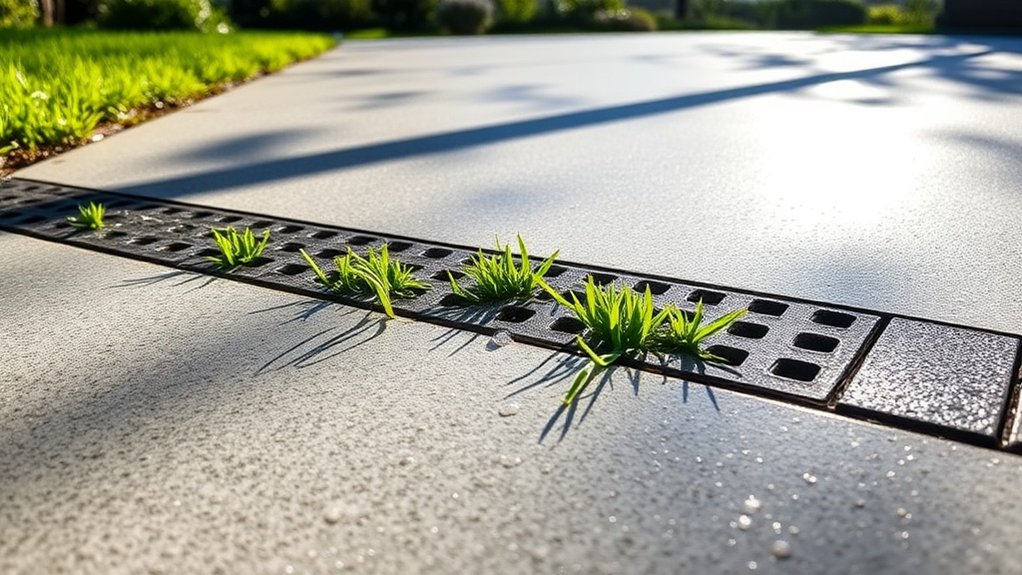
Understanding permeability in resin driveways is crucial for effective drainage and adhering to Sustainable Urban Drainage Systems (SuDS) guidelines. By allowing water to pass through the surface, you significantly reduce surface runoff and promote groundwater recharge. This is essential for lowering flood risks, protecting your property, and ensuring compliance with regulations. Choosing a permeable resin driveway is a smart, sustainable option for urban areas, as its environmental benefits contribute to better water management. Additionally, selecting a driveway type with effective water drainage capabilities can further enhance your landscape’s sustainability.
Benefits of Permeable Systems
Permeable resin driveways are an excellent choice for homeowners looking to manage water drainage effectively. These surfaces allow rainwater to soak through, significantly reducing puddles and protecting your garden from erosion.
By cutting down surface runoff by over 50%, they ease the burden on drainage systems and help recharge groundwater naturally. The durable resin-aggregate blend ensures long-lasting performance while remaining easy to maintain. Additionally, these driveways utilize recycled materials, which further enhances their eco-friendliness. Furthermore, permeable resin driveways meet Sustainable Drainage Systems (SuDs) standards, promoting a more sustainable approach to water management.
Additionally, these driveways can trap pollutants, improving local water quality. Choosing a permeable resin driveway enhances safety and appearance while contributing to a healthier environment in your community.
SUDS Compliance Importance
Ensuring SUDS compliance for your resin driveway is crucial for both the environment and local regulations. By following SUDS guidelines, your driveway can effectively manage rainwater, minimising runoff and reducing the risk of flooding.
Using permeable materials helps recharge groundwater and eases the burden on local drainage systems. On the other hand, non-compliant driveways with impermeable bases can increase surface water runoff and heighten local flood risks, potentially breaching planning requirements.
To stay compliant, make sure both the resin-bound surface and the sub-base are permeable, using the right materials and installation techniques. This not only meets local regulations but also boosts your property’s value and protects the environment.
Identifying Drainage Problems in Your Driveway

How can you tell if your driveway has drainage issues? Look out for signs such as puddles, cracks, and uneven surfaces, which point to poor drainage. Water should flow away from the driveway; if you notice pooling or moss, it’s time to investigate. Here’s a quick reference table to help you identify these problems:
| Signs of Issues | Possible Causes | Recommended Actions |
|---|---|---|
| Puddles after rain | Inadequate drainage | Check the slope and materials |
| Cracks and dips | Water penetration | Examine the sub-base condition |
| Moss and algae growth | Ongoing moisture retention | Improve drainage solutions |
| Surface erosion | Ineffective water flow | Consider re-grading the driveway |
Addressing these signs promptly can save you from costly repairs later on.
Effective Solutions for Improving Drainage
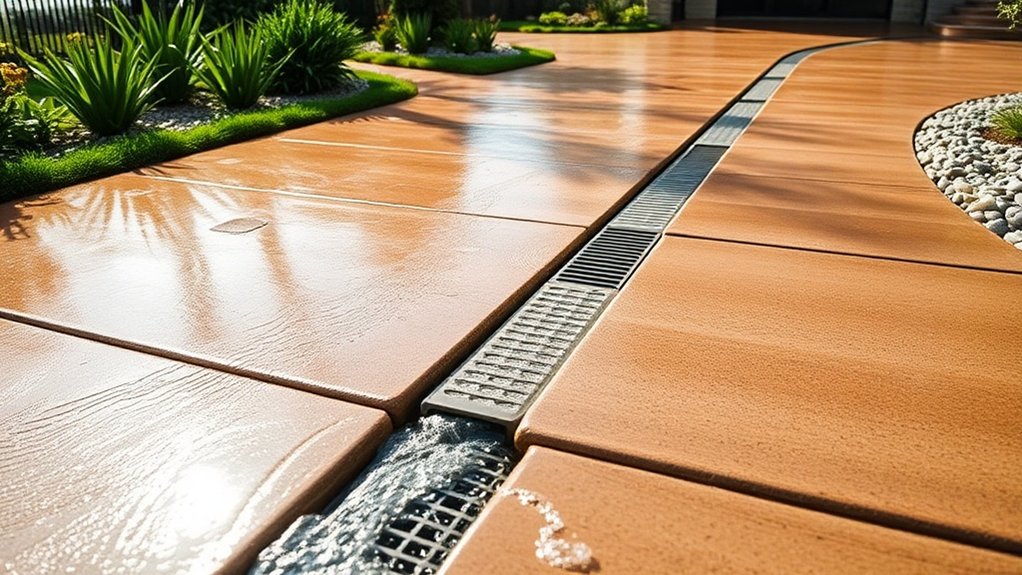
To improve drainage on your resin driveway, start by adjusting the slope to direct water away from the surface.
Installing drainage channels along the edges can effectively capture runoff.
Additionally, consider adding soakaways or French drains to allow excess water to seep back into the ground.
These measures work together to reduce pooling and maintain the integrity of your driveway.
Driveway Slope Adjustments
Adjusting the slope of your driveway is essential for proper drainage and preventing water damage.
Begin by evaluating the slope; aim for a gradient between 1:12 and 1:40. This gentle incline helps water run off effectively without causing erosion. Use quality materials, such as crushed stone or gravel, to create a solid base that can accommodate these changes.
Ensure the ground is properly graded to direct water away from your home’s foundation. If your driveway has a steeper slope, consider using geotextile membranes for added support.
Keep an eye on the slope, especially after heavy rain, to identify any pooling issues and maintain the integrity of your driveway for years to come.
Drainage Channel Installation
Installing drainage channels is vital for managing surface water effectively, ensuring your resin driveway remains functional and free from pooling.
Start by marking the path of the channel, directing water towards a suitable discharge point. Dig a trench according to the manufacturer’s guidelines, making it slightly wider and deeper than the channel to ease installation.
When positioning the channel sections, ensure a consistent slope to facilitate efficient water flow. Connect sections with couplings and securely fit end caps to prevent leaks.
Backfill with compacted gravel to stabilise the drain. Use high-quality materials, such as durable grates that can withstand vehicle weight, and make sure the drainage system blends well with your driveway’s appearance for optimal performance.
Soakaway and French Drains
Soakaways and French drains are effective solutions for improving drainage on resin driveways, helping to prevent water pooling and runoff.
A well-designed soakaway captures excess surface water, allowing it to seep into the soil and avoid waterlogging. It’s crucial to size the soakaway correctly based on your driveway’s size and expected rainfall.
French drains, meanwhile, are trenches filled with gravel and a perforated pipe that redirects water away from problem areas.
Installing these systems reduces the risk of flooding and extends the life of your resin driveway. Regular maintenance, such as clearing debris from French drains, ensures they remain effective, keeping your driveway safe and functional.
Best Practices for Installation to Ensure Proper Drainage
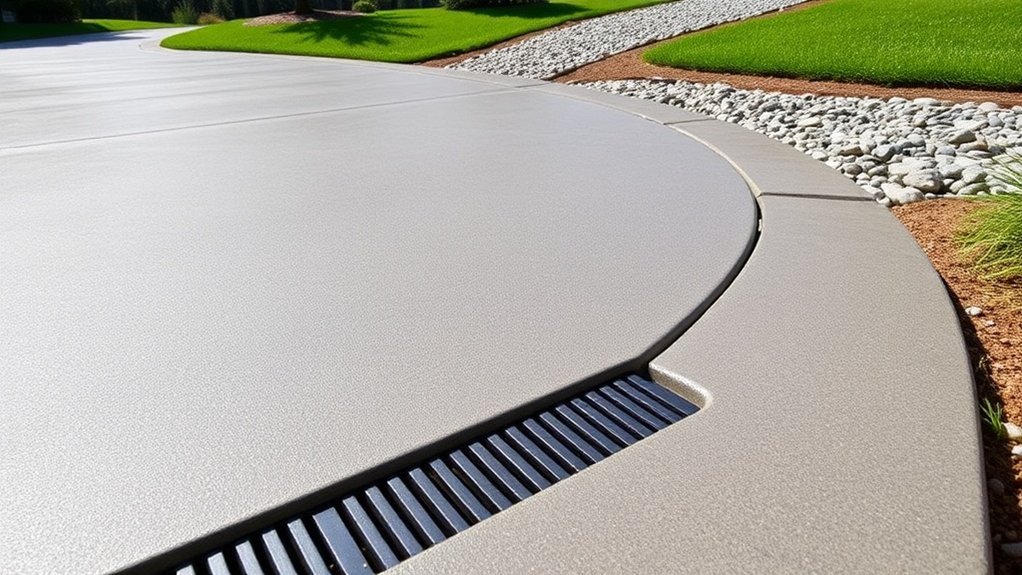
To ensure proper drainage when installing resin driveways, it’s essential to focus on preparation and detail.
Start by creating a stable sub-base at least 220mm deep, using a geotextile membrane to stop soil particles from mixing. A clean foundation, like macadam, should be thoroughly compacted to prevent settling over time.
Add a 70mm layer of open surface permeable asphalt to aid water drainage, and maintain a gentle slope between 1:12 and 1:40 to encourage runoff without creating steep gradients.
Consider incorporating channel drains or soakaways to effectively manage water flow.
Lastly, use angular aggregates for improved traction and drainage, ensuring durability and minimising future drainage problems.
Maintenance Tips to Prevent Drainage Problems
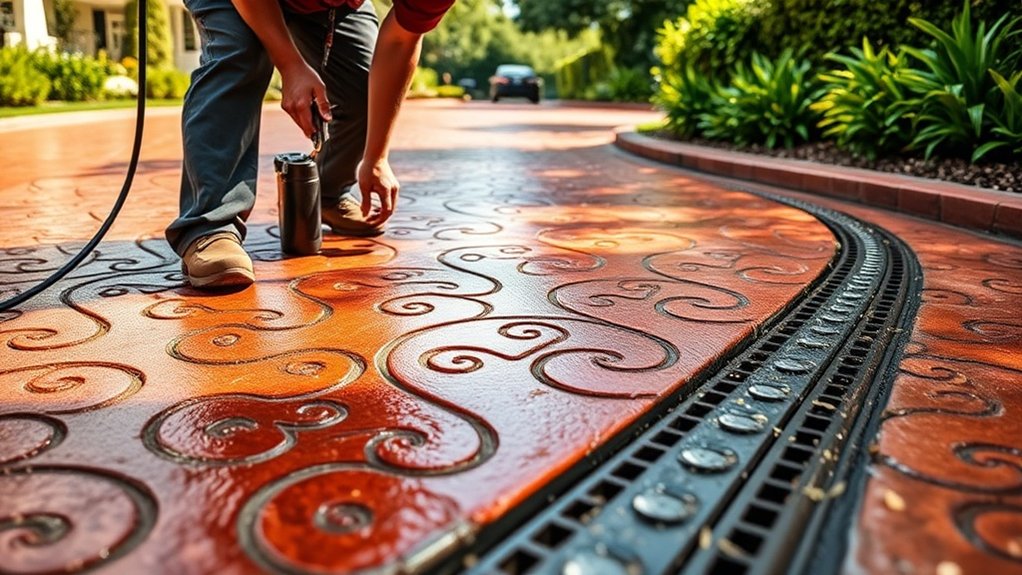
To keep your resin driveway in top condition, regular inspections are crucial.
Make it a routine to check for any surface damage and clear drainage channels of debris that could obstruct water flow.
For instance, leaves and dirt can easily build up and cause issues.
Regular Inspections Required
Regular inspections are crucial for keeping your resin driveway in good condition and preventing drainage issues. Aim for inspections at least twice a year, ideally in spring and autumn, to check the surface and drainage efficiency.
After severe weather, increase the frequency of inspections to spot any potential damage or blockages early. Schedule your maintenance alongside these inspections for more efficient upkeep.
Keep a record of your findings to monitor changes over time, which will help in identifying recurring drainage problems. Look out for signs of wear, like colour fading or surface cracking, as these can impact water flow.
Consider having a professional assessment every 2-3 years to ensure your driveway remains in excellent shape and to determine if recoating or resealing is needed.
Clean Drainage Channels
Neglecting to clean drainage channels can lead to water pooling and potential damage to your resin driveway. Regular maintenance is crucial to prevent blockages.
Start by sweeping away leaves and debris with a broom or stiff-bristled brush. For stubborn material, use drainage rods or drain snakes. Rinse the channels with a garden hose, using moderate pressure to avoid damage. If necessary, use a pressure washer sparingly.
When removing and reinstalling grates, do so carefully to ensure they function properly. Make it a habit to inspect the channels monthly, especially after heavy rain, to keep them clear and ensure proper water flow, protecting your driveway from damage.
Repair Surface Damage
Keeping your resin driveway in good condition requires attention to both drainage channels and surface damage.
Act quickly to repair small cracks or chips using approved resin repair kits to ensure proper adhesion and permeability. Regularly sealing cracks prevents water from pooling and seeping beneath the resin, which can lead to further drainage issues.
Clean your driveway with mild detergent and warm water a few times a year to improve water flow. If stains develop, tackle them promptly to avoid damaging the resin.
Regularly check repaired areas to maintain surface permeability and keep your driveway looking great for years to come.
Common Errors to Avoid During Installation

When installing a resin driveway, avoiding common mistakes is crucial for a durable and attractive finish.
One major pitfall is inadequate base preparation; ensure your sub-base is at least 150mm deep and stable.
Avoid applying resin in wet conditions or extreme temperatures, as this can weaken the bond and cause issues like blooming.
Properly mix the resin and aggregates according to the manufacturer’s guidelines to achieve a consistent texture.
Don’t forget edge restraints; failing to secure these can lead to shifting materials.
Additionally, address drainage and surface slope to prevent water pooling.
The Role of Drainage Channels and Soakaways
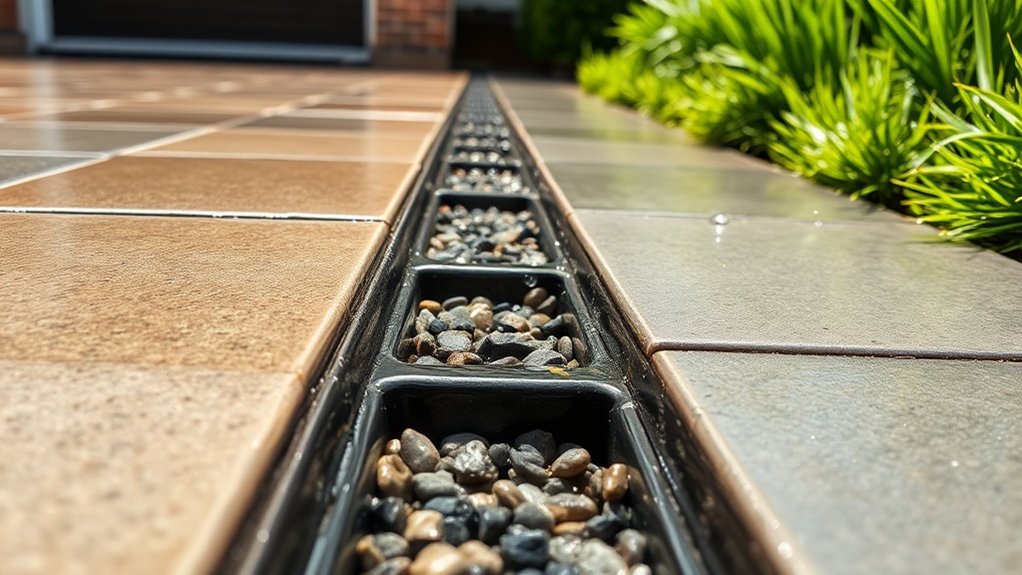
Inadequate drainage can compromise even the best-installed resin driveways, making drainage channels and soakaways crucial for optimal performance.
Proper drainage design is essential; channels should be positioned along edges or low points, particularly on sloped driveways, to effectively collect and redirect surface water runoff, thus preventing pooling that could damage your driveway.
Soakaways help manage excess water underground, allowing it to seep into the soil and reducing flood risks. By incorporating these systems, you improve water management and minimise potential driveway damage.
Ensure proper installation with a 5mm fall per metre and carry out regular maintenance to keep your drainage channels and soakaways working effectively for long-lasting durability.
Repairing and Upgrading Existing Driveways
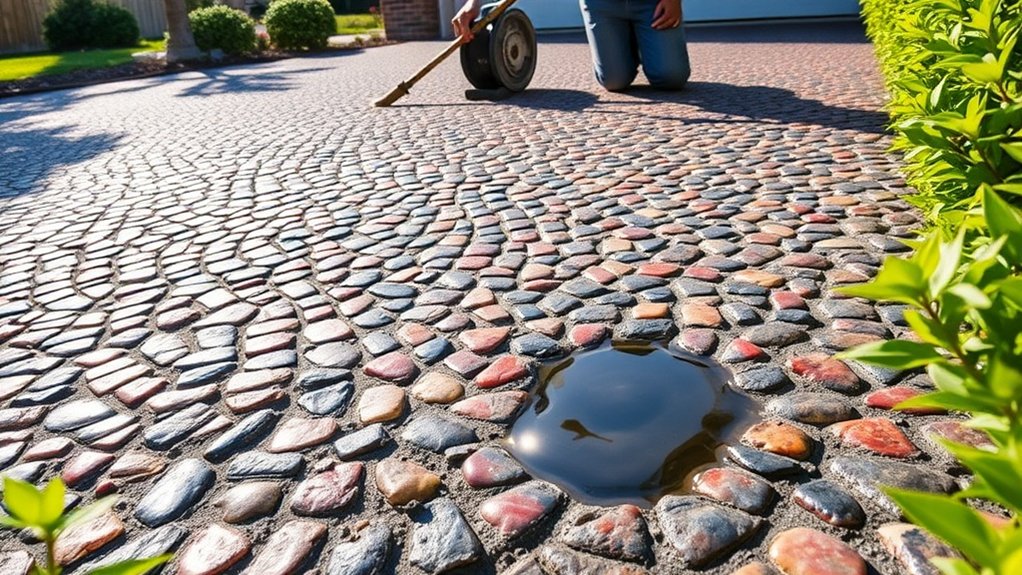
When you spot cracks, loose stones, or sinking in your resin driveway, it’s important to act quickly to avoid further damage and prolong its lifespan.
Begin by inspecting the surface to pinpoint problem areas. Remove any loose resin and clean the affected spots to ensure a stable base for repair.
Here are some straightforward tips for effective repairs and upgrades:
- Choose resin products that match the original appearance of your driveway.
- Fill in cracks with an appropriate mixture, layering it as necessary for deeper damage.
- Tackle any underlying structural issues, possibly using professional methods like slabjacking.
- Consider upgrading to UV-stable resins for improved durability and longevity.
Environmental Benefits of Proper Drainage Management
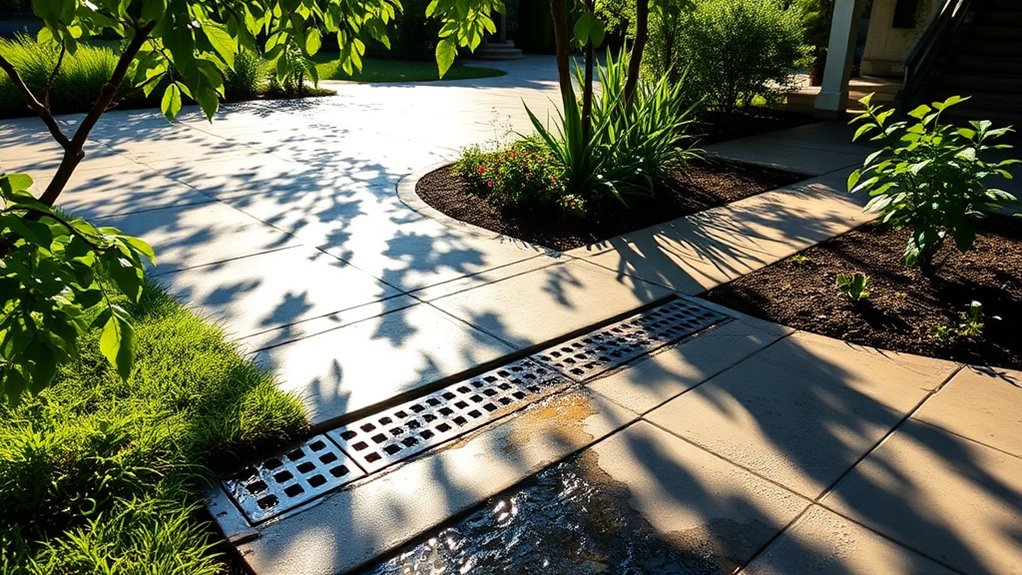
Proper drainage management is vital for protecting your property and the environment. By directing excess water away from vulnerable soils, you help prevent erosion and preserve vital topsoil, which supports sustainability.
Systems like French drains effectively manage runoff, stopping pollutants from entering waterways and safeguarding aquatic habitats. Additionally, good drainage reduces the need for artificial irrigation, encouraging natural vegetation and enhancing biodiversity.
It also helps mitigate flooding risks, protecting local ecosystems. By implementing these strategies, you play a part in maintaining a balanced ecosystem, reducing structural damage, and lessening your environmental impact—all while keeping your resin driveway and surrounding landscape intact.
Frequently Asked Questions
Can I Install a Resin Driveway Myself?
Yes, you can install a resin driveway yourself. With the right preparation and a clear understanding of the DIY process, you can enjoy benefits such as durability, low maintenance, and environmental friendliness. For example, resin driveways are easy to clean and can withstand heavy traffic, making them a practical choice for your home.
How Long Does It Take for Resin Driveways to Cure?
Cure time for resin driveways usually takes between 24 to 36 hours to reach full strength. During this period, it’s important to avoid heavy loads to prevent any damage, allowing the surface to achieve its maximum durability and performance.
Will Resin Driveways Fade Over Time?
Resin driveways can indeed fade over time, particularly if they lack adequate UV resistance. Prolonged exposure to sunlight can dull their vibrant colours, so it’s wise to invest in high-quality resin and carry out regular maintenance. For instance, choosing a product with UV stabilisers can help keep your driveway looking fresh for longer.
Are Resin Driveways Suitable for Cold Climates?
Yes, resin driveways are suitable for cold climates. Their flexibility and performance in winter conditions mean they can handle freeze-thaw cycles without cracking. However, it’s essential to ensure proper installation and drainage to enhance their durability during harsh weather. For example, a well-drained resin driveway can withstand heavy snowfall and icy conditions better than some traditional materials.
How Much Does a Resin Driveway Cost?
A resin driveway typically costs between £60 and £120 per m². Factors like installation and maintenance can impact the final price. Using high-quality resins and ensuring proper preparation can enhance durability. Additionally, the choice of decorative aggregates can also influence your overall costs.
Conclusion
Effective drainage is essential for maintaining your resin driveway. Without it, you risk creating stagnant puddles that can damage the surface over time. Understanding the causes of drainage issues and implementing the right solutions will not only protect your investment but also enhance the overall appearance of your home.
For instance, ensuring proper slope and gradient can direct water away from the driveway, preventing pooling. Installing drainage channels or soakaways can also help manage excess water effectively. A well-drained driveway not only looks better but also acts as a safeguard against weather-related damage. By adopting these practices, you can maintain your driveway’s integrity and aesthetic appeal.

Get ready to discover the top driveway design trends in Nottingham for 2025 that will transform your outdoor space—find out Read more

Compare resin and concrete driveways to discover which option provides superior durability and value, but the answer may surprise you.

The rise of resin-bound driveways is transforming outdoor aesthetics, but what hidden advantages might make them the perfect choice for Read more