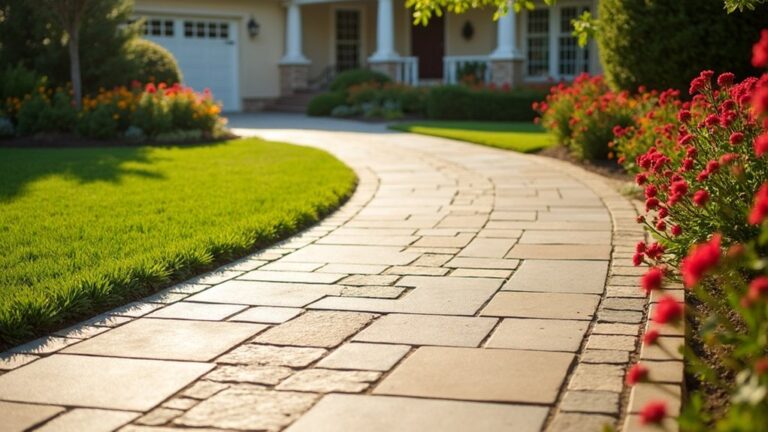

How Aggregate Sourcing Affects Appearance
Aggregate sourcing significantly impacts the appearance of construction materials. The type and mineral composition of aggregates dictate colour consistency, while particle size affects surface texture. Sourcing locally ensures visual harmony and quality control, allowing materials to blend with the regional palette and withstand local weather conditions.
Different sourcing methods yield distinct aesthetics; for instance, uniform quarry aggregates create a sleek look, while varied recycled materials offer character and uniqueness. Understanding how these factors interplay is crucial for achieving the desired visual effect in your projects. Explore the vital links between sourcing and aesthetics to enhance your designs.
Key Takeaways
- Sourcing materials locally allows for better colour matching, enhancing visual cohesion with the environment and supporting architectural character.
- Quarrying yields consistent colours and textures, while mining introduces distinctive visual elements with diverse colours and patterns.
- Recycled aggregates can provide a charming, rustic look but may lack uniformity, which could impact the overall aesthetic.
- The methods used to source aggregates affect their durability and long-term visual appeal, influencing the final appearance of the project.
- Marine dredging results in smooth aggregates that improve workability and contribute to a refined finish in construction.
Impact of Aggregate Type on Aesthetic Consistency

When choosing the right aggregate type for your project, it’s essential to consider how its colour and mineral composition impact aesthetic consistency. Natural aggregates come in a variety of colours, from warm earth tones to cool greys, making it easier to match your design scheme. Consistent hues create uniformity, enhancing the overall cohesion of the project. In contrast, artificial aggregates, such as crushed glass, can introduce unique colours that might disrupt this visual harmony. Additionally, where you source your aggregates is crucial for maintaining colour stability, as some materials may fade over time due to environmental exposure. To achieve a coherent visual identity, the chosen aggregate colour should complement the architectural style, while a stable mineral composition helps reduce undesirable variations and surface inconsistencies, effectively addressing aesthetic concerns. Proper aggregate blending contributes to enhancing the overall appearance and durability of the surface finishes.
Influence of Particle Size on Surface Texture
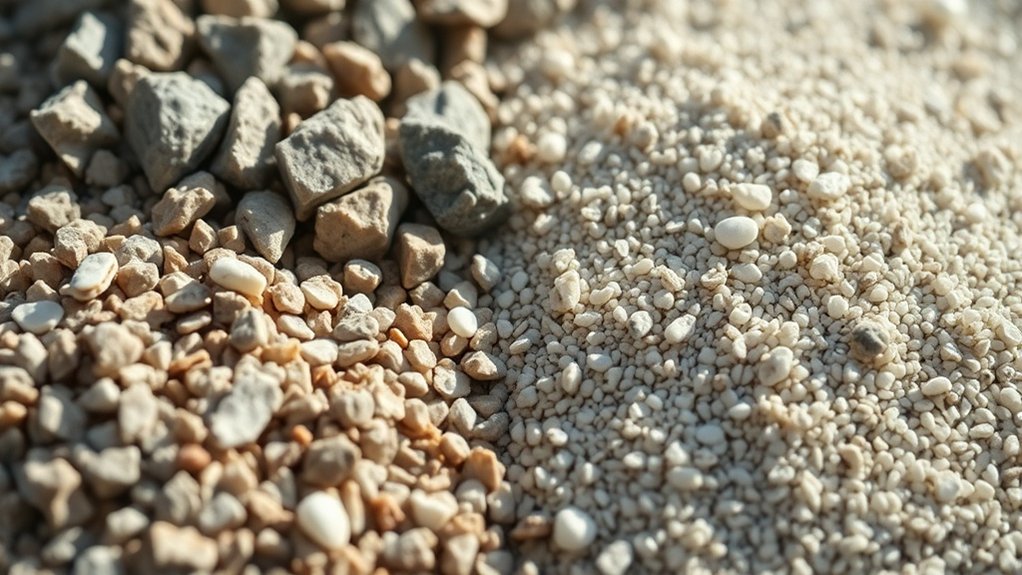
When considering how particle size affects surface texture, it’s clear that larger aggregates tend to create smoother surfaces. This occurs because larger particles produce fewer micro-textural features, which can lead to decreased friction and stability. In contrast, finer aggregates increase surface texture due to their greater surface area, allowing for better interlocking and enhanced stability.
| Particle Size | Surface Texture | Skid Resistance |
|---|---|---|
| Large | Smooth | Lower |
| Medium | Moderate | Moderate |
| Small | Rough | Higher |
Understanding these texture differences is crucial for optimising aggregate selection to achieve specific performance outcomes in construction projects.
The Role of Local Sourcing in Visual Harmony
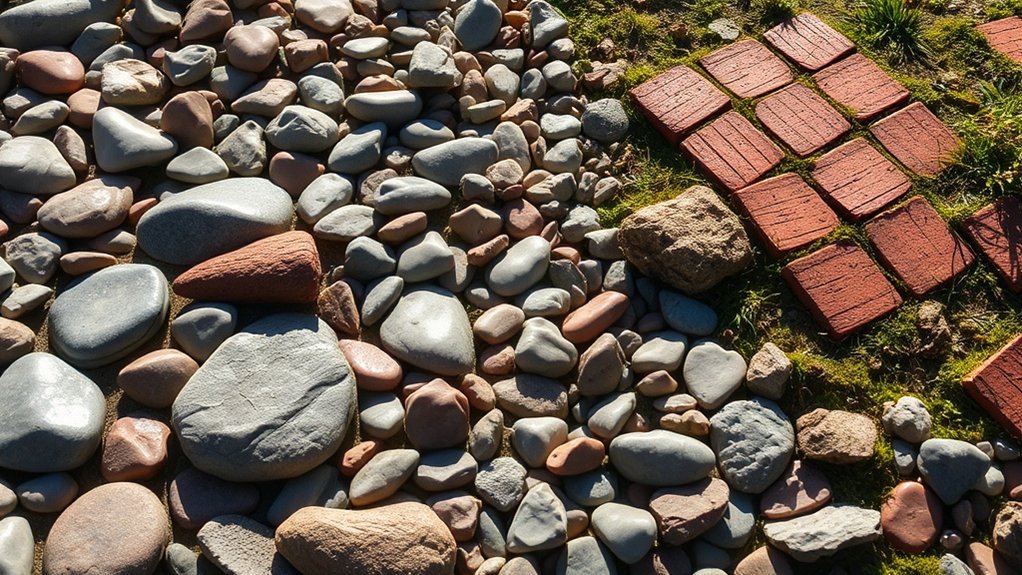
Sourcing aggregates locally allows for precise colour matching that enhances visual harmony with the surrounding landscape. This approach not only simplifies quality control but also reinforces the architectural identity of your project, creating a cohesive look that reflects local character. Additionally, using local aggregates can significantly reduce transportation costs, further contributing to a sustainable and visually appealing construction process. Furthermore, utilizing eco-friendly materials can further enhance the sustainability of your project while maintaining its aesthetic appeal.
Site-Specific Color Matching
Understanding the importance of sourcing local aggregates can significantly improve the visual coherence of concrete structures. By using site-specific aggregates, you ensure better colour consistency and minimise visual mismatches with existing materials. Local aggregates tend to weather in a similar manner, helping to maintain a cohesive appearance over time. Additionally, the use of X-Rite solutions can enhance the precision of colour matching processes, ensuring that the hues of the aggregates align perfectly with project specifications.
| Matching Techniques | Description | Benefits |
|---|---|---|
| Analytical Methods | Analyse samples for precise colour matching | High accuracy in matching |
| Visual Comparison | Use standard colour cards for quick matching | Quick initial assessment |
| Laboratory Testing | Test physical samples for reliable results | Consistency in colour reproduction |
| Digital Analysis | Use software for colour quantification | Enhanced precision and efficiency |
These techniques, along with local sourcing, facilitate effective visual integration in your projects.
Quality Control Advantages
Local sourcing is crucial for quality control, significantly impacting the appearance of concrete structures. By opting for local aggregates, you can improve both the aesthetic and durability of your projects in the following ways:
- Consistency: Local aggregates conform to regional standards, reducing variability and minimising structural risks.
- Compatibility: Materials are suited to local weather conditions, ensuring designs are visually cohesive with the surrounding environment.
- Responsiveness: Being close to suppliers enables rapid adjustments to material blends, enhancing visual results.
- Sustainability: Shorter transport distances reduce carbon emissions and help maintain the quality of materials.
- Additionally, local sourcing supports sustainable construction practices, contributing to environmental benefits and enhancing the overall appeal of your projects.
Architectural Identity Enhancement
Using locally sourced aggregates significantly enhances architectural identity by promoting visual harmony in built environments. By choosing aggregates that align with local stone and soil colours, you ensure that your architecture blends seamlessly with the surrounding landscape. This approach helps preserve neighbourhood aesthetics and strengthens a sense of architectural identity rooted in community heritage.
When materials reflect the regional geology, they tell local stories, acting as a tangible link to traditions.
Moreover, sourcing aggregates locally supports contextual compatibility, enabling new buildings to respect and complement existing structures. This practice is vital for maintaining the integrity of heritage districts and avoiding visual discord.
Ultimately, using local materials not only fosters aesthetic appeal but also encourages community acceptance, firmly anchoring your architecture in its unique cultural context.
Mineralogy’s Effect on Color and Finish

When choosing aggregates, you’ll find that their mineral composition significantly impacts the colour range of your concrete.
For example, the cleavage of minerals like quartz and feldspar can produce different shades and finishes, which directly affect the overall aesthetic.
Aggregate Color Spectrum
The colour spectrum of aggregates is heavily influenced by their mineral composition, with each mineral adding unique shades and finishes. Understanding this spectrum allows you to see how mineral impurities can change appearances.
Here are the main factors affecting aggregate colour:
- Iron Oxides: These minerals give reddish or brownish tones.
- Silicate Minerals: Quartz and feldspar offer light to white shades.
- Carbonate Minerals: Calcite and dolomite produce lighter colours.
- Trace Elements: These can create complex colour variations and iridescent effects.
Together, these elements form a diverse array of colour variations.
Mineral impurities can further enhance the visual complexity of aggregates, influencing their overall look and finish.
Mineral Cleavage Impact
The colour of aggregates is influenced not only by their mineral composition but also by mineral cleavage, which affects both appearance and finish.
Different types of cleavage, such as basal, prismatic, and rhombohedral, determine how minerals break apart, impacting surface texture and smoothness. For example, mica’s perfect basal cleavage results in thin, shiny sheets that enhance its visual appeal, whereas calcite’s rhombohedral cleavage offers a distinct aesthetic.
The strength of the bonds within the crystal lattice dictates these cleavage properties, influencing how light interacts with the surfaces.
While cleavage doesn’t directly affect colour, the smooth surfaces it creates can enhance colour visibility, ultimately influencing the overall finish and aesthetic value of the aggregate in various applications.
Sourcing Methods and Their Influence on Appearance Quality
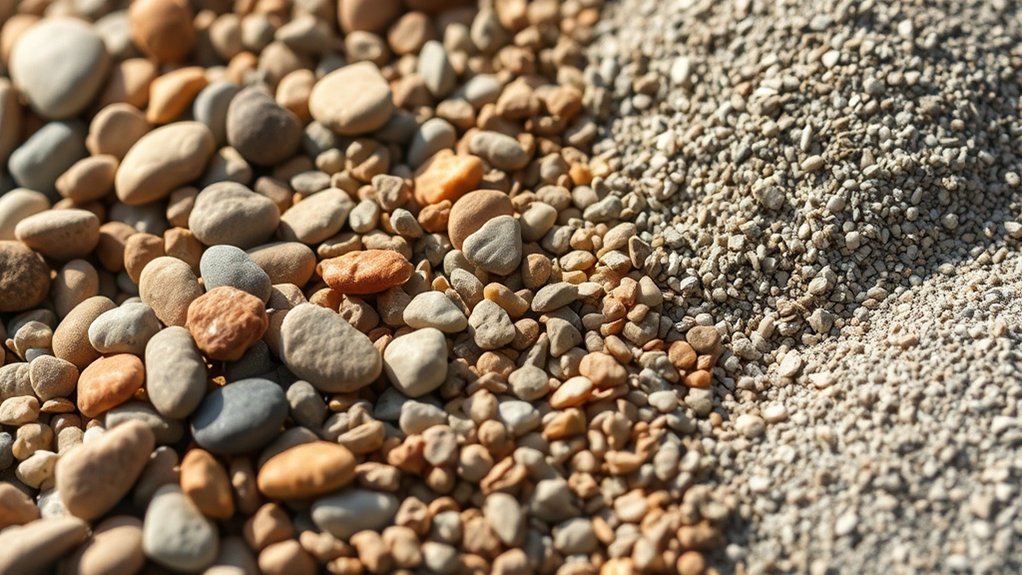
Understanding how different sourcing methods affect appearance quality is vital for achieving the desired visual outcomes in construction materials. The way aggregates are sourced significantly impacts their visual appeal:
- Quarrying provides consistent colours and textures due to uniform mineral compositions, enhancing surface quality.
- Mining yields aggregates with unique visual traits, resulting in varied colours and patterns.
- Recycled aggregates can introduce variability, offering a rustic look but potentially compromising uniformity and surface stability.
- Marine dredging produces smooth, rounded aggregates that enhance workability, though they may lack texture diversity.
Choosing the appropriate sourcing method not only influences aesthetics but also affects the long-term durability and maintenance of the finished product. Additionally, climate considerations can play a crucial role in determining the most suitable aggregate sourcing method for specific projects.
Variations in Aggregate Shape and Their Aesthetic Outcomes

Sourcing methods not only determine the quality of aggregates used in construction but also their aesthetic characteristics. The shape of the aggregates significantly influences surface texture and visual depth. For instance, angular aggregates with sharp edges create a bold, tactile complexity, while rounded aggregates provide a smooth, polished appearance. By blending different shapes, designers can achieve a balance between ruggedness and refinement.
| Aggregate Shape | Aesthetic Impact |
|---|---|
| Angular | Bold, rugged aesthetics, high texture |
| Rounded | Smooth, refined finishes |
| Sub-angular | Moderate texture, visual interest |
| Flaky/Elongated | Directional flow, rustic aesthetics |
Understanding these variations enables you to create surfaces that cater to specific aesthetic and functional requirements.
Environmental Considerations in Aggregate Sourcing
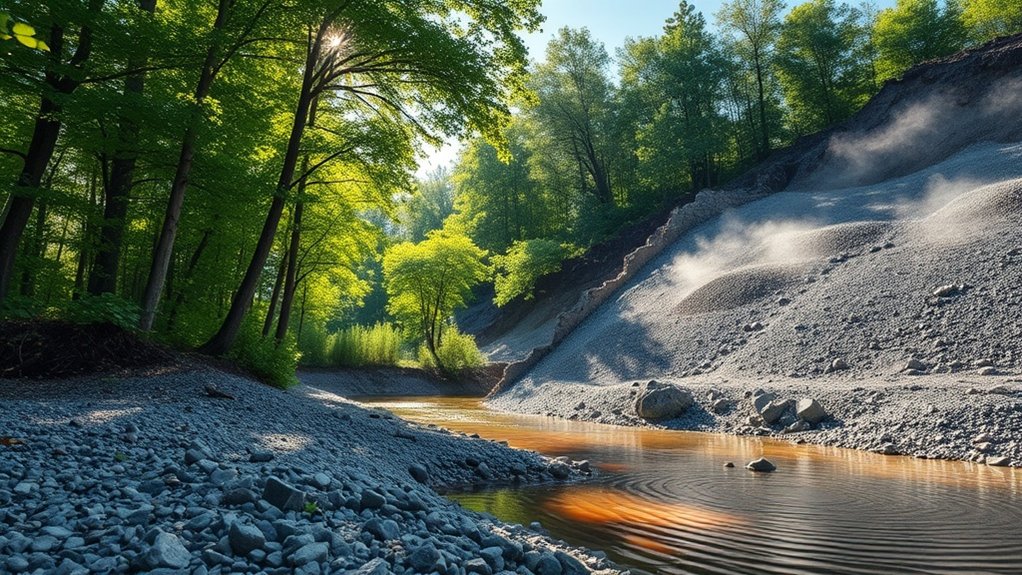
When assessing the environmental impacts of aggregate extraction, it’s important to consider several key factors that affect both ecosystems and water management:
- Habitat Disruption: Extracting aggregates can fragment natural habitats, which may lead to a decline in biodiversity. For instance, the removal of gravel from riverbanks can threaten species that rely on those ecosystems.
- Water Quality: Runoff from quarries can introduce pollutants and sediment into nearby water bodies, adversely affecting aquatic life. This can result in the decline of fish populations and the overall health of local waterways.
- Air Pollution: The dust and emissions generated during extraction and transport can deteriorate air quality, posing risks to community health. In areas close to quarries, residents may experience respiratory issues as a result.
- Energy Use: The extraction process is energy-intensive, contributing significantly to the carbon footprint of construction materials. For example, transporting aggregates over long distances further increases greenhouse gas emissions.
Aggregate Durability and Its Impact on Visual Longevity
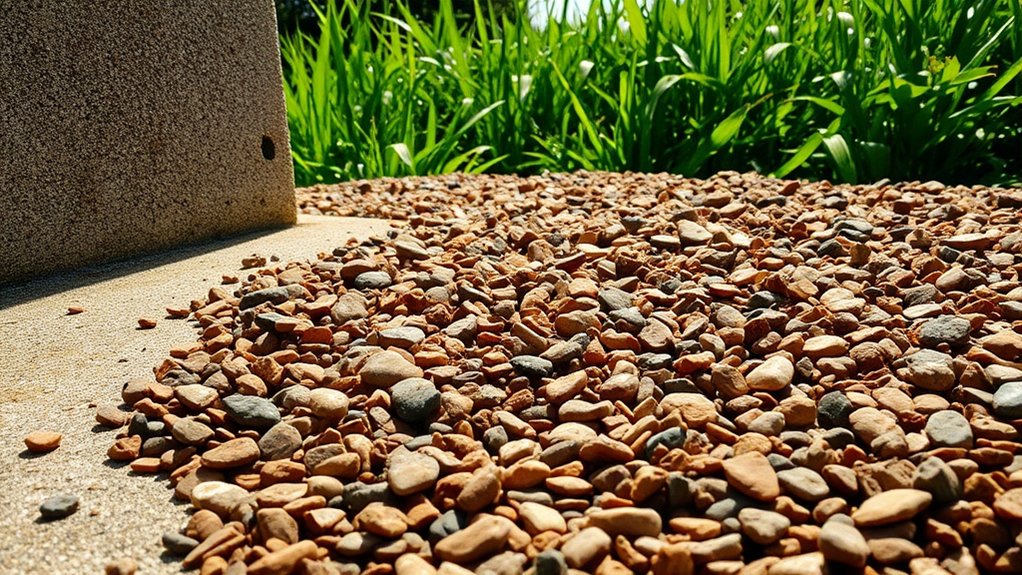
The choice of aggregates significantly affects both the durability and visual longevity of building materials. High-performing aggregates offer better resistance to environmental factors, ensuring that materials retain their aesthetic appeal over time. Using the right aggregates can greatly minimise issues like surface erosion and thermal cracking.
| Aggregate Type | Impact on Visual Longevity |
|---|---|
| Granite | Excellent weathering resistance |
| Limestone | Moderate durability |
| Geopolymer | Low water absorption |
Aggregates with strong hardness and chemical stability are vital for preserving the visual integrity of structures. By prioritising these elements, you can ensure your projects not only function well but also maintain their attractiveness for years to come.
The Importance of Quality Control in Aggregate Selection

Effective quality control in aggregate selection is vital for ensuring both the performance and aesthetic quality of construction materials.
To achieve optimal aggregate quality, focus on the following:
- Testing Protocols: Conduct thorough tests such as sieve analysis and crushing strength assessments to ensure consistency.
- Sampling Methods: Employ systematic sampling techniques to accurately evaluate material uniformity and identify any impurities.
- Compliance Standards: Ensure compliance with industry standards (e.g., BS, EN) for aggregate performance and appearance.
- Process Management: Use automated inspection methods for precise grading, reducing variation that can affect the final look.
Frequently Asked Questions
How Do Aggregate Colors Change Over Time?
Aggregate colours change over time due to weathering, moisture exposure, and variations in mineral composition. These factors can impact colour stability, resulting in fading or alterations in appearance as environmental conditions and the ageing process take their toll. For instance, a vibrant red aggregate may fade to a dull pink if exposed to constant rain and sunlight. Understanding these changes is essential for maintaining aesthetics in landscaping and construction.
Can Aggregate Sourcing Impact Project Costs?
Yes, aggregate sourcing can significantly affect project costs. By improving cost estimation and budget management, you can manage finances more effectively. This ensures that resource allocation and procurement strategies align with the project’s goals and expenses. For instance, sourcing materials in bulk can lead to reduced prices, ultimately lowering overall project costs.
What Role Does Aggregate Cleanliness Play in Appearance?
Aggregate cleanliness significantly affects both the quality of the aggregate and the surface finish of a project. Clean aggregates result in smoother and more attractive surfaces, whereas contaminants can lead to uneven textures. This not only detracts from the visual appeal but can also jeopardise the overall integrity of the finished work. For instance, in a decorative concrete patio, using clean aggregates can enhance the appearance, while dirty aggregates may leave unsightly blemishes.
How Does Aggregate Shape Affect Concrete Workability?
The shape of aggregates significantly impacts the workability of concrete. Rounded aggregates improve flow and packing density, which means less water and paste are needed. For instance, consider using smooth pebbles in your mix; they will help the concrete flow more easily. On the other hand, angular aggregates create more friction, necessitating additional paste and water, which can hinder workability. Think of sharp-edged gravel; it can make the mix more challenging to work with.
Are There Regulations on Aggregate Sourcing Aesthetics?
Are you taking the visual impact of your project into account? Yes, there are aesthetic regulations in place that set sourcing standards for aggregates, ensuring they meet specific visual criteria. Adhering to these standards helps maintain the desired appearance in construction and ensures that projects blend well with their surroundings. For example, using locally sourced stone can enhance the character of a building in a historic area.
Conclusion
In conclusion, sourcing high-quality aggregates significantly impacts surface appearance. Choosing the right types and sizes ensures a visually appealing and consistent finish. Careful consideration of mineral content and strict quality control help maintain long-lasting beauty. Ultimately, your decisions in aggregate sourcing not only improve immediate attractiveness but also create enduring charm. Understanding these elements lays the groundwork for impressive results, ensuring every project reflects an elegant and timeless appeal.

Proper aggregate size selection is crucial for driveway durability; discover essential tips that could transform your outdoor space today.

Unlock the secrets to perfectly matching your driveway color with your house for stunning curb appeal; discover expert tips that Read more

Learn how your color choices can influence product durability and uncover the surprising factors that might affect your decision.