
How to Choose the Right Aggregate Size for Your Driveway
Choosing the right aggregate size for your driveway depends on the type you’re installing. For asphalt driveways, use larger aggregates (25-40 mm) for the base and smaller ones (10 mm) for the surface. If you’re opting for concrete, 20 mm coarse aggregates are ideal for strength. For paver driveways, angular gravel (12-25 mm) works well for the base, while smaller sizes (6-12 mm) are suited for the surface. Making the right choice enhances both stability and drainage. It’s worth considering other factors that can affect aggregate selection and overall driveway performance.
Key Takeaways
- Think about the type of traffic your driveway will see; larger aggregates (25mm to 50mm) are ideal for heavy vehicles, while smaller aggregates (6mm to 10mm) are better for light use.
- Choose larger aggregates for improved drainage, as they facilitate quicker water movement and help prevent pooling.
- Use well-graded aggregates to enhance interlocking and stability, reducing shifting and prolonging the life of your driveway.
- For asphalt driveways, use a combination of larger aggregates for the base and smaller ones for the top layer to maximise performance.
- Regularly check your driveway’s condition and consider adjusting the aggregate size to keep it smooth and prevent deterioration.
Understanding Different Driveway Types

When choosing a driveway, it’s important to know the different types and their features.
Concrete driveways are very durable and can be customised with various textures and colours to improve their appearance. Durability differs among materials; some require regular maintenance is a key consideration when selecting the right driveway for your needs. Additionally, asphalt driveways are cost-effective and provide a long-lasting surface with proper care.
Gravel and crushed stone driveways are budget-friendly but require regular upkeep to keep them looking good.
Asphalt options, like tar-and-chip, offer a textured finish but need resealing every few years to stay in good shape.
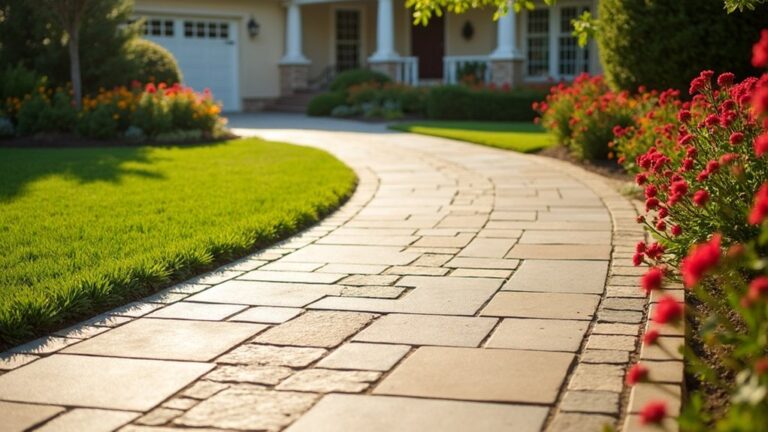
Paver and brick driveways are attractive and weather-resistant, making repairs straightforward.
Natural stone options, such as cobblestone, are long-lasting and visually appealing, perfect for more luxurious properties.
Make your choice wisely to ensure a good balance of looks, sustainability, and maintenance.
Recommended Aggregate Sizes for Asphalt Driveways

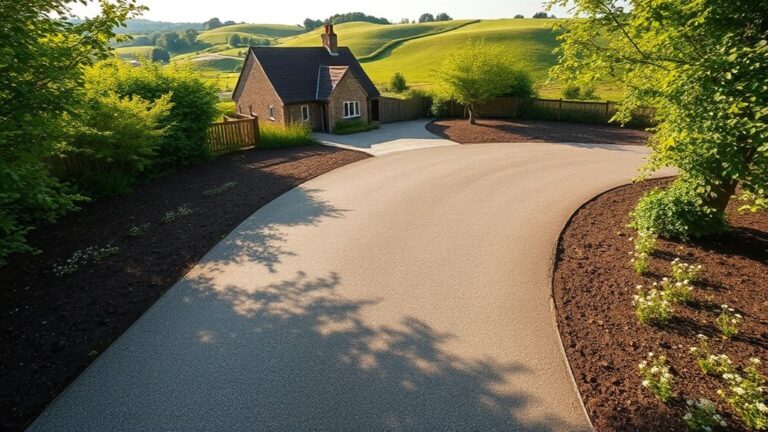
Choosing the right aggregate size for your asphalt driveway is crucial for its durability and performance. For the base layer, opt for larger aggregates such as 40 mm (1.5 inches) or 25 mm (1 inch) stone, while the surface layer should use 10 mm (3/8 inch) stone. Ensuring proper aggregate gradation is vital for good stone-to-stone contact. Aim for aggregate sizes between 9.5 mm and 2.36 mm, as these sizes enhance stability and performance. Additionally, maintaining an air void content of around 4% is essential to prevent problems like rutting and raveling, ensuring your asphalt driveway remains robust and functional over time. The selection of proper binder and aggregate significantly contributes to the overall longevity of your pavement.
Recommended Aggregate Sizes for Concrete Driveways

Choosing the right aggregate size for your concrete driveway is crucial for its strength and durability. A coarse aggregate size of around 20 mm (3/4 inch) is ideal, as it strikes a good balance between stability and compressive strength. Properly selected aggregates can comprise 60-80% of concrete mix, ensuring optimal performance. Avoid aggregates larger than 40 mm, as they’re unsuitable for residential driveways. Smaller aggregates, typically below 9.5 mm, improve workability and create a denser mix, which is essential for load-bearing. Always keep in mind structural limitations: the maximum aggregate size shouldn’t exceed one-third of the slab depth or three-quarters of the spacing between reinforcing bars. Proper selection and grading of aggregate sizes significantly affect the durability and lifespan of your concrete driveway.
Recommended Aggregate Sizes for Paver Driveways

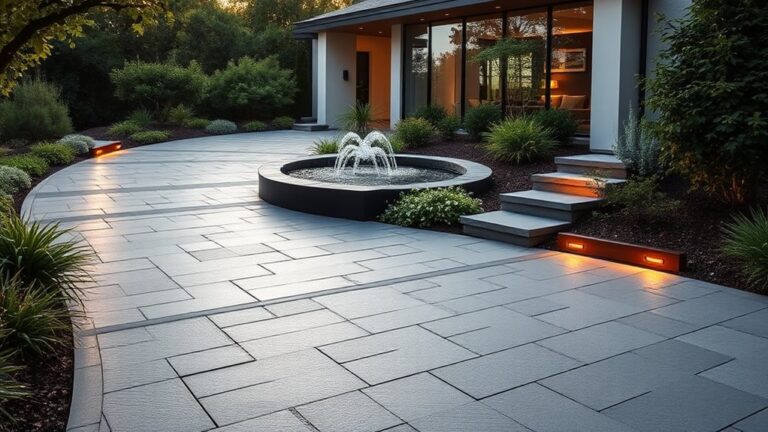
When choosing aggregate sizes for block paving driveways, it’s important to consider dimensions that ensure stability and proper drainage. The right aggregate size supports vehicle weight and aids in effective water runoff, which helps prevent erosion. For example, a blend of 20mm and 10mm aggregates can provide a strong base while allowing water to drain away easily. Additionally, using angled limestone chippings can enhance stability and longevity of the driveway. Balancing these factors is crucial for a durable and functional driveway.
Ideal Aggregate Size
The ideal aggregate size for a block paving driveway significantly affects its durability and performance.
For the base layer, use angular gravel sized between 12mm and 25mm to ensure optimal compaction and compatibility. Choosing Type 1 gravel or 20mm stone enhances drainage and load distribution.
For the surface layer, smaller aggregates of around 6mm to 12mm help with interlocking and minimise shifting, while also offering aesthetic variety.
It’s crucial to combine larger stones with finer materials for improved compaction and stability. Proper installation techniques on a well-compacted base are essential to prevent settling or shifting over time. Additionally, using highly porous materials can further enhance water drainage management.
Following these guidelines will provide a strong foundation for your driveway that can withstand vehicle traffic effectively.
Drainage Considerations
To ensure effective drainage in block paving driveways, selecting the right aggregate size is crucial. Larger aggregates (25mm and above) enhance water flow, while those between 12mm and 37mm strike a balance between drainage efficiency and performance. Avoid aggregates smaller than 6mm, as they can impede water movement. Here’s a quick reference table for recommended sizes:
| Aggregate Size | Performance Benefits | Applications |
|---|---|---|
| 20mm Gravel | Promotes drainage, stable base | Driveways, patios, paths |
| 20mm Crushed Stone | Good drainage, stability | Paths, patios |
| 37mm Stone | Supports heavier loads, drains | Heavier driveways |
Choosing the appropriate aggregate size helps prevent water pooling and ensures the longevity of your driveway.
Stability and Support
Selecting the right aggregate sizes for paving driveways is crucial for ensuring stability and support under different traffic conditions. For optimal load distribution, use 20mm crushed stone as the main aggregate. This provides a stable surface for both pedestrian and vehicle traffic.
For heavier loads, you might want to add 63mm stone to improve structural strength.
Choose angular aggregates, ideally between 12mm and 25mm, for the base layer as they interlock effectively. A layered approach, using progressively smaller aggregates, enhances compaction and stability.
Always ensure each layer is properly compacted to avoid future settling. This careful selection and arrangement of aggregates will result in a durable driveway that can handle various loads.
Recommended Aggregate Sizes for Gravel-Only Driveways

When choosing aggregate sizes for gravel driveways, it’s important to select those that ensure stability and good drainage.
Generally, gravel sizes between 20mm and 25mm are ideal, as they perform well under vehicle weight and improve surface texture, reducing slipperiness. Sizes from 13mm to 20mm also strike a good balance, allowing for effective drainage while maintaining stability.
Avoid aggregates smaller than 6mm, as they don’t clump together well, which can compromise the driveway’s integrity.
Using angular gravels like granite or crusher run promotes interlocking and compaction, key factors for a durable surface.
Properly selected aggregate sizes help prevent erosion and keep your driveway functional over time.
The Importance of Drainage in Aggregate Selection
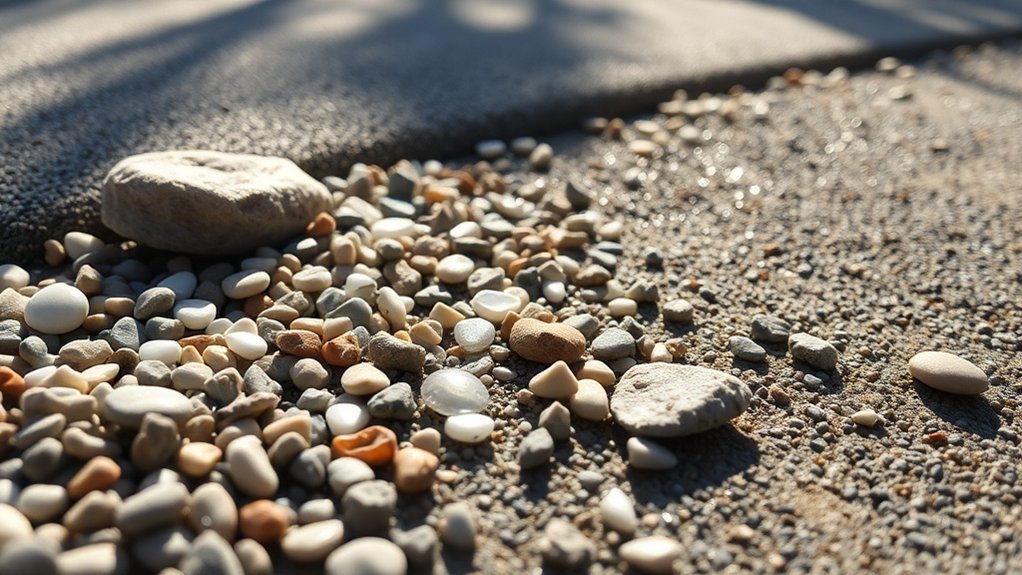
Effective drainage is crucial when selecting aggregates for your driveway, as it significantly affects both its durability and performance.
Here are key points to consider:
- Good drainage prevents water pooling, which can weaken your driveway over time.
- The size of the aggregates you choose influences how easily water can flow through them.
- Inadequate drainage can result in problems like potholes, frost damage, and erosion.
- Larger aggregates allow for quicker water movement, especially important in areas with heavy rainfall.
- Selecting aggregates that take into account local rainfall and soil conditions will enhance the longevity of your driveway.
Stability and Durability of Different Aggregate Sizes

Understanding how aggregate size affects the stability and durability of your driveway is crucial, especially when considering drainage.
Larger aggregates (25mm to 50mm) significantly improve load distribution and interlocking strength, offering greater stability.
Medium-sized gravel (20mm to 25mm) is often the best choice, providing excellent compaction and resistance to movement under vehicle loads.
Smaller aggregates (6mm to 10mm) may enhance surface stability for light traffic but can struggle with heavier vehicles.
Choosing well-graded aggregates is essential, as they bond better and reduce shifting.
Using the wrong aggregate size can lead to poor compaction, resulting in surface degradation and compromised performance.
Maintenance Considerations for Driveway Aggregates

Maintaining your driveway aggregates requires a regular maintenance schedule to effectively address wear and tear.
It’s essential to use compaction techniques frequently to keep the surface stable and even under traffic. For instance, using a plate compactor every few months can help prevent ruts and potholes.
This proactive approach not only reduces deterioration but also extends the overall lifespan of your driveway.
Frequency of Maintenance
Regular maintenance is crucial for keeping your aggregate driveway in top shape. To ensure its longevity and appearance, follow these straightforward maintenance tips:
- Clean your driveway every few weeks using a broom or low-pressure washer.
- Rake gravel driveways every few months to prevent potholes and maintain a smooth surface.
- Promptly remove leaves in autumn to discourage weeds and improve drainage.
- Inspect for cracks or holes and patch them immediately to prevent water damage.
- Reapply sealant every 2-3 years for concrete driveways, and top up gravel every 1-2 years.
Compaction Techniques
For an aggregate driveway to perform well over time, effective compaction techniques are essential.
Use vibratory plate compactors for dense layers and drum rollers for larger areas. Ensure you compact each layer of aggregate, which should be 100 to 200 mm thick, before adding the next to avoid weak spots.
A light misting of water can help bind the particles together, but be cautious not to overdo it, as too much moisture can lead to a slurry.
Make overlapping passes with your compaction equipment to achieve consistent density. Regularly check the surface for levelness and fill in any low spots with extra aggregate and compact it down.
Aesthetic Choices in Aggregate for Driveways

When choosing aggregate for your driveway, it’s important to consider the aesthetic impact on your property. The right selection can enhance texture and colour, boosting your home’s overall appeal.
Here are some key points to consider:
- Larger gravel gives a rustic look, ideal for countryside settings.
- Smaller gravel provides a refined, elegant finish for contemporary designs.
- Angular crushed stone isn’t only durable but also adds visual interest.
- Rounded gravels offer a polished appearance, perfect for suburban areas.
- Unique decorative gravels can add sophistication to a high-end driveway.
Cost and Availability of Driveway Aggregates
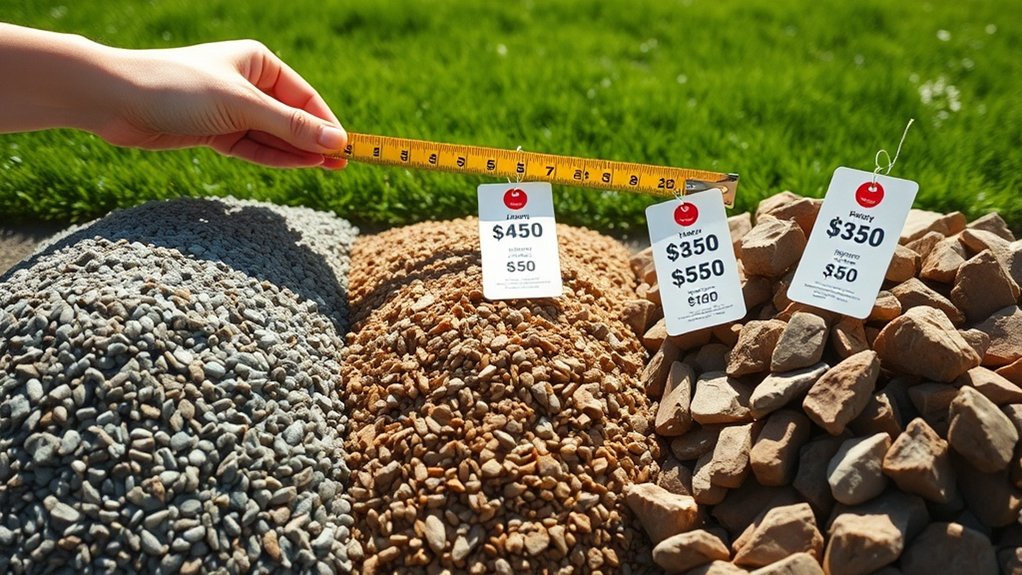
When choosing the right aggregate for your driveway, it’s important to consider the cost and availability. A cost comparison shows notable differences, often affected by regional pricing and accessibility. Gravel is the cheapest option, whereas asphalt and concrete are more expensive.
| Material | Cost per Square Foot |
|---|---|
| Gravel | £1 – £3 |
| Asphalt | £7 – £13 |
| Concrete | £8 – £18 |
| Recycled Gravel | £10 – £50 per ton |
| Delivery Fees | Varies by location |
Sourcing materials locally can lower costs and improve availability. Keep in mind that seasonal changes, particularly in colder areas, can impact both supply and pricing.
Frequently Asked Questions
How Does Climate Affect Aggregate Selection for Driveways?
Climate conditions significantly impact your choice of aggregate for driveways. In regions with freeze-thaw cycles, opt for robust aggregates like granite or limestone, as they can endure these conditions and provide lasting durability. In contrast, warmer climates necessitate aggregates that resist thermal expansion and discolouration, ensuring your driveway remains aesthetically pleasing.
Can I Mix Different Aggregate Sizes for My Driveway?
Yes, you can mix different aggregate sizes for your driveway. Just ensure the aggregates are compatible and use proper installation methods. This will help achieve good compaction, strength, and drainage, ultimately improving the driveway’s durability and performance in varying weather conditions. For example, combining larger stones for stability with smaller gravel for drainage can create a robust surface.
What Is the Best Aggregate for Heavy Vehicle Traffic?
For heavy vehicle traffic, crushed stone #411 and quarry process aggregates are ideal due to their strength and stability. These types of gravel efficiently distribute weight, preventing surface deformation and ensuring longevity under constant heavy loads.
How Often Should I Regrade My Gravel Driveway?
Regular regrading is crucial for maintaining your gravel driveway. It’s best to regrade it every spring and autumn to tackle gravel compaction and ensure a smooth surface. If your driveway sees heavy use, you may need to regrade more often to keep it in good condition and prevent further wear.
Are There Eco-Friendly Aggregate Options for Driveways?
Yes, recycled aggregates such as crushed concrete and asphalt can be used for driveways. These sustainable materials not only help reduce waste and minimise environmental impact but also provide durability and cost-effectiveness. They are excellent options for eco-friendly driveways.
Conclusion
Choosing the right aggregate size for your driveway is crucial, and it’s more important than you might think. The size of the aggregate impacts stability, drainage, and appearance, all of which are vital for your driveway’s longevity. For instance, larger aggregates provide better drainage but may not be as smooth for walking or driving. Conversely, smaller aggregates can create a more polished look but might retain water. By understanding the needs of your specific driveway, you can improve its durability and lower maintenance costs. Take the time to select the right aggregate size; it will benefit you in the long run.

Get ready to discover the top driveway design trends in Nottingham for 2025 that will transform your outdoor space—find out Read more

Unlock the secrets to perfectly matching your driveway color with your house for stunning curb appeal; discover expert tips that Read more

Discover how the choice of aggregate sourcing can transform the aesthetics of your construction projects, revealing unexpected visual possibilities.