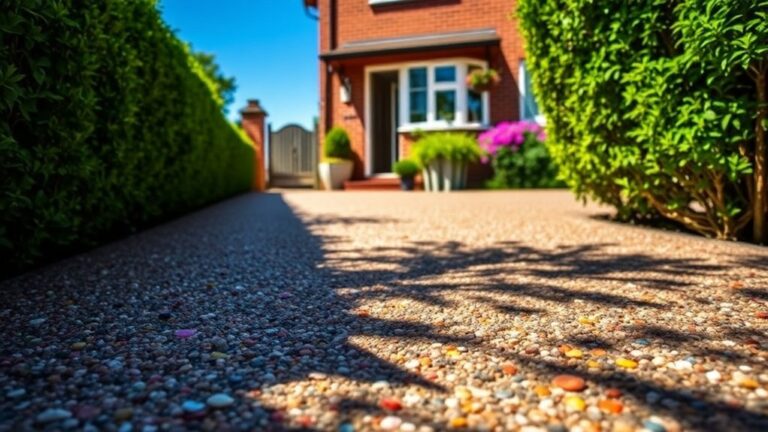

Pros and Cons of Resin-Bound Driveways
Resin-bound driveways can significantly improve your property’s appearance with their range of designs and vibrant colours. They boast durability, lasting up to 25 years, and their permeable nature helps reduce flooding by allowing rainwater to drain through. However, they do require professional installation, can be more expensive than traditional driveways, and aren’t suitable for heavy vehicles. With the right care, they are low maintenance. Consider how resin-bound driveways stack up against other materials and which specific aggregates might best suit your requirements.
Key Takeaways
- Aesthetic Appeal: Resin-bound driveways come in a variety of colours and can be designed to fit your style, making your property more attractive and helping it blend in with the surroundings.
- Durability: When properly installed and maintained, resin-bound driveways can last between 20 to 25 years and require less upkeep than traditional driveways.
- Permeability: These driveways allow rainwater to pass through, helping to reduce the risk of flooding and supporting sustainable drainage solutions.
- Installation Costs: The initial cost of installation is often higher than traditional driveways, and it requires professional expertise to ensure a smooth finish.
- Limitations: Resin-bound driveways aren’t suitable for heavy vehicles, and if drainage isn’t managed correctly, it can result in water pooling on non-permeable surfaces.
Aesthetic Appeal and Customization

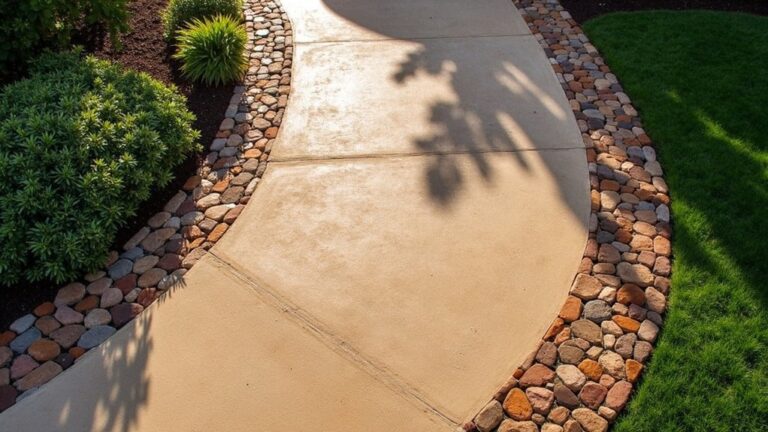
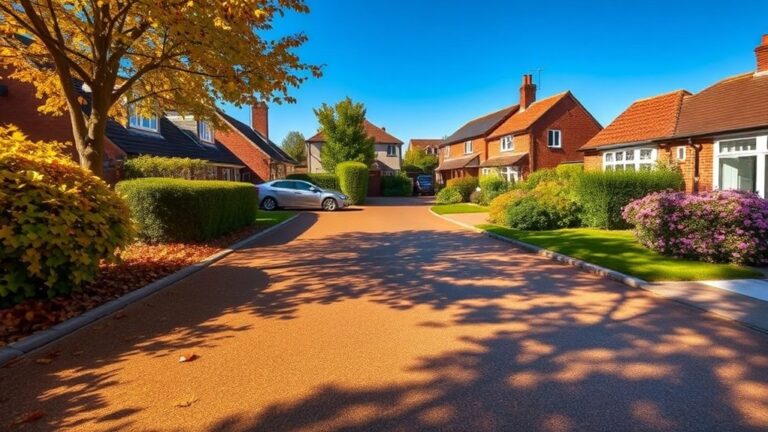
When you think about a resin-bound driveway, the aesthetic appeal and customisation options are hard to miss. You can select from a wide range of colours to perfectly match your property’s style, creating a unique surface tailored to your home’s architecture. The UV-stable resins keep colours vibrant over time, while the blend of aggregates allows for both subtle and bold shades. You can also incorporate custom patterns or motifs to reflect your personal taste and enhance visual interest. With different aggregate sizes available, you can achieve finishes that are smooth or more textured, adding depth and character. This level of customisation not only transforms your driveway but also boosts your home’s overall curb appeal, making it ideal for natural stone elegance that seamlessly blends with the environment. Additionally, the wide variety of color and texture options ensures that every homeowner can find a design that resonates with their individual style.
Durability and Longevity
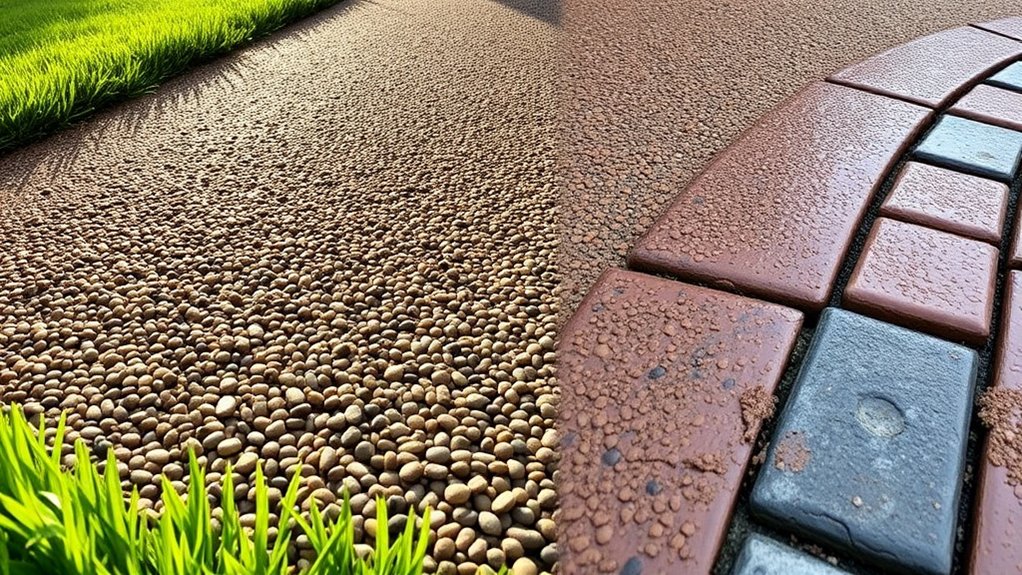
While the aesthetic charm and customisation options of resin-bound driveways are noteworthy, their durability and longevity are crucial for homeowners. With the right installation, these driveways can last 20 to 25 years or more, outlasting traditional surfaces.
Key factors that affect their durability include:
- High-quality, UV-stable resin to prevent fading
- Correct resin-to-aggregate ratio for added strength
- Installation on a well-prepared sub-base for stability
- Resistance to weather effects, accommodating ground movements
However, heavy traffic and extreme weather can shorten their lifespan. Additionally, effective drainage systems are essential for managing surface water runoff, further enhancing the longevity of the driveway. Proper mixing of resin and aggregates is crucial for maintaining durability and preventing cracking.
Regular maintenance, like cleaning and resealing, helps extend durability. By choosing quality materials and skilled installers, you’ll ensure a robust surface that stands the test of time and conditions.
Permeability and Drainage Benefits

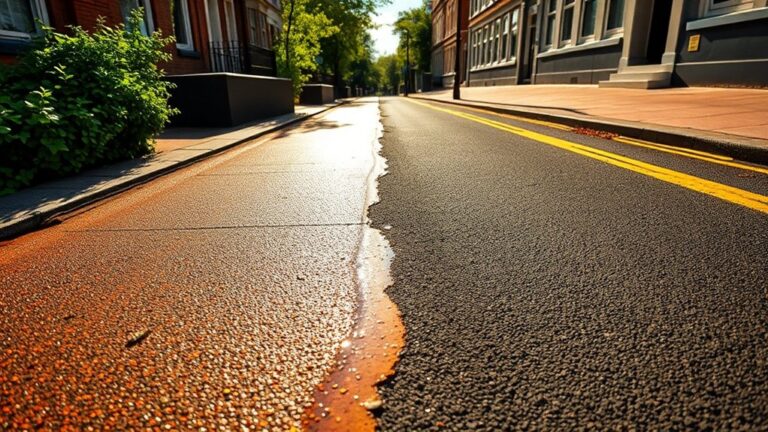
Choosing a resin-bound driveway means opting for a surface that excels in water drainage. This innovative design allows rainwater to soak through, reducing the risk of flooding and surface runoff. Additionally, its permeable surface promotes sustainable urban drainage and helps recharge groundwater supplies. By effectively managing stormwater, resin-bound driveways contribute to flood prevention, enhancing their environmental benefits.
Water Drainage Efficiency
Resin-bound driveways are highly effective for water drainage due to their permeable design, which allows water to flow through and significantly reduces surface runoff.
This modern solution employs smart drainage techniques that improve water management, especially in urban areas.
Here are some key advantages:
- Reduced Surface Runoff: Water seeps through the surface, decreasing runoff and the risk of pollution.
- Groundwater Recharge: Helps replenish groundwater, supporting local ecosystems.
- Regulatory Compliance: Adheres to Sustainable Urban Drainage Systems (SUDS) regulations, ensuring you meet legal standards.
- Low Maintenance: Fewer puddles mean less erosion and reduced upkeep.
Flood Prevention Capabilities
Resin-bound driveways are designed with flood prevention in mind. They allow rainwater to drain through their surface, significantly reducing surface water runoff by over 50%.
The gaps created by the resin-bound aggregates help water to seep in, which can delay and lessen flood peak times. This design meets Sustainable Urban Drainage Systems (SUDS) regulations, meaning your driveway not only contributes to groundwater recharge but also filters out pollutants.
With proper installation, you can expect it to remain permeable for over 20 years.
Installation Considerations and Costs
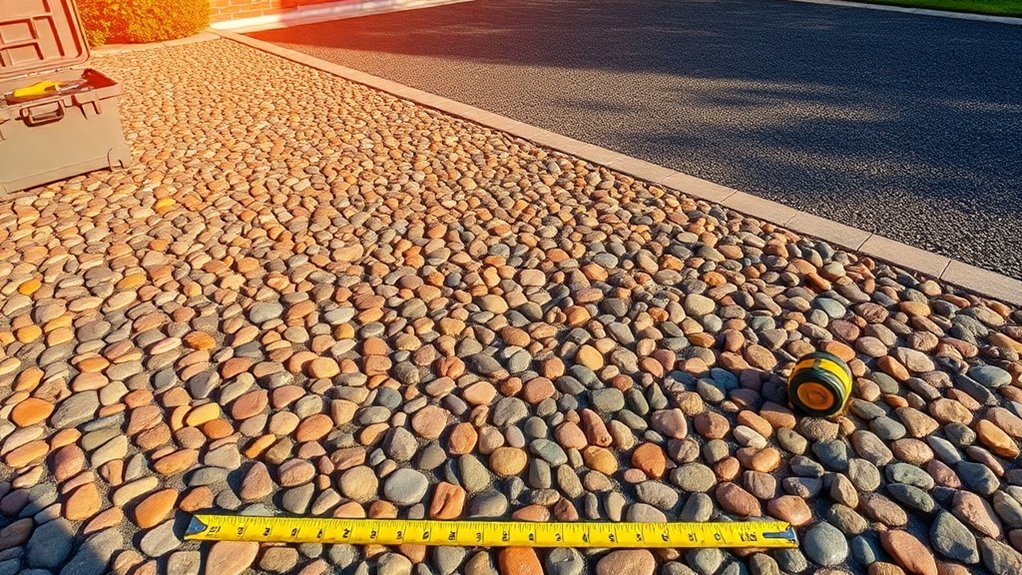
When planning a resin-bound driveway project, it’s crucial to consider installation factors and costs to ensure success. Here are some key points to keep in mind:
- Base Preparation: Excavating to around 150mm and using quality sub-base material is vital for a stable foundation.
- Material Selection: Opt for high-quality polyurethane resin to ensure the longevity of your driveway.
- Weather Conditions: Installation should ideally take place in dry weather to allow for proper curing.
- Labour and Complexity: The size of the project and how accessible the site is can significantly influence labour costs.
Maintenance Requirements and Issues
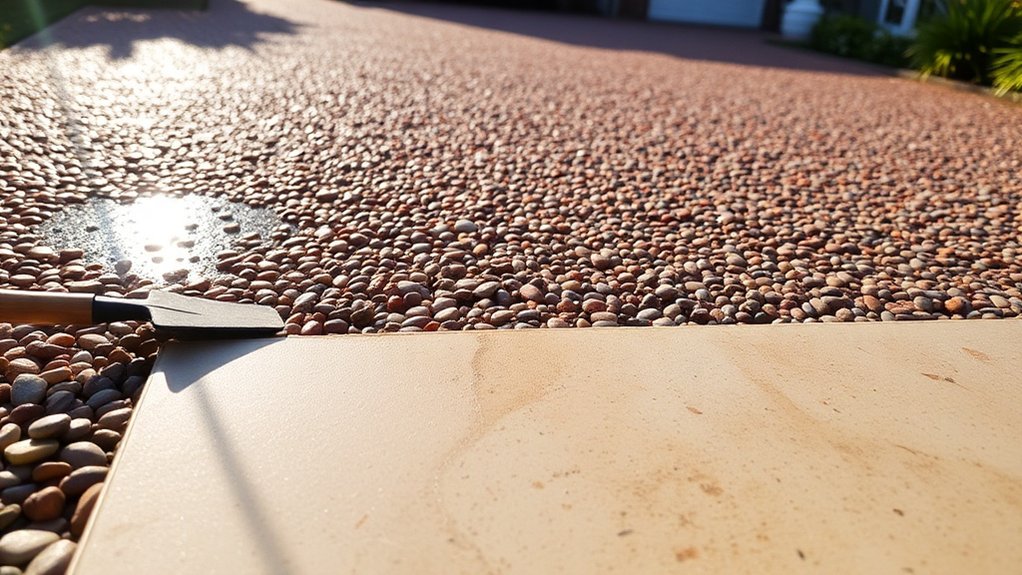
Once you’ve installed your driveway, keeping it in good condition is crucial. Regular maintenance helps prevent issues like staining and surface wear.
Sweep your driveway regularly to remove debris, and give it a good hose down each month to stop moss from growing. For tough stains, use a mild detergent and a soft brush.
During seasonal changes, clear away leaves and check for damage from frost. Look out for cracks and fading, and apply sealants or repair kits as necessary.
Weeds can still pop up, so pull them out by hand and keep an eye on the joints. Lastly, ensure drainage outlets are clear to allow water to flow freely and avoid pooling, which can weaken the surface.
Limitations and Suitability
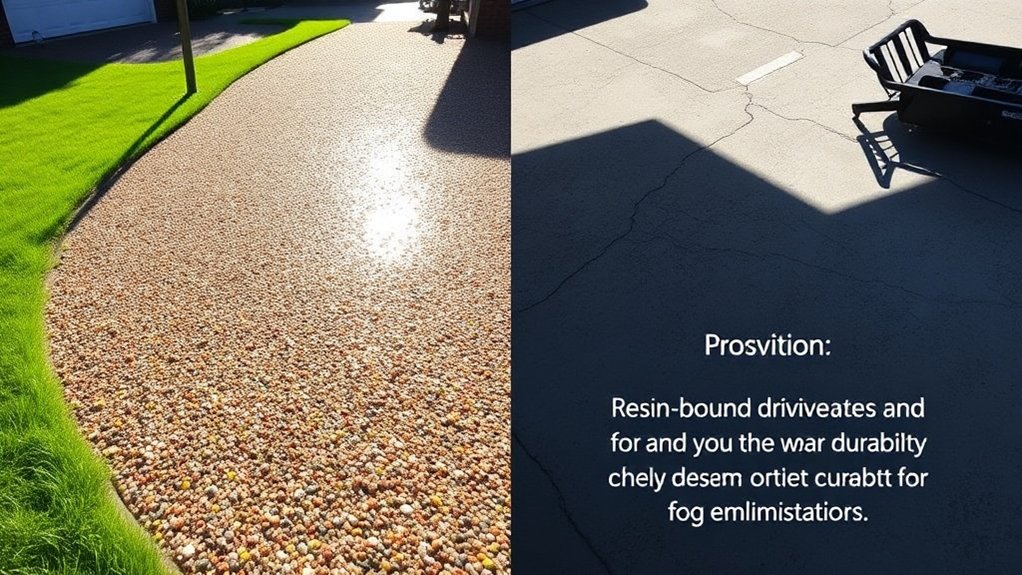
While resin-bound driveways look great, it’s important to consider their limitations and whether they’re right for your home. Here are some key points to think about:
- Professional Installation Needed: Getting a resin-bound driveway requires skilled installers; a botched job can result in an uneven surface.
- Cost Considerations: They tend to be pricier than traditional driveways, so make sure it fits within your budget.
- Weight Restrictions: These driveways aren’t suitable for heavy vehicles like lorries or HGVs, as they can’t handle the weight.
- Drainage Requirements: Proper drainage is crucial; laying them on non-permeable surfaces can cause water to pool.
Weigh these factors carefully to determine if a resin-bound driveway is the right choice for you.
Environmental Impact
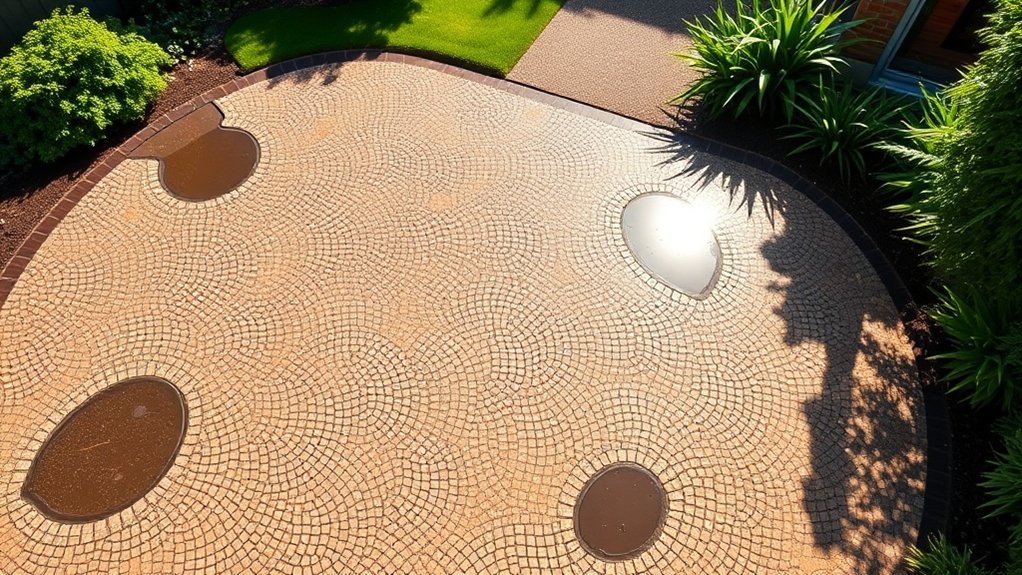
Choosing a resin-bound driveway means opting for a surface that supports Sustainable Drainage Systems (SuDS).
This allows rainwater to permeate through the surface, reducing runoff and lowering the risk of flooding.
Additionally, resin-bound driveways use eco-friendly materials, helping to minimise your environmental impact.
Sustainable Drainage Systems
As urban areas expand, effective water management is essential, and resin-bound driveways provide a sustainable option that aligns with Sustainable Drainage Systems (SuDS).
Their design enhances drainage and encourages water infiltration, helping to reduce urban flooding.
- Allows rainwater to seep through, minimising pooling and runoff
- Reduces pressure on local drainage systems, lowering flood risks
- Naturally filters rainwater, enhancing groundwater quality
- Supports local water cycles by promoting infiltration into the ground
Reduced Water Runoff
With urban flooding and water management becoming ever more pressing issues, resin-bound driveways offer a practical solution to significantly reduce water runoff.
Their porous design allows rainwater to permeate the surface, replenishing groundwater instead of causing floods in urban areas. Compared to traditional pavements, these driveways can reduce surface runoff by over 50%, enhancing drainage efficiency and easing the strain on drainage systems during heavy rain.
When properly formulated, they maintain their strength while improving water infiltration. This not only lowers flood risks but also protects local waterways by minimising the transport of pollutants, making resin-bound driveways a smart choice for sustainable living in the UK.
Eco-Friendly Materials Used
Resin-bound driveways are a great choice for eco-conscious homeowners. They combine natural stone aggregates with synthetic resin, resulting in a strong, permeable surface.
Here are some notable environmental benefits:
- They use recycled materials, which helps reduce the need for new resources.
- Locally sourced stones cut down on transport emissions and benefit local ecosystems.
- The UV-stable polyurethane resin boosts durability, meaning fewer replacements and less waste.
- Their permeability allows for groundwater recharge, which is essential for local wildlife.
Comparison With Other Paving Materials

When assessing various paving materials, it’s important to consider not just the cost, but also long-term performance and environmental impact.
Resin-bound driveways may have a higher initial price, but they provide better aesthetics and sustainability compared to concrete and block paving. Unlike concrete, resin-bound surfaces are permeable, which helps reduce flood risk and complies with Sustainable Urban Drainage Systems (SuDS) regulations.
Additionally, resin-bound driveways can easily incorporate design trends, enhancing your property’s appearance. While concrete is strong under heavy loads, it doesn’t offer the same flexibility or UV resistance as resin.
On the other hand, block paving can attract weeds and demands regular maintenance, making resin-bound a more practical and low-maintenance choice for your outdoor areas.
Popular Aggregate Choices
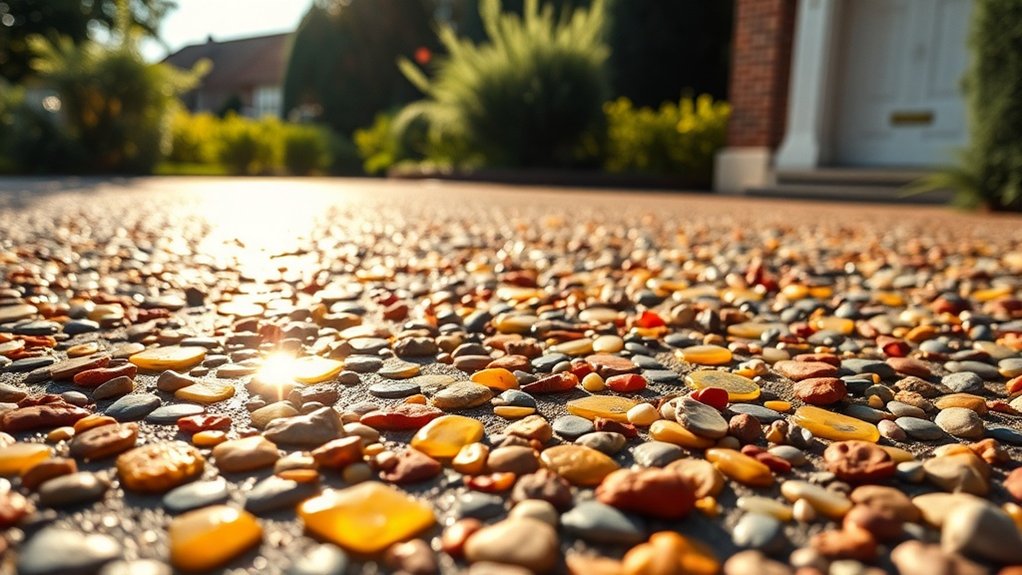
The choice of aggregates is crucial for both the performance and appearance of your resin-bound driveway.
With a variety of aggregate types available, you can customise your driveway to suit your style. Here are some popular options:
- Granite: Tough and durable, ideal for areas with heavy footfall.
- Quartz: Offers a vibrant look with a range of colour choices.
- Flint: Features unique textures and subtle colour variations.
- Limestone: A softer alternative, perfect for a more natural aesthetic.
These aggregates come in different colours, enabling you to create striking designs or blend seamlessly with your surroundings.
Using high-quality aggregates ensures a strong bond with the resin, resulting in a sturdy and attractive driveway that endures over time.
Installation Process Overview
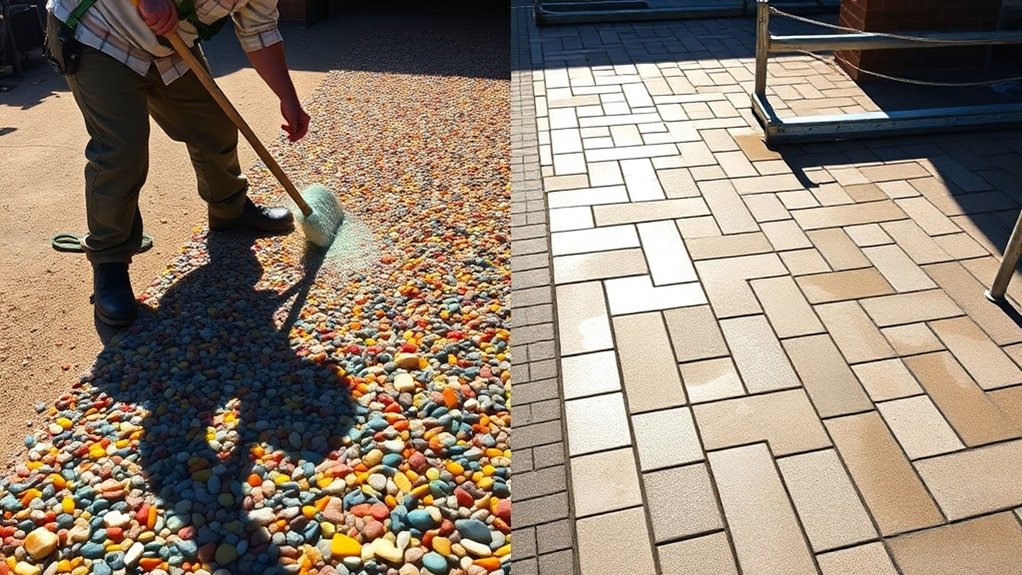
Installing a resin-bound driveway requires several essential steps to ensure a long-lasting and attractive finish. Start with a thorough site survey to evaluate the area and discuss your design preferences.
Next, prepare the site by excavating around 150mm to create a solid sub-base. You can use MOT type 1 stone or, if suitable, an existing concrete base.
Then, mix the resin and aggregate in a typical 3:1 ratio, ensuring that moisture doesn’t interfere with the curing process. Pour the mixture evenly, using a trowel to achieve a consistent thickness, and compact it with a roller.
Allow the surface to cure for 24 hours, then check for uniformity and proper drainage.
Following these steps will help ensure your driveway is both durable and visually appealing.
Long-term Value and Investment
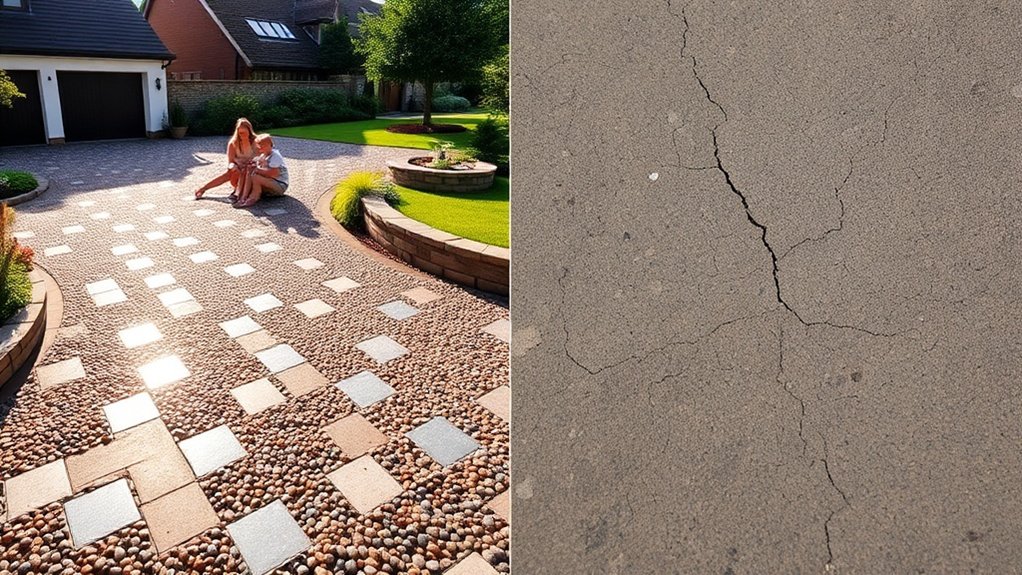
When considering a resin-bound driveway, it’s important to look beyond immediate costs and think about the long-term benefits it offers to your property.
With its outstanding durability and minimal maintenance needs, this investment can significantly boost your property’s value while saving you money in the long run.
For example, a well-installed resin-bound driveway can enhance your home’s curb appeal, making it more attractive to potential buyers.
Ultimately, the initial cost is often offset by the lasting performance and aesthetic improvements it provides.
Increased Property Value
Investing in a resin-bound driveway can significantly increase your property’s long-term value, typically raising market prices by 5% to 10%, and in some instances, even up to 20%.
This boost is due to several factors that enhance your home’s appeal and attract potential buyers:
- Improved curb appeal with a range of custom designs.
- Better functionality, particularly in properties with limited parking.
- Durable surfaces that are easy to maintain.
- Quicker sales, which often lead to a higher perceived value.
A resin-bound driveway isn’t just a practical choice; it’s an investment in your property’s future.
Cost-Benefit Analysis
A resin-bound driveway enhances your property’s appearance and is a smart long-term investment.
In the UK, installation costs range from £80 per square metre, comparable to premium paving options. While professional expertise is crucial to avoid costly mistakes during installation, the benefits outweigh these challenges.
With minimal maintenance and a lifespan of 15 to 20 years, resin driveways save you money in the long run by preventing issues like potholes and weed growth.
This combination of lower upkeep costs and improved curb appeal makes the investment worthwhile, effectively offsetting the initial costs.
Long-Term Durability
When it comes to driveways, few options can match the long-term durability of resin-bound surfaces, making them a top choice for homeowners looking for lasting value.
These driveways typically last between 15 to 25 years, influenced by several key factors:
- Material quality: Using high-grade aggregates and UV-stable resin ensures strength and longevity.
- Installation techniques: A well-prepared sub-base is crucial to prevent cracking and enhance durability.
- Weather resistance: Resin-bound driveways can handle temperature changes and resist wear from the elements.
- Routine upkeep: Regular maintenance, such as cleaning and resealing, helps to maximise your investment and extend its lifespan.
Frequently Asked Questions
Can Resin-Bound Driveways Be Installed in Winter Conditions?
Yes, you can install resin-bound driveways in winter, but it’s important to keep an eye on the cold weather conditions. Ensure temperatures remain above 5 degrees Celsius and check moisture levels to guarantee proper curing and durability.
How Does Temperature Affect Resin-Bound Driveway Installation?
Temperature significantly affects the installation of resin-bound driveways. It’s essential to pay attention to temperature changes and aim for installation when it’s between 5°C and 25°C. This range ensures proper curing, which helps prevent brittleness and enhances the durability of the driveway, providing long-lasting results. For instance, installing in colder weather can lead to a weaker finish, while too much heat can cause the resin to cure too quickly, affecting the overall quality.
Are Resin-Bound Driveways Suitable for Sloped Areas?
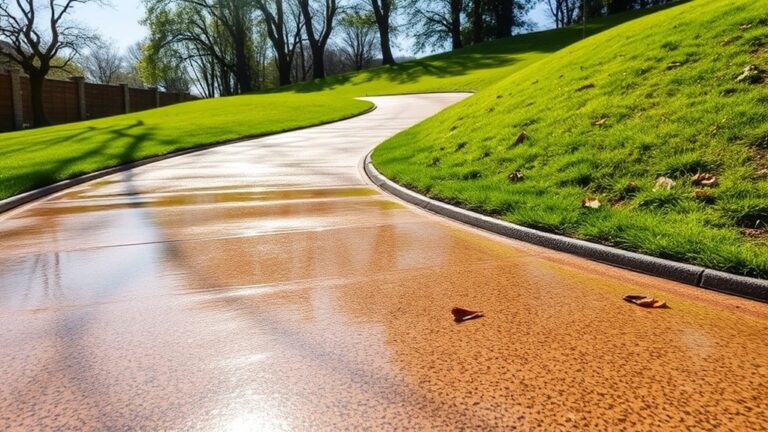
Yes, resin-bound driveways are suitable for sloped areas. They offer excellent stability and drainage, allowing rainwater to flow through the textured surface. This helps keep your driveway safe, even when vehicles are navigating the incline.
What Colors Are Available for Resin-Bound Driveways?
You have a variety of resin colours available for your driveway. Consider warm shades like Golden Quartz, modern greys such as Silver Granite, or striking options like Charcoal to complement the look of your home.
Can I Install Resin-Bound Driveways Myself?
Yes, you can install resin-bound driveways yourself if you have the right preparation and skills. Ensure you have a solid base before starting, and pay close attention to the mixing ratios during the resin application for a long-lasting and attractive finish. For example, if you’re laying a driveway for your car, make sure the base is level and well-compacted to prevent any future issues.
Conclusion
In conclusion, resin-bound driveways combine aesthetic appeal with practicality. They are durable and offer good drainage, but it’s important to consider installation costs and maintenance in relation to your budget and lifestyle. Think of it as investing in a quality piece of furniture; while the upfront cost may be high, it pays off in the long run with lasting benefits. By making an informed choice, you can boost your property’s value and enhance its curb appeal for many years.

How to effectively repair cracks in your concrete driveway hinges on understanding the right techniques; discover the essential steps to Read more

Should you choose a stamped concrete driveway? Discover the benefits and drawbacks that could shape your home's future appeal.

Compare resin and concrete driveways to discover which option provides superior durability and value, but the answer may surprise you.