
How To Widen A Driveway Without Concrete
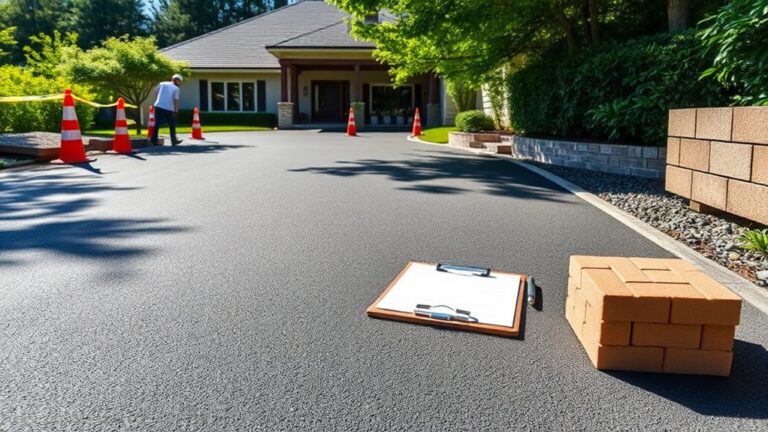
To widen your driveway without concrete, start by measuring the current width and considering local zoning laws. For materials, choose between gravel or permeable pavers, which enhance both functionality and aesthetics. Prepare the expansion area by clearing debris and evaluating the soil’s condition. If you opt for gravel, guarantee proper levelling and compact successive layers for stability; if using pavers, lay a crushed stone base followed by sand before setting the pavers. Maintain the edges with materials that match your landscape design. Proper maintenance will keep your new driveway in top shape, and exploring further will uncover additional customisation options.
Assessing Your Space Needs
Before you begin expanding your driveway, it’s important to evaluate how much additional space you actually need. Start by considering the primary function of the expansion. Is it to accommodate more vehicles, or perhaps to facilitate easier movement around parked cars?
Once you’ve pinpointed the purpose, you can move on to the specifics of driveway design and space enhancement. Measure the current dimensions of your driveway and determine the minimum required width to achieve your goals. Standard parking spaces are typically 9 to 10 feet wide.
However, if you’re dealing with a tight space, precision in your measurements and design becomes significant. Don’t just think width; also consider the turning radius required for vehicles to maneuver comfortably. This aspect is often overlooked but is crucial for functional driveway design.
Additionally, it’s important to check local zoning laws and homeowners’ association regulations, as these may influence the maximum allowable width for your driveway expansion.
Next, sketch a scaled diagram of your existing driveway alongside the proposed expansion. This visual aid not only helps in foreseeing potential challenges but also in making the most of every inch of available space efficiently.
Choosing the Right Materials
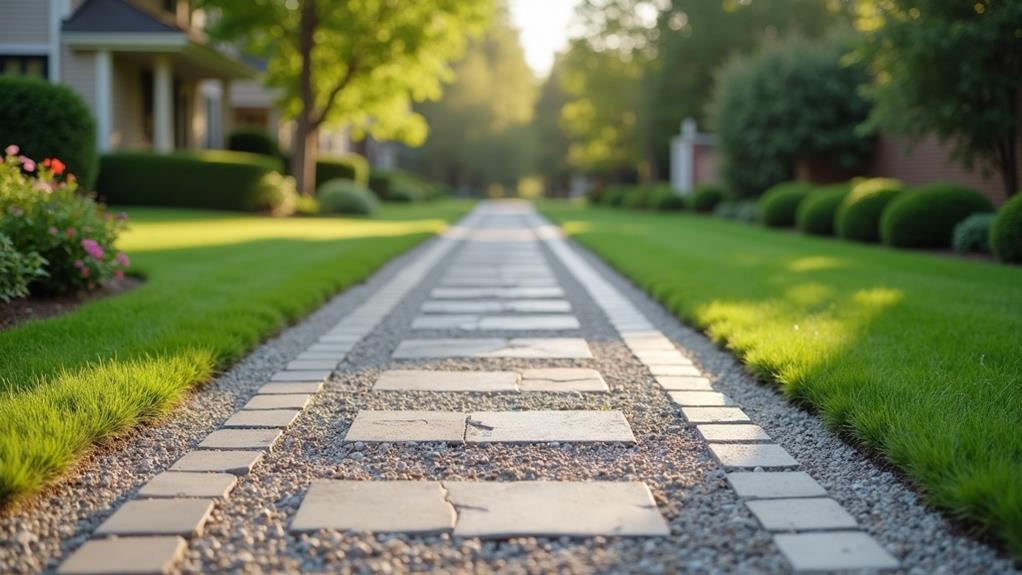
After evaluating your space needs, selecting the right materials for your driveway expansion becomes vital. You’ll want to focus on materials that not only enhance the aesthetic continuity with your existing driveway but also factor in landscape integration and drainage solutions.
For landscape integration, consider materials that complement or match your current driveway and surrounding garden. Gravel, for instance, can blend seamlessly with most settings and is available in various colors and sizes. It’s important to choose a gravel type that compacts well to prevent shifting and enhances stability.
For effective drainage solutions, permeable pavers are an excellent choice. These pavers allow water to percolate through the surface and into the ground beneath, reducing runoff and preventing water accumulation that can lead to surface damage or foundation issues.
Permeable pavers come in various materials, including plastic grids that you fill with gravel or grass, promoting eco-friendly drainage. Additionally, these paving options are recognised for their environmental benefits, such as reducing water pollution and supporting sustainable water management practices.
Additionally, consider the durability and maintenance requirements of these materials. While gravel is low-cost and easy to install, it may require periodic top-ups.
Permeable pavers, though initially more expensive, offer greater longevity and minimal maintenance.
Preparing the Expansion Area
To prepare the expansion area for your driveway, start by clearing away any existing vegetation, debris, or obstacles that could interfere with construction. This initial step guarantees a clean and accessible workspace, setting a solid foundation for the subsequent phases of your project.
Once the area is cleared, it’s essential to conduct a detailed assessment to integrate the new section seamlessly with the existing landscape. Here are the key steps you’ll need to follow:
- Evaluate Soil Condition: Test soil compaction and composition to determine if additional preparation, like adding a sub-base layer, is necessary. It’s important to assess the soil type as different conditions can greatly affect the stability and support of the expanded driveway area.
- Plan for Drainage: Confirm that the expanded area doesn’t disrupt existing drainage patterns; consider installing additional drainage solutions if required.
- Mark the Area: Use stakes and string or spray paint to define the exact dimensions of the expansion.
- Check for Utilities: Locate and mark any underground utilities to avoid damaging them during construction.
- Level the Ground: Create a level base, adjusting for any slopes to maintain proper drainage and seamless landscape integration.
Installing Pavers for Wider Driveways

Having prepared your expansion area, the next step involves installing pavers to achieve a wider driveway. Begin by selecting the right type of pavers that complement your existing driveway design. Consider factors like size, color, and material to guarantee a seamless integration and aesthetic appeal. For those aiming for a unique touch, you might find design patterns resembling stone or brick particularly appealing.
You’ll want to start the paver installation by laying down a sturdy base. Typically, this consists of a crushed stone layer, about 4 to 6 inches deep, compacted properly to provide a stable foundation. Over this, spread a layer of sand, approximately 1 inch thick, to help in leveling and setting the pavers.
Place the pavers closely together starting from one edge of your driveway, working towards the other side. Use a rubber mallet to tap each paver firmly into place. Make sure each piece is level with the next; use a spirit level for accuracy. This step is essential in guaranteeing a uniform driveway surface.
Once all pavers are installed, spread additional sand over the top and sweep it into the gaps between the pavers to secure them in place. This interlocking effect not only enhances stability but also contributes to the overall strength and durability of the driveway.
Using Gravel to Widen Driveways

Expanding your driveway using gravel not only enhances accessibility but also adds a rustic charm to your property. When selecting gravel, consider the variety of gravel types available, each offering different benefits regarding durability and appearance.
It’s vital to choose a type that complements your existing driveway and supports the weight of vehicles. For instance, opting for crusher run can provide excellent compaction and stability, which are essential for a driveway that needs to withstand regular vehicle traffic.
Here are key steps to effectively widen your driveway with gravel:
- Choose the Right Gravel: Opt for crushed stone or pea gravel for better compaction and stability. Angular gravel tends to lock together, reducing displacement under car tires.
- Prepare the Site: Remove any grass and topsoil where you’ll extend the driveway. Level the area to prevent uneven surfaces.
- Implement Drainage Solutions: Install a slight slope away from your home to direct water runoff. Consider adding a permeable landscape fabric underneath the gravel layer to enhance drainage and prevent weed growth.
- Spread and Compact the Gravel: Lay the gravel in layers, compacting each before adding the next to guarantee a solid, stable surface.
- Edge the Driveway: Use steel, wood, or stone edging to keep the gravel contained and maintain the shape of your driveway.
Implementing these steps will guarantee a functional and aesthetically pleasing driveway extension.
Maintaining Your Expanded Driveway

Once your driveway expansion is complete, regular maintenance becomes essential to preserve its condition and functionality.
You’ll need to focus on integrating effective drainage solutions to prevent water accumulation that can erode gravel and destabilise your driveway. Start by ensuring that the slope of your driveway facilitates proper water runoff. Additionally, consider installing French drains or channel drains at strategic locations, especially where water tends to pool.
Next, regular upkeep of the gravel surface is vital. You’ll need to rake the gravel periodically to maintain an even surface and prevent the formation of ruts and potholes. It’s advisable to add a new layer of gravel annually or biennially, depending on usage and weather conditions, to replenish any displaced material and maintain proper thickness.
Don’t overlook the importance of landscape integration. This involves bordering your driveway with edging materials such as steel, wood, or stone to keep the gravel contained and enhance aesthetic appeal.
Additionally, selecting low-growing, hardy plants for the driveway borders can prevent soil erosion and complement your home’s overall landscaping.
Conclusion
Now that you’ve navigated widening your driveway, diligently maintain your masterpiece by monitoring and managing materials meticulously. Regularly rake gravel regions and reposition any pavers that shift. This strategic upkeep guarantees enduring enhancement and functionality. Whether using pavers or gravel, your expanded driveway not only meets your spatial needs but also adds aesthetic appeal. Keep up with consistent care, and your driveway will deliver durability and delight for decades.

The Dilemma of Homeowners One of the most common and frustrating issues that homeowners face is driveway cracks. These cracks Read more

We all have an idea of how we want our driveways to look; whether it's the feel of a smooth Read more
We all know that the driveway is one of the most important features of any home. It sets the tone Read more