
Is It Illegal To Have A Drive Without Lowering Your Kerb
Driving over a footway without a lowered kerb is illegal under the Highways Act 1980. You must get permission from your local council before installing a dropped kerb. If you don't comply, you risk facing fines that can range from hundreds to over £1,000, as well as potential legal action. Additionally, driving over an unlowered kerb poses safety hazards, especially for pedestrians. It's crucial to adhere to local regulations not only to avoid penalties but also to guarantee public safety. There's more to know about the steps you should take for compliance and safety.
Key Takeaways
- Driving over footways without a dropped kerb is illegal under the Highways Act 1980.
- Council permission is necessary before installing a dropped kerb for legal driveway access.
- Non-compliance can result in fines, repair costs, and potential civil lawsuits for accidents.
- Dropped kerbs enhance safety and accessibility for pedestrians, especially the elderly and disabled.
- Regular maintenance is essential to ensure compliance and prevent hazards from damaged kerbs.
Legal Basis for Dropped Kerbs
Understanding the legal basis for dropped kerbs is essential for safe and compliant driving. Driving over a footway without a dropped kerb is illegal and breaches the Highways Act 1980. This act explicitly prohibits driving over pavements or verges that lack an approved dropped kerb.
If you ignore this rule, you risk enforcement action, which can include financial liabilities for damage to the footway or injuries to pedestrians. Additionally, if a dropped kerb was installed improperly, you may be responsible for rebuilding it at your own cost.
Kerb construction plays a critical role in ensuring safe access to properties. The dropped kerb must be designed to withstand the weight of domestic vehicles, guaranteeing durability and safety.
Regular kerb maintenance is also important, as it prevents hazards that may arise from damage or deterioration. Remember, non-compliance can lead to severe consequences, including penalties and potential collisions with pedestrians.
Always guarantee visibility at access points to maintain safety for both pedestrians and vehicles. By adhering to these legal requirements, you contribute to a safer environment for everyone on the road.
Importance of Council Permissions
Obtaining council permission is a vital step before installing a dropped kerb. The local Council, as the highway authority, must own the road and footpath for your application to be valid.
You'll need to pay a non-refundable fee during the application process, which includes a site visit and inspection by a Highway Technician. The Council typically provides a decision within a specified timeframe, often around 21 days.
Your proposal must meet the Council criteria, which assess the impact on street aesthetics and safety. They'll consider factors like proximity to road junctions, visibility for safe pavement crossing, and any obstacles such as trees or street furniture.
Additionally, your garden must be deep enough to accommodate a proper parking space without obstructing the footpath.
If your property is on a classified road or in a conservation area, planning permission might also be necessary. Remember, if you rent or lease your home, you'll need to secure permission from your landlord or landowner.
Following these guidelines guarantees that your dropped kerb installation is compliant and safe for traffic and pedestrians.
Penalties for Illegal Access
Illegal access to kerbs without a dropped kerb can lead to severe penalties. If you drive over an undropped kerb, you risk being fined, which can vary widely by jurisdiction—from a few hundred pounds to over £1,000.
Repeated violations may escalate the penalties, potentially requiring you to appear in court and face even higher fines, such as £600 for ignoring prior notices.
Local councils enforce these regulations through various mechanisms, including monitoring and responding to reports of illegal crossings. If you're caught, you could incur financial repercussions not just from fines but also from potential damage to your vehicle and public infrastructure.
Damage to kerbs can lead to additional charges and maintenance costs for local authorities, further complicating your situation.
Councils often send warnings before fines are imposed, but ignoring these can amplify your financial burden. It's vital to be aware of these enforcement mechanisms and the consequences of illegal access to avoid unnecessary costs and legal issues.
Always consider the long-term implications of accessing your drive without the proper permissions.
Safety Concerns and Liability
Driving over an unlowered kerb not only leads to potential legal penalties but also raises serious safety concerns and liability issues.
One of the most pressing dangers is the increased risk of pedestrian hazards. When you drive over an unlowered kerb, you put pedestrians, particularly those with lower mobility or using mobility aids, at risk. Obstacles like unlowered kerbs can obstruct pedestrian paths and complicate road crossings, creating mobility obstacles for those with pushchairs or wheelchairs.
Additionally, driving over these kerbs can cause serious damage to utility apparatus beneath the footway, which poses health and safety risks. Damage to cables and pipes might lead to costly repairs and disruptions to essential services, raising concerns for property owners and local authorities.
From a liability perspective, you could face legal consequences for any accidents or damage caused by your actions. Property owners may be held responsible for collisions with pedestrians or damage to the footway and utilities. This could lead to fines, repair costs, and even civil lawsuits from affected parties, making it vital to comply with regulations regarding lowered kerbs.
Practical Benefits of Dropped Kerbs
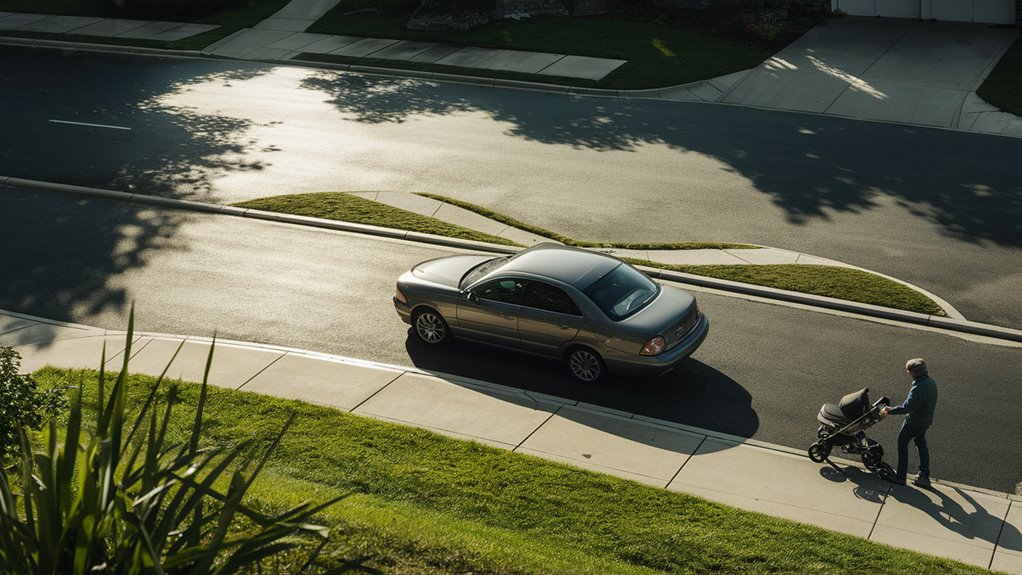
Dropped kerbs offer several practical benefits that enhance both vehicle access and pedestrian safety. First and foremost, they allow you to drive across public pathways legally, enabling your vehicle to enter or exit your property without damaging tyres or suspension. This convenience is especially valuable for homes with on-road parking, as it reduces parking congestion and enhances your property's appeal and value.
Accessibility enhancements are vital for individuals with disabilities and the elderly. Dropped kerbs provide smooth passages between pavements and roads, making it easier for wheelchair users and those with mobility aids to navigate urban areas.
By eliminating barriers like high kerbs, you promote independence and improve access to public transport. Additionally, the installation of dropped kerbs must comply with local highway regulations, ensuring that safety and accessibility standards are upheld.
Furthermore, dropped kerbs foster community integration by demonstrating a commitment to supporting all individuals' needs. They create a more inclusive society, ensuring equal access for everyone.
Enhanced safety is also a noteworthy benefit, as they reduce tripping hazards and facilitate easier navigation for pedestrians, including those with prams or walking difficulties.
Local Authority Variations
Understanding local authority variations is essential when considering a dropped kerb installation. Each local authority has its own regulations that can greatly impact your planning processes. You need to be aware of these variations, especially if your property is in a conservation area or classified road.
| Situation | Planning Permission Required? | Consequences of Non-Compliance |
|---|---|---|
| Conservation Area | Yes | Enforcement action and restoration to original state |
| Classified Road | Often Yes | Financial liabilities for unauthorized work |
| Residential Properties | Depends on local regulations | Possible retrospective licence needed |
Before you proceed, consult with your local planning authority or a qualified town planner to determine if planning permission is necessary for your specific situation. You'll likely need to fill out a householder application form and provide supporting documentation. Keep in mind that local authorities may charge for reviewing your application, so it's essential to follow all steps carefully. Non-compliance can result in considerable issues, including the need to restore your kerb to its original state, making it crucial to understand and adhere to local regulations.
Recommendations for Property Owners

When considering a dropped kerb, it's essential for property owners to familiarize themselves with the specific regulations and responsibilities associated with driveway maintenance and usage.
First, verify your driveway complies with local regulations to avoid legal issues. Driving over a kerb without a dropped kerb could make you liable for damage to the kerb or utilities beneath it.
You must maintain a clear path for both pedestrians and vehicles. Regular driveway maintenance includes keeping the area accessible, identifiable, and free of obstructions. Clear signage can help prevent confusion and potential conflicts with neighbors.
If your driveway is shared, consider establishing a written easement agreement with your neighbors to outline maintenance responsibilities and usage rights. This can help avoid disputes and strengthen neighborly relations.
Before making any changes or installing a new driveway, remember that permits are often necessary. Hiring a professional land surveyor can ensure compliance with local regulations regarding property boundaries.
Agreeing to a Hold Harmless Agreement protects you from claims related to the driveway installation.
Conclusion
To conclude, having a drive without a lowered kerb is illegal and can lead to fines of up to £1,000. Notably, around 30% of all reported accidents involve vehicles struggling to navigate high kerbs, highlighting the safety risks involved. Obtaining council permission for a dropped kerb isn't just a legal requirement; it greatly enhances accessibility and reduces hazards. For property owners, investing in a proper dropped kerb isn't just smart—it's essential for compliance and safety.

The Dilemma of Homeowners One of the most common and frustrating issues that homeowners face is driveway cracks. These cracks Read more

We all have an idea of how we want our driveways to look; whether it's the feel of a smooth Read more
We all know that the driveway is one of the most important features of any home. It sets the tone Read more