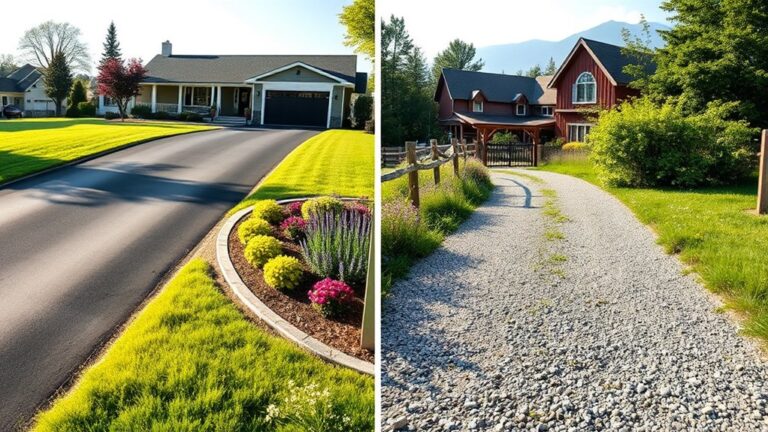

How To Build A Green Driveway
To build a green driveway, you’ll first need to assess your space, considering the topography and soil type to guarantee effective drainage and slight environmental impact. Opt for sustainable materials like permeable pavers or recycled aggregates, which allow rainwater to filter through, reducing runoff and replenishing groundwater. During installation, use a geotextile fabric beneath the pavers for added stability and filtration. Design your driveway with curves to navigate around natural features, lessening disruption to the existing ecosystem. Regular maintenance, such as cleaning and drainage inspections, will keep it functional and environmentally friendly. Exploring all these aspects will reveal additional insights into creating an effective green driveway.
Assessing Your Space
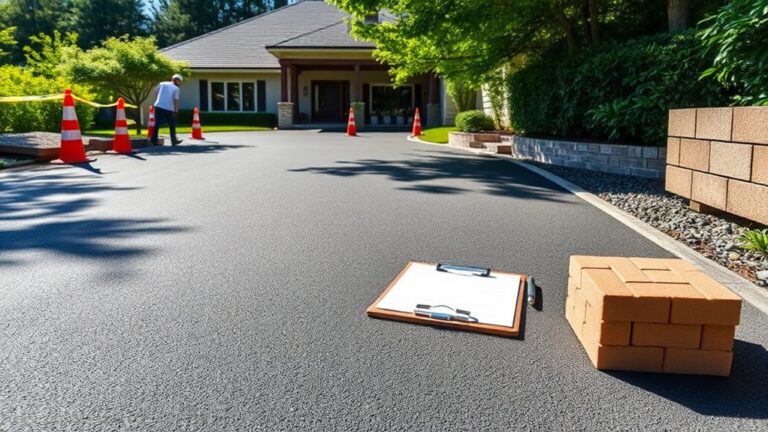
Before planning your green driveway, you need to thoroughly assess your space. Start by analysing the topography of your land. Is it flat or sloped? This will affect your choice of drainage solutions, vital in preventing runoff and ensuring your driveway complements the natural environment.
Consider integrating a swale or French drain system to manage water effectively, guiding it away from surfaces where it could cause erosion or pooling.
Next, evaluate the soil type. Is it sandy or clay-heavy? Soil composition influences how well your area can support eco-friendly plants and absorb water. For clay-heavy soils, you might need to amend the soil or consider more robust drainage solutions to prevent water logging.
Additionally, using permeable paving can provide an environmentally friendly solution by filtering stormwater and enhancing local ecosystems.
Don’t overlook the local climate. If you’re in a region that experiences heavy rainfall, your planning needs to include resilient features that manage excess water without compromising the driveway’s structural integrity.
Choosing Sustainable Materials

Selecting the right materials is essential for constructing a green driveway that’s both durable and environmentally friendly.
You’ll want to focus on options that enhance sustainability without compromising on quality. Here are three key materials to evaluate:
1. Permeable Pavers
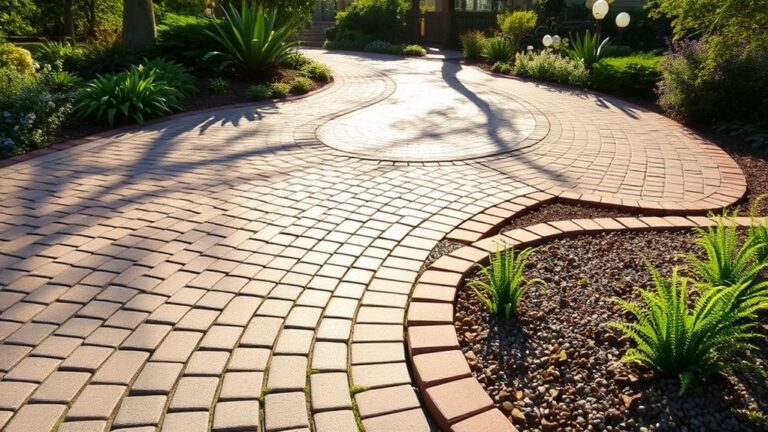
Permeable pavers are a top choice for green driveways. They allow rainwater to seep through, reducing runoff and replenishing groundwater.
These pavers come in various materials, including recycled plastic and concrete, proving that durability doesn’t have to sacrifice eco-friendliness.
2. Recycled Aggregates
Using recycled aggregates instead of freshly quarried stone is a fantastic way to lessen your environmental impact.
These aggregates, made from crushed concrete or reclaimed asphalt, provide a strong foundation while helping to reduce landfill waste. Their use decreases the demand for virgin materials, conserving natural resources.
3. Natural Stone and Local Sourcing
Opting for natural stone sourced locally reduces transportation emissions, making it a sustainable choice.
Additionally, eco-friendly sealants can protect these materials without harmful chemicals, preserving the environment and extending the lifespan of your driveway.
Furthermore, such materials often contribute to effective drainage management that reduces the strain on traditional sewer systems and lessens flood risks.
Designing the Layout
When designing the layout of your green driveway, contemplate how the placement impacts both functionality and environmental sustainability. You’ll want to integrate layout aesthetics that not only enhance the visual appeal but also promote eco-friendly patterns.
Think about the natural flow of your landscape and how you can preserve existing greenery and natural features. This approach reduces disruption to the local ecosystem and supports water drainage naturally. Incorporating soakaways or rain gardens within the layout can greatly boost your driveway’s ability to manage stormwater effectively.
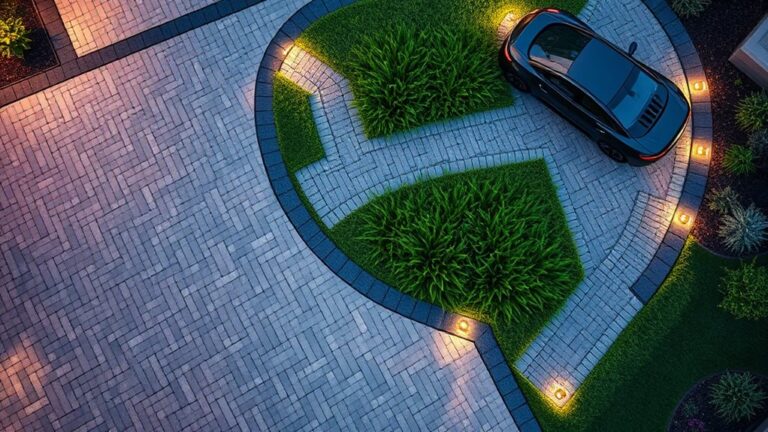
Choosing a curved design rather than a straight path can help you navigate around mature trees or garden beds, lessening the need for extensive land alterations. It’s also crucial to ponder the driveway’s orientation; aligning it to amplify permeable surfaces can greatly improve water absorption and lessen runoff.
Incorporate materials that complement the surroundings while maintaining durability. For instance, using grass pavers, gravel, or pervious concrete allows rainwater to seep through, reducing erosion and the heat island effect.
You can also explore the use of recycled materials to further lessen the environmental footprint.
Lastly, think about future access needs and verify that the driveway configuration accommodates them without sacrificing green features. Planning with innovation and foresight guarantees your driveway is both aesthetically pleasing and environmentally responsible.
Preparing the Ground
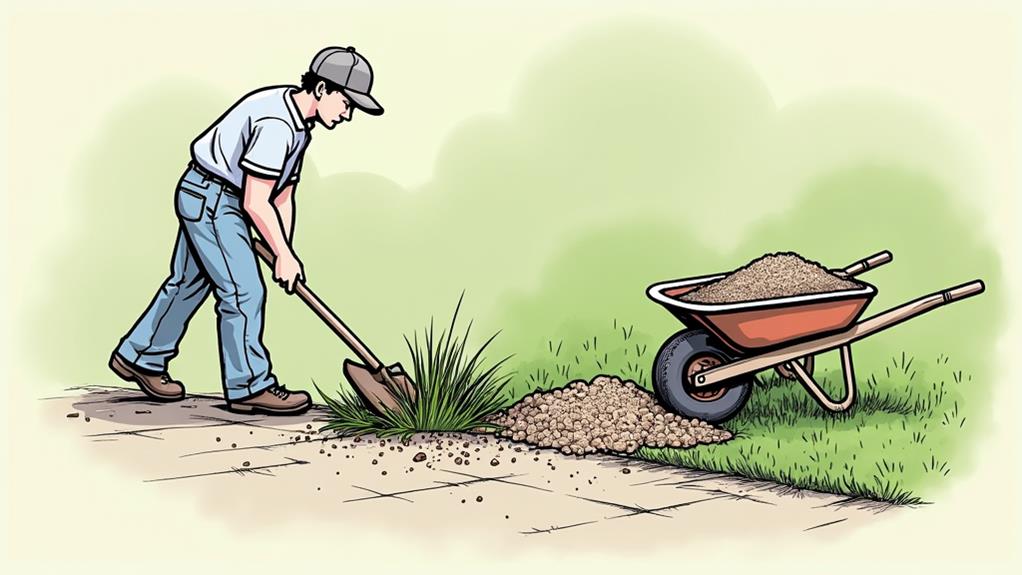
How will you guarantee that your green driveway begins on solid ground? Ensuring the foundation of your driveway is robust involves meticulous preparation. Before you lay down any materials, the ground beneath must be thoroughly prepared to support your sustainable vision.
Here’s how you can prepare the ground effectively:
- Conduct Soil Testing: Begin by testing the soil’s composition and pH level. This step will help you understand the soil’s natural propensity for drainage and support. Depending on the results, you might need to enhance the soil with organic matter or choose specific types of base materials that complement your soil’s characteristics.
- Design Drainage Solutions: Proper drainage is essential to prevent water accumulation that could damage the driveway over time. Plan for integrated drainage systems such as permeable pavers or French drains. These systems allow water to percolate through the driveway and into the ground beneath, reducing runoff and promoting natural water cycles.
- Level and Compact the Soil: After addressing the soil’s needs and planning for water management, thoroughly level the area. Compact the soil to create a stable, even base. This step is significant to prevent future settling or shifting, which could compromise the driveway’s integrity.
Incorporating a SuDS compliant resin during this phase can further enhance the permeability and durability of the base, aligning with sustainable building practices.
Installation Techniques

Once the ground is properly prepared, you’ll move on to selecting and installing the materials for your green driveway. Opt for eco-friendly alternatives like permeable pavers or recycled plastic grids that support grass or gravel growth. These materials not only reduce runoff but guarantee effective drainage solutions, integrating seamlessly with your sustainable landscape.
You’ll need to lay a sturdy, non-woven geotextile fabric directly on the prepared soil. This layer acts as a stabiliser and filter, preventing the mixing of subsoil and the aggregate base you’ll install next. Choose angular, crushed stone as it locks together better than rounded pebbles, enhancing stability and facilitating better water infiltration.
For installation, start from one corner and work your way across. Confirm each paver is level and the edges fit snugly together. If you’re using a grid system, press the grids firmly into the base layer and fill them with your chosen material, be it soil for grass seeding or gravel. This setup promotes natural water absorption and reduces erosion.
Lastly, consider integrating a French drain or swales around the perimeter if you anticipate heavy rainfalls. These innovative drainage techniques will further enhance water management, keeping your driveway functional and eco-friendly year-round.
Maintenance Tips
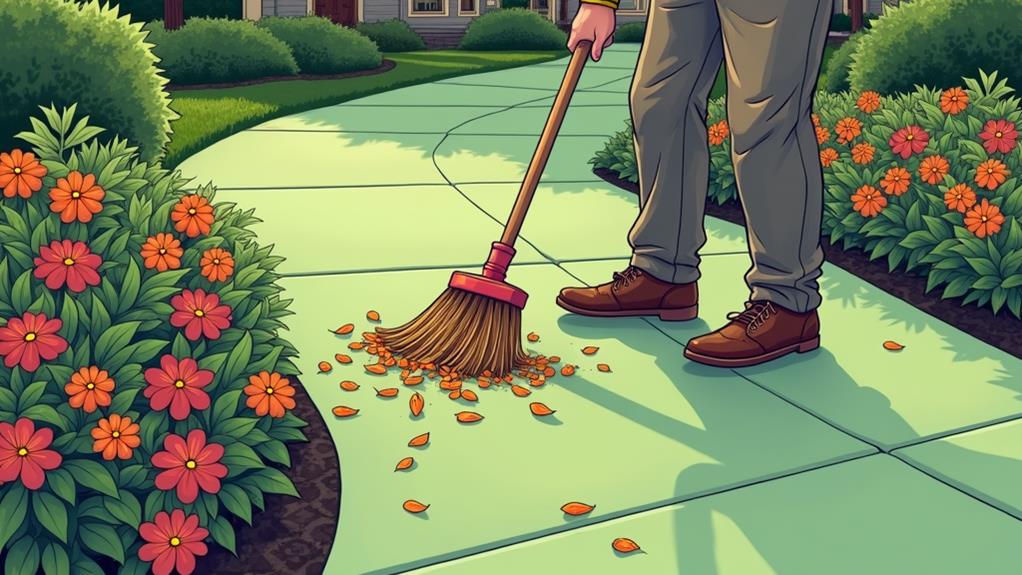
To keep your green driveway in top condition, regular maintenance is essential. Here are three key tips to guarantee longevity and sustainability:
1. Regular Cleaning
Guarantee you’re removing debris like leaves and twigs regularly. This prevents organic matter from decomposing on the surface, which can cause damage over time.
Use eco-friendly cleaning products that won’t harm the surrounding environment.
2. Drainage Inspections
Periodically check your drainage solutions to guarantee they’re functioning properly. Good drainage prevents water accumulation that can weaken the structure of your driveway.
Innovative designs such as permeable pavers or French drains can be particularly effective, but they require clear channels to operate efficiently.
3. Surface Protection
Use sealants that are environmentally friendly to protect your driveway’s surface.
These products help resist weathering and staining, extending the life of your driveway while keeping harmful chemicals out of ecosystems.
Opt for sealants specifically designed for use on permeable materials to maintain proper drainage and avoid clogging.
Following these maintenance tips won’t only keep your driveway looking great but also support your commitment to sustainability and eco-friendly options.
Conclusion
Well, you’ve nearly mastered the art of crafting a green driveway that’d make your eco-conscious community members green with envy. Remember, choosing sustainable materials isn’t just trendy; it’s about not paving paradise to put up a parking lot. So, pat yourself on the back as you lay each permeable paver. With your innovative design and diligent maintenance, you’re not just installing a driveway; you’re leading the charge in the suburban sustainability race. Keep up the good work, eco-warrior!

The Dilemma of Homeowners One of the most common and frustrating issues that homeowners face is driveway cracks. These cracks Read more

We all have an idea of how we want our driveways to look; whether it's the feel of a smooth Read more
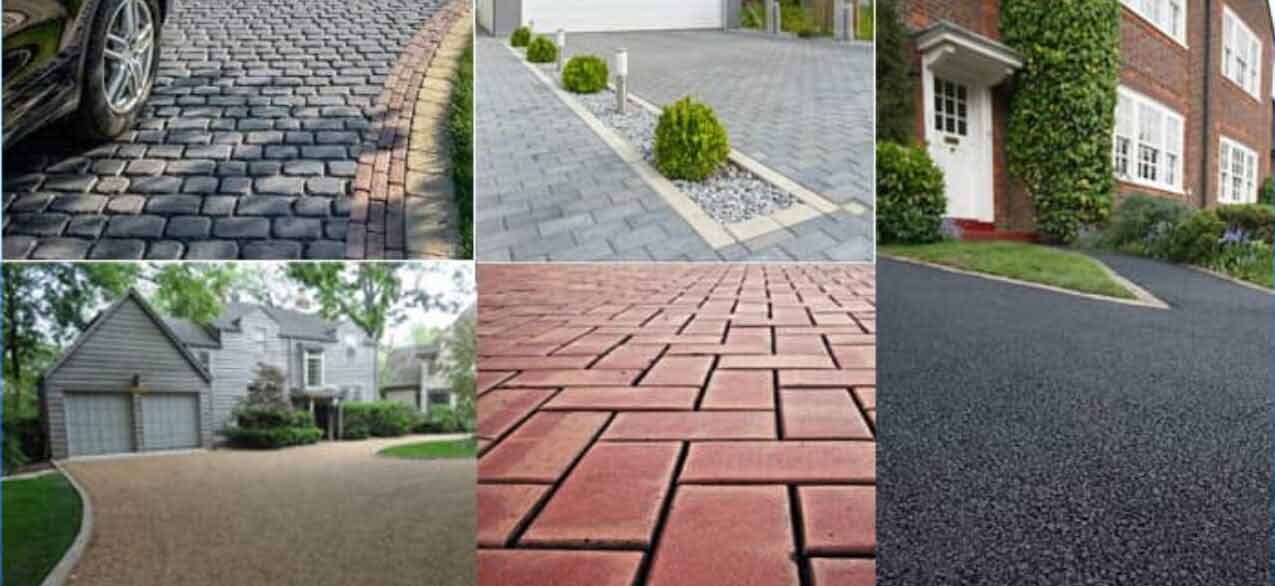
We all know that the driveway is one of the most important features of any home. It sets the tone Read more