
Do I Need Building Regulations for a Resin Driveway in Nottingham?
In Nottingham, you usually don’t need planning permission for a resin driveway if it’s permeable. However, building regulations must be followed to ensure safety and effective drainage. This means you’ll need to use a suitable sub-base and proper drainage solutions, especially if your design isn’t permeable. Always check local regulations, particularly if your property is a listed building or located in a conservation area. Consider the materials you choose, as they can impact compliance and installation.
Key Takeaways
Do I Need Building Regulations for a Resin Driveway in Nottingham?
Building regulations do apply to resin driveways, particularly concerning the sub-base and drainage to ensure safety and sustainability.
For permeable resin surfaces, planning permission is typically not required, but it’s wise to check local regulations in Nottingham for any specific requirements.
If you’re considering a non-permeable surface larger than 5 square metres, you must implement effective drainage solutions to prevent flooding and comply with regulations.
If your property is listed or located in a conservation area, there may be stricter guidelines, so it’s essential to consult with the local council.
Always ensure your driveway is permeable to meet sustainable drainage regulations and install the necessary drainage systems.
Understanding Resin Driveways

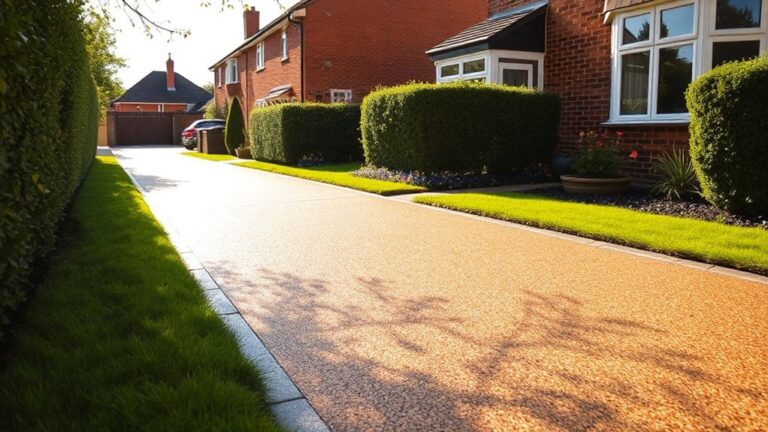
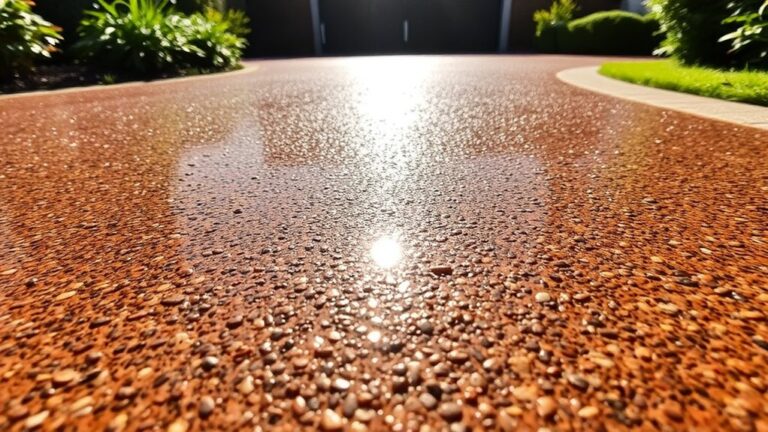
When considering a resin driveway, it’s essential to know what it’s made of and its advantages. A resin driveway combines natural aggregate stones with a high-quality, UV-resistant resin binder. This mix creates a seamless, smooth surface that looks great.
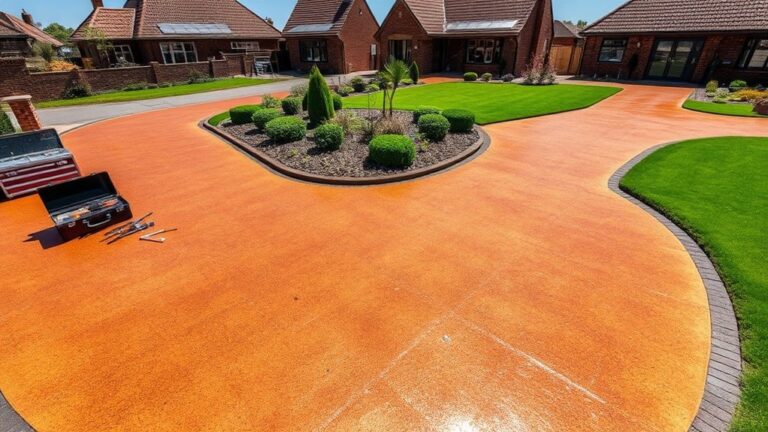
Installation involves preparing the site properly, including excavation and laying a stable sub-base, usually Type 3 MOT stone. The resin and aggregate are mixed on-site and applied in a single layer, ensuring durability and permeability, which allows water to drain effectively. The permeable nature of resin driveways also aligns with Sustainable Urban Drainage Systems (SUDS), helping to manage rainfall and reduce flooding risks, making it a unique solution for enhancing your property.
With the right resin-to-aggregate ratio, these driveways are strong and long-lasting. You can also choose from various aggregates to personalise your driveway, making it not just functional but visually appealing too. Additionally, the permeability of resin driveways helps manage rainfall and reduces flooding risks, making it a unique solution for enhancing your property.
Differences Between Resin Bound and Resin Bonded

Resin bound and resin bonded driveways each have their own advantages, but their differences in composition and application affect both performance and appearance.
| Feature | Resin Bound | Resin Bonded |
|---|---|---|
| Resin Types | Fully mixed with aggregate | Layered with loose stones |
| Surface Texture | Smooth and glossy | Textured and rough |
| Permeability | Permeable, complies with SuDS regulations | Non-permeable |
| Durability | Highly durable, lasting over 25 years | Less durable, requiring more frequent repairs |
Resin bound systems provide a sleek finish that suits modern designs, while resin bonded surfaces give a more traditional gravel look. Additionally, resin driveways tend to stay intact longer than traditional surfaces, making them a practical choice for longevity. The permeable nature of resin bound driveways improves local water quality by filtering pollutants. Your choice will depend on the surface texture you prefer and practical needs like drainage and upkeep.
Planning Permission Requirements for Driveways
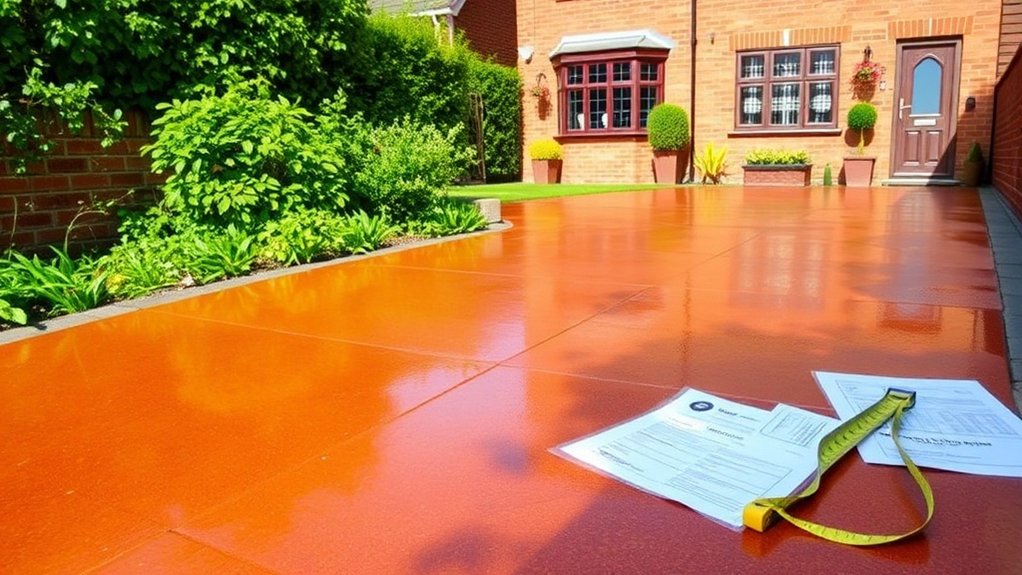
When planning your driveway, using a permeable surface might save you from needing planning permission. However, if your home is a listed building, you’ll need to follow different regulations, so it’s wise to consult your local council for specific guidelines. Being aware of these factors ensures your driveway project meets legal requirements and maximises its advantages. Additionally, understanding the importance of dropped kerbs is crucial, as they may be necessary for legal access across the pavement if your driveway leads directly to the road. It’s also essential to consider drainage compliance to prevent flooding and ensure your driveway adheres to local regulations.
Permeable Surface Benefits
Permeable surfaces for driveways offer substantial benefits, particularly in managing water runoff and minimising flood risks. Here’s how you can gain from them:
- Environmental Benefits: Permeable materials help filter out pollutants before they reach rivers and streams, improving local water quality.
- Groundwater Recharge: These surfaces allow rainwater to soak into the ground, supporting the replenishment of groundwater supplies.
- Fewer Regulations: If your driveway is under 5 square metres, you won’t need planning permission, making it easier than traditional impermeable surfaces.
Proper installation ensures durability and effectiveness, even during heavy rain.
Choosing permeable surfaces not only enhances your property’s aesthetic appeal but also supports sustainable drainage, helping to reduce flood risks in your area.
Exceptions for Listed Buildings
Listed buildings are of historical and architectural importance, which means any changes, like modifying a driveway, must follow strict rules.
If you own a listed building, you’ll need to get listed building consent in addition to planning permission for any driveway alterations. This consent is usually harder to obtain than for non-listed properties, as it aims to protect the unique features and heritage of these buildings.
Local councils manage the preservation of listed buildings, ensuring that any changes respect the area’s historical context.
It’s crucial to check with your local council before making any alterations, as there are special planning controls in place to safeguard these cherished structures.
Always ensure you comply with these regulations to avoid penalties.
Local Council Guidelines
If you’re planning to install a resin driveway, understanding local council guidelines is crucial. Here are the key points to keep in mind:
- Planning Permission: Typically, you won’t need permission for permeable resin-bound driveways unless they exceed 5m² and don’t drain to a permeable area.
- Sustainable Drainage Systems (SuDS): Ensure your driveway is compliant with SuDS to allow proper water drainage and help reduce flood risks.
- Consultation: It’s wise to check with Nottingham City Council for any specific requirements, especially if you reside in a flat or a converted property.
Building Regulations and Resin Driveways

When planning a resin driveway, it’s crucial to follow building regulations for safety and sustainability.
Ensure your installation methods meet the required standards, especially regarding sub-bases. A suitable base like Type 3 MOT, with a minimum depth of 220mm, is essential for the durability of your resin and effective drainage.
This setup aligns with Sustainable Drainage Systems (SuDS) regulations, helping to reduce flood risks.
If you’re replacing a non-permeable surface larger than 5 square metres, you must implement effective drainage solutions.
Keeping your driveway permeable is key for compliance, so regular maintenance is important to avoid penalties and ensure your driveway remains functional and legal.
Permeability and Its Importance

Permeability is crucial for the effectiveness of resin driveways, especially in managing water drainage and preventing flooding. The porous nature of resin-bound surfaces enhances drainage by allowing water to pass through, reducing the risk of flooding.
Here are three main advantages:
- Natural Infiltration: Water penetrates the surface, minimising runoff and preventing water from pooling.
- Sustainable Practices: These driveways are compatible with Sustainable Drainage Systems (SuDS), promoting environmentally friendly water management.
- Infrastructure Protection: By easing the burden on local drainage systems, they help protect against urban flooding, particularly in areas prone to heavy rain.
Opting for a permeable resin driveway not only improves the look of your property but also contributes to effective water management.
Local Authority Guidelines in Nottingham
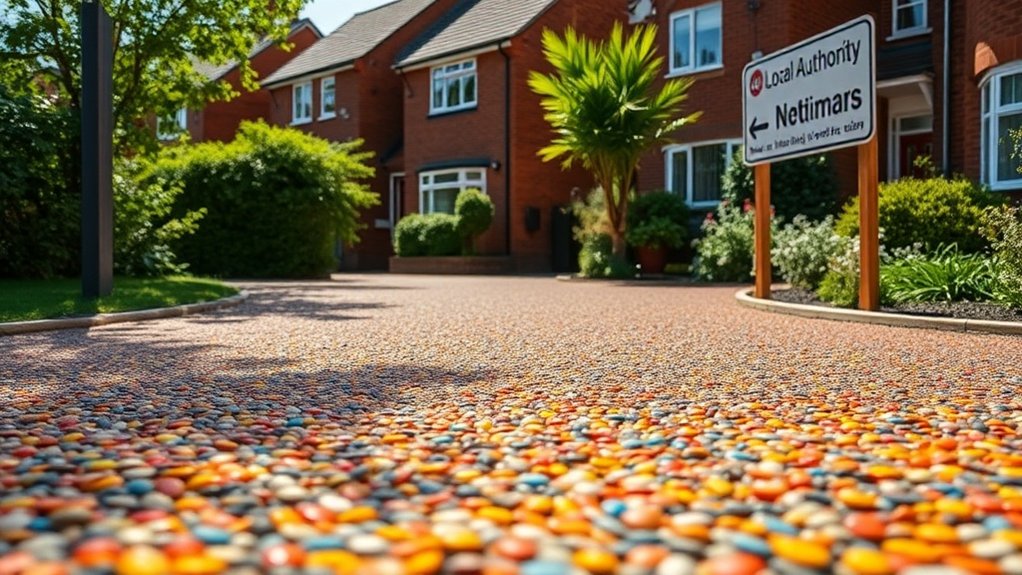
When planning a resin driveway in Nottingham, it’s important to follow local regulations regarding installation and drainage.
You need to consider factors like size limits for planning permission and ensure compliance with Sustainable Urban Drainage Systems (SuDS).
For example, if your driveway exceeds a certain area, you might need to apply for planning permission.
Adhering to these guidelines will help you avoid fines and ensure your driveway is legally compliant.
Local Regulations Overview
Understanding local regulations for resin driveways in Nottingham is important for homeowners looking at this eco-friendly option. Here are the key points:
- Usually, you won’t need planning permission for resin-bound driveways, unless they’re impermeable and exceed specified sizes.
- It’s crucial to comply with Sustainable Urban Drainage Systems (SuDS) standards for effective water management.
- Resin driveways not only improve the look of your property but also help reduce flood risks and surface water runoff.
Make sure to check with local authorities for any specific requirements before starting your project.
Special Considerations Noted
Navigating local authority guidelines in Nottingham for resin driveways involves a few important steps to ensure compliance and functionality.
Firstly, check that your driveway meets permeability requirements in line with sustainable drainage regulations. Planning permission is typically not needed, but it’s crucial to verify specific rules if your property is a listed building or located in a conservation area.
Additionally, installing an appropriate drainage system is vital to manage water runoff effectively. Be aware that flats or converted houses may have different regulations.
Lastly, choose high-quality materials that adhere to British Standards for slip resistance and durability.
Special Cases: Listed Buildings and Conservation Areas

If you’re considering installing a resin driveway at a listed building or in a conservation area, it’s important to understand the relevant regulations.
Here are some key points:
- Listed Buildings: You’ll likely need consent for any changes that could impact the building’s historical value.
- Conservation Areas: These zones have stricter rules aimed at maintaining the area’s character, which may restrict the types of materials and designs you can choose.
- Planning Permission: Always check with your local council, as you may need planning permission before starting your installation.
Being aware of these rules is crucial for compliance and for preserving the heritage of your property.
Drainage Solutions and Sustainable Practices

When installing a resin driveway, it’s crucial to implement effective drainage solutions and sustainable practices for long-lasting performance and to meet environmental standards.
Using proper drainage methods, such as channel drains and soakaways, helps manage water efficiently, preventing issues like pooling and erosion. Resin-bound surfaces, made from eco-friendly materials, allow water to soak through, which complies with Sustainable Urban Drainage Systems (SuDS) regulations. This permeability reduces surface runoff and encourages groundwater recharge.
Designing the driveway with a slope towards drainage points can further improve water flow, especially during heavy rain.
Opting for natural aggregates and UV-resistant resin not only enhances durability but also offers environmental advantages.
Costs Associated With Resin Driveway Installation

Installing a resin driveway typically costs between £2,500 and £10,000. The final price depends on several factors:
- Size and Shape: Larger driveways can lower the cost per square metre, but intricate designs may require more time and materials.
- Material Quality: Using higher-grade resins or decorative aggregates can increase costs, as can the groundwork needed for a stable finish.
- Labour Rates: Installation costs range from £30 to £50 per hour, with projects taking anywhere from 2 to 5 days depending on complexity.
Compliance and Best Practices for Installers

Understanding compliance requirements and best practices for resin driveway installation is crucial for a successful project.
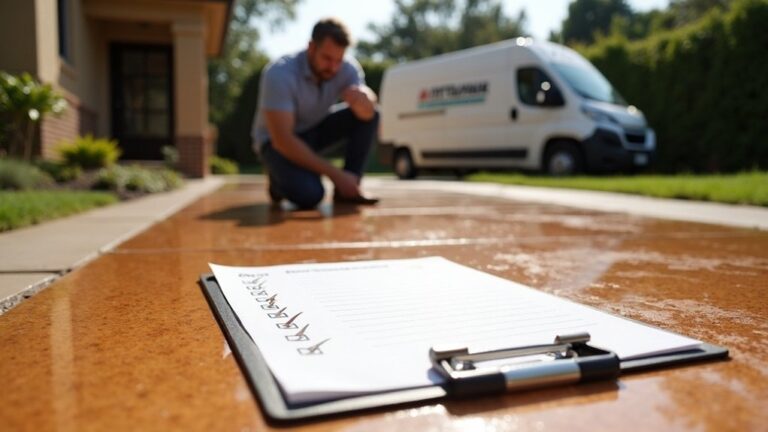
Ensure your installer is qualified to assess ground stability and drainage needs properly. During installation, it’s important to use the right techniques, such as removing any unstable materials and creating a well-compacted sub-base.
Designing for water flow is essential to enable efficient drainage through permeable surfaces, in line with SuDS regulations.
Mixing and applying resin in small sections ensures consistency and proper curing. Always check with local authorities for specific guidance, especially if you’re in a conservation area or making changes to property access.
Following these standards helps ensure long-lasting performance and compliance, protecting you from potential regulatory issues down the line.
Frequently Asked Questions
Can I Install a Resin Driveway Myself?
You can install a resin driveway yourself, but be prepared for some challenges. It’s crucial to prepare the base properly and mix the resin accurately. For the best results and to ensure you meet any regulations, you might want to consider hiring a professional.
How Long Does a Resin Driveway Last?
A resin driveway won’t last forever, so it’s important to have realistic expectations. With proper installation and maintenance, you can expect it to last between 15 to 25 years. Its durability largely depends on the quality of materials used and the care you provide. Regular upkeep, like cleaning and resealing, can help extend its life significantly.
What Colors Are Available for Resin Driveways?
Resin driveways come in a variety of colours, featuring both natural aggregates and bright recycled materials. This versatility allows you to create distinctive blends that can enhance the look of your home. For instance, you might opt for a classic golden gravel finish or a bold, vibrant red blend to make a statement.
Are Resin Driveways Slippery in Wet Conditions?
Resin driveways generally aren’t slippery in wet conditions, thanks to their textured surface that helps prevent slips. When installed correctly and maintained regularly, they provide excellent grip, making them a safe option for your home. For instance, unlike smooth concrete, a resin driveway gives you peace of mind when it rains.
Can I Install Heating Under a Resin Driveway?
Yes, you can install a heating system under a resin driveway. It’s essential to ensure that the installation includes adequate preparation and insulation to maintain efficiency and prevent moisture damage. Think of it as having a warm surface to walk on during chilly mornings, which can be particularly beneficial in the UK’s colder months.
Conclusion
In summary, while a resin driveway can enhance your home’s appeal, navigating the building regulations in Nottingham is essential. It’s tempting to ignore compliance, but doing so could lead to fines and complications down the line. Remember, it’s not just about looks; ensuring your driveway meets regulations will save you from potential headaches in the future.

Keen to transform your driveway? Discover the essential steps to expertly install a resin driveway and elevate your home's curb Read more

Incorporate essential tips for maintaining your resin driveway's longevity and appearance, ensuring it remains a stunning feature of your home. Read more
Just how do installation quality and weather conditions impact the longevity of your resin driveway? Find out the crucial factors Read more