Resin Driveways and EPC Ratings
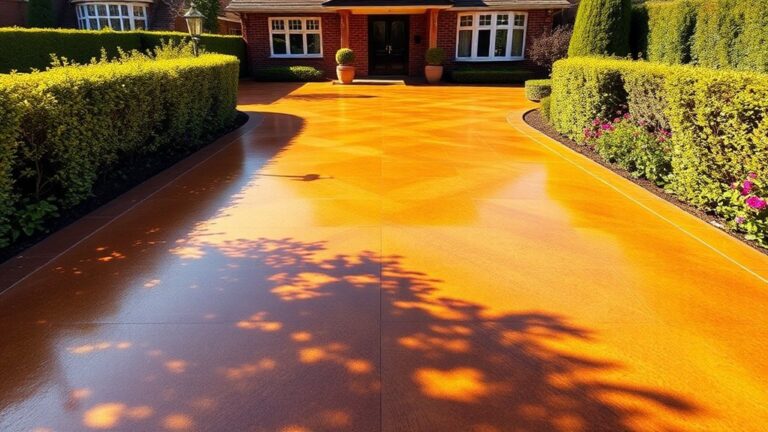
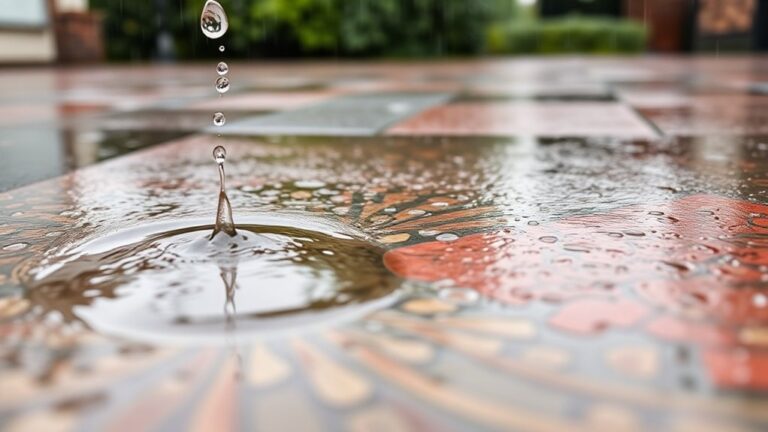
Resin driveways can significantly enhance your property’s appearance and improve its Energy Performance Certificate (EPC) ratings by promoting sustainability. Their permeable surfaces help manage rainwater, reducing the risk of flooding and aiding groundwater recharge. Additionally, their reflective qualities can lower urban heat, which may reduce the need for air conditioning. These driveways are also durable, leading to lower repair costs over time. By choosing eco-friendly materials, you not only boost energy efficiency but also attract potential buyers. There are more benefits and regulations to explore, so read on to learn more.
Key Takeaways
- Resin driveways are permeable, aiding water drainage and reducing flood risks, which can positively affect EPC ratings.
- Their reflective surfaces help mitigate the urban heat island effect, potentially lowering energy costs for cooling.
- The longevity of resin driveways means fewer repairs, boosting long-term property value and attracting energy-conscious buyers.
- Made from eco-friendly materials, resin driveways align with sustainability goals, which can enhance EPC assessments.
- Properties featuring eco-friendly elements like resin driveways may achieve better EPC ratings, improving their market appeal and compliance with energy efficiency standards.
Overview of Resin Driveways

Resin driveways provide a stylish and practical option for enhancing your outdoor areas. They’re made from a mixture of polyurethane resin and small aggregates, like stone, creating a strong and flexible surface.
The installation begins with excavating the area and laying a stable MOT type 1 stone sub-base. After preparation, the resin and aggregate mixture is expertly blended and trowelled onto the base for a smooth finish. Proper mixing of resin and aggregates enhances durability, which is essential for long-lasting performance.
These resin-bound surfaces boast high UV resistance and shock absorption, making them suitable for heavy traffic. Additionally, the importance of a solid foundation ensures longevity and durability, making resin driveways a reliable choice for homeowners.
Plus, their permeable nature allows for effective water drainage, which aligns with Sustainable Urban Drainage Systems (SUDS). This means they aren’t only durable but also low-maintenance, ensuring they stand the test of time. With proper maintenance practices, resin driveways can last between 10 to over 20 years, contributing to their long-term appeal.
Understanding EPC Ratings
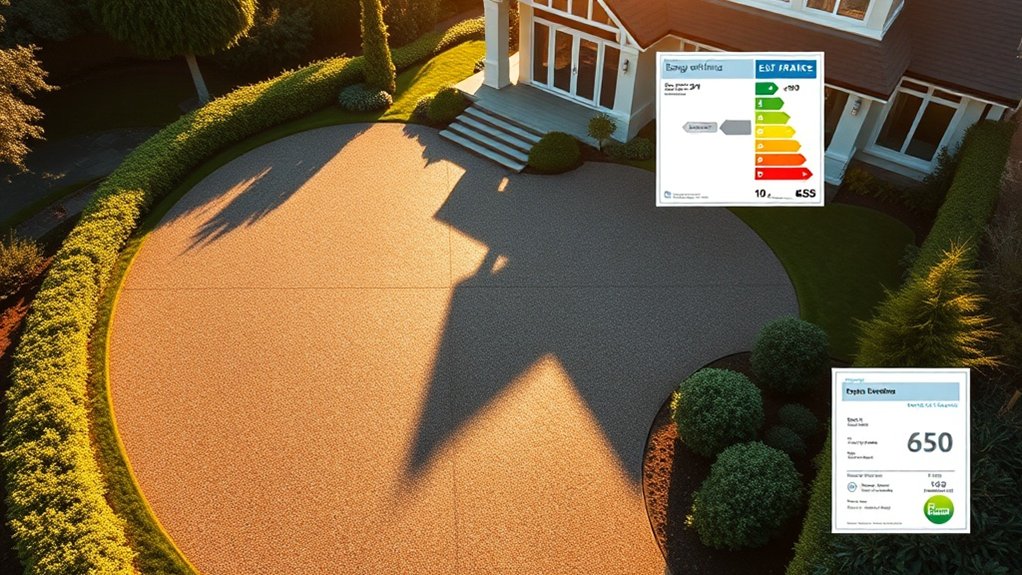
Understanding EPC ratings is crucial for homeowners and potential buyers, as they reveal a property’s energy efficiency. The EPC assessment uses a scale from A to G, with A representing the highest efficiency and G the lowest.
Each rating aligns with specific SAP or rdSAP scores, which reflect energy performance based on estimated costs for heating, lighting, and ventilation. For existing homes, the rdSAP method involves on-site evaluations, while new builds rely on SAP based on architectural plans. Additionally, an EPC (Energy Performance Certificate) provides typical energy costs for the property, offering further insight into the financial implications of energy efficiency.
These ratings also indicate CO2 emissions, providing insight into both energy use and environmental impact. By grasping these ratings, you can pinpoint improvements to boost your home’s efficiency and value.
Impact of Resin Driveways on EPC Scores
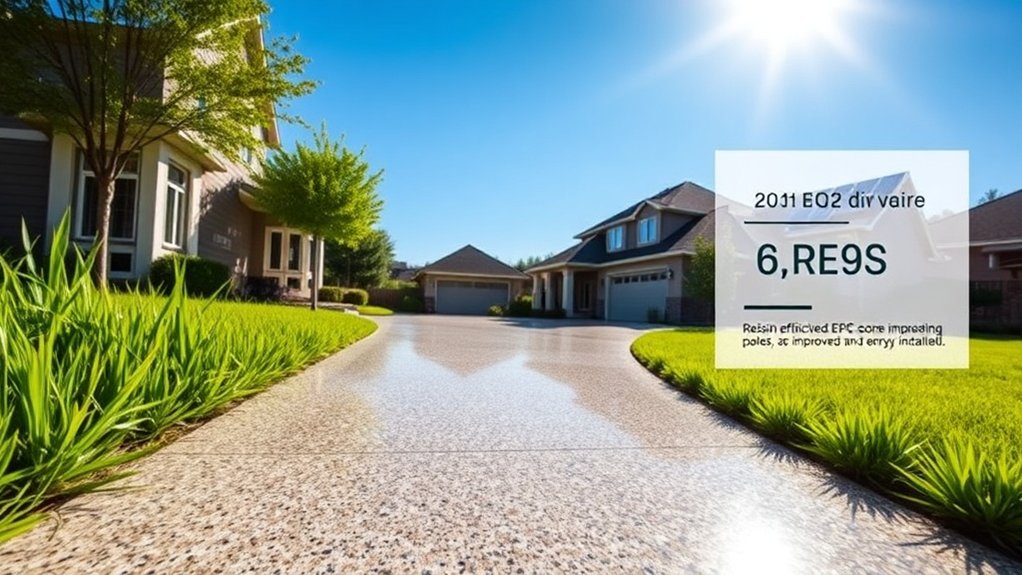
Many homeowners may not realise how their choice of driveway can impact their property’s EPC score. Choosing a resin-bound driveway can make a significant difference. These surfaces are permeable, allowing rainwater to drain effectively, which helps reduce flood risks and supports local water ecosystems. Moreover, resin driveways reflect sunlight, contributing to a cooler environment and reducing the urban heat island effect. This cooling effect can lower energy demands for air conditioning, positively influencing your EPC rating. Additionally, the strength and durability of resin driveways ensure they withstand wear and tear, further enhancing their long-term value. Furthermore, their design aligns with Sustainable Urban Drainage Systems principles, promoting efficient water management.
| Aspect | Impact on EPC Score |
|---|---|
| Permeability Benefits | Reduces flood risk and aids water systems |
| Heat Reduction | Lowers energy demand for cooling |
| Durability | Minimises need for repairs, reducing lifecycle costs |
| Carbon Footprint | Efficient installation cuts emissions |
| Aesthetic Value | Boosts the overall appeal of the property |
Benefits of Resin Driveways in Sustainable Property Management
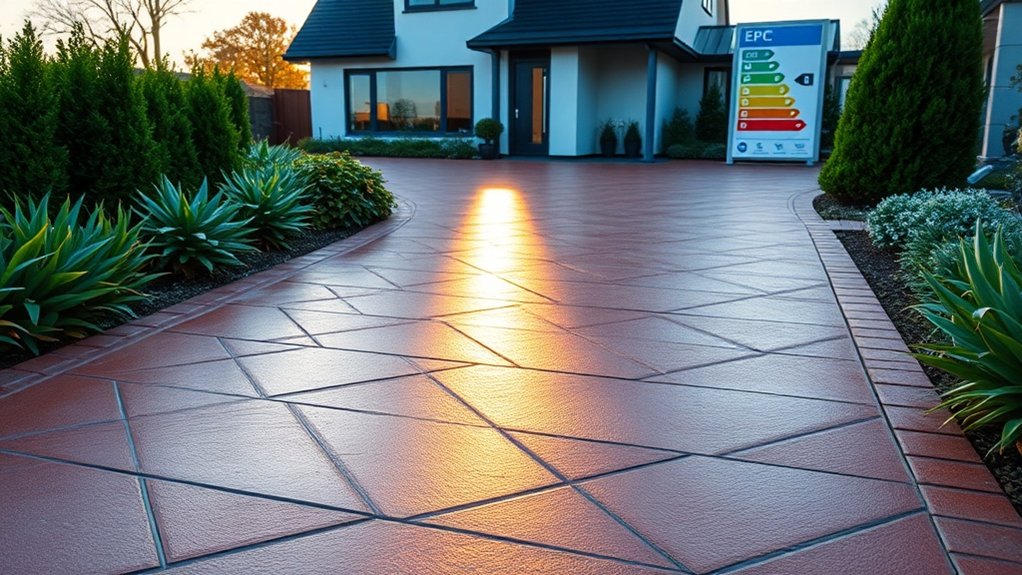
Choosing a resin driveway is a smart move for sustainable property management.
These driveways are made from eco-friendly materials and allow rainwater to soak through, which helps reduce urban runoff and the risk of flooding. This natural drainage also aids in recharging groundwater levels and maintaining healthy water cycles.
Resin driveways are durable and require minimal upkeep, which means less construction waste over time. Many are made with recycled materials, further cutting down on carbon emissions during production. Additionally, they can meet Sustainable Drainage Systems standards, enhancing their environmental benefits.
Plus, their smooth surfaces prevent weeds from growing, reducing the need for chemical treatments and promoting a healthier environment.
In short, resin driveways offer a sustainable, efficient way to manage your property, benefiting both you and the environment.
Regulations Surrounding EPCs and Property Sales
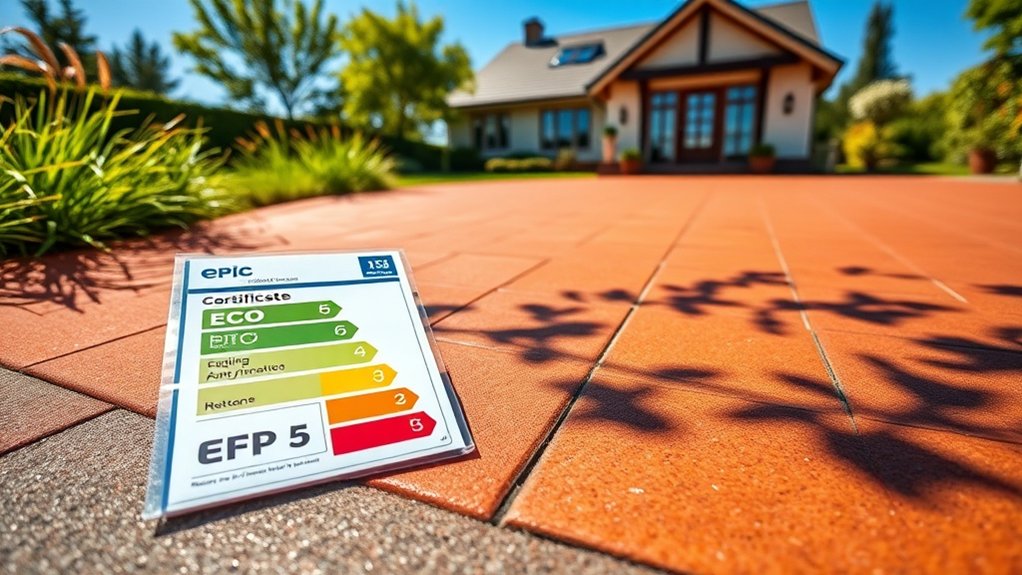
Incorporating eco-friendly features like resin driveways can boost your property’s appeal. However, it’s crucial to comply with the regulations surrounding Energy Performance Certificates (EPCs) when selling or renting out your property. EPC compliance is mandatory and confirms that your property meets energy efficiency standards.
Before you market your property, you must obtain an EPC, and you are required to provide potential buyers or tenants with a copy at no cost.
Here’s a brief overview of the EPC regulations:
| Requirement | Description | Penalty |
|---|---|---|
| Commission Before Marketing | Secure an EPC before advertising your property | £200 for non-compliance |
| Validity Period | EPCs remain valid for up to 10 years | Increased fines for commercial properties |
| Must Include Rating | Energy performance must be included in marketing materials | Enforcement actions |
Frequently Asked Questions
How Long Do Resin Driveways Typically Last?
Resin driveways generally last between 15 to 25 years, depending on the quality of the resin and how well the driveway is maintained. Regular cleaning and prompt repairs can significantly extend its lifespan, keeping your investment looking good and functioning well for many years.
Can I Install a Resin Driveway Myself?
Yes, you can install a resin driveway yourself, but it’s not straightforward. DIY installation demands precision, the right materials, and careful preparation to ensure a durable finish. For instance, make sure you have a solid sub-base and the correct mix of resin and aggregates. If you’re up for the challenge, it can be a rewarding project, but be prepared for some hard work.
Are Resin Driveways Suitable for All Climates?
Resin driveways aren’t ideal for every climate. Although they are durable and resistant to weather, extreme temperatures, freeze-thaw cycles, and heavy rainfall can weaken them. For instance, if you live in an area with frequent frost or heavy downpours, it’s wise to think carefully before opting for a resin driveway. Always assess your local weather conditions before installation.
What Colors Are Available for Resin Driveways?
Picture your driveway as a canvas; you can choose from a range of colours, from neutral shades like beige to bold hues like emerald green. This variety allows you to create a look that perfectly complements the style of your home.
How Do Resin Driveways Compare to Traditional Asphalt or Concrete?
Resin driveways have several advantages over traditional asphalt and concrete. They are fully permeable, which means rainwater can drain through easily, helping to reduce flooding and surface water run-off. This makes them a more sustainable choice for the environment. Additionally, resin driveways require less maintenance than their asphalt and concrete counterparts, saving you time and money. Not only are they durable, but they also offer a range of colours and finishes, making them an attractive option for your property.
Conclusion
In summary, resin driveways enhance your property’s appearance and can positively impact your EPC ratings. By choosing this sustainable option, you’re not only making your home look better but also potentially increasing its value. As regulations change, meeting EPC standards is crucial for selling your property. Consider resin driveways for an attractive, eco-friendly upgrade that benefits you in multiple ways.

Compare resin and concrete driveways to discover which option provides superior durability and value, but the answer may surprise you.

The rise of resin-bound driveways is transforming outdoor aesthetics, but what hidden advantages might make them the perfect choice for Read more

Get the facts on resin vs. concrete driveways and discover which option could save you money in the long run. Read more