Can You Install Resin Driveways in Winter in Nottinghamshire?
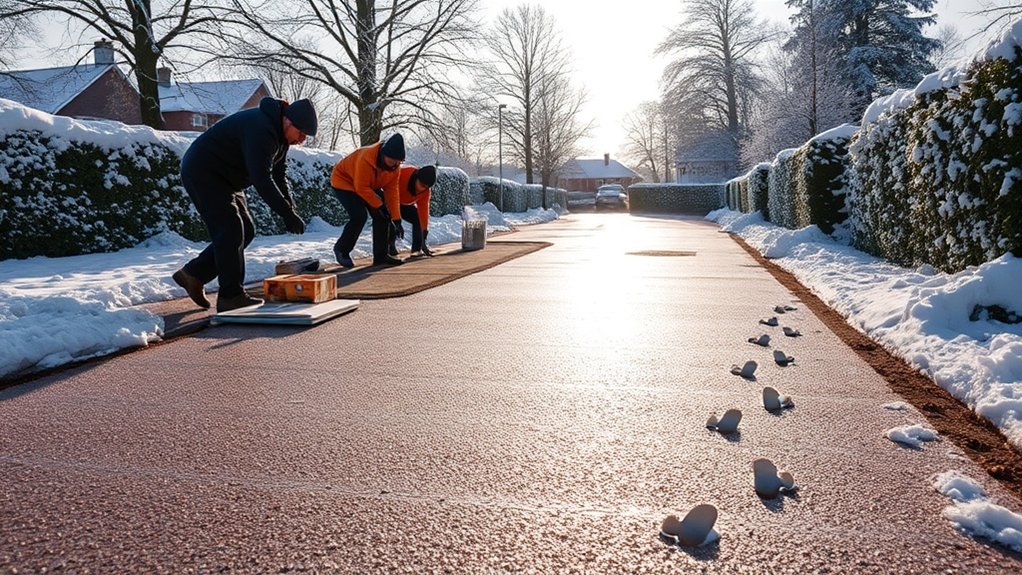
Yes, you can install resin driveways in winter in Nottinghamshire, but it needs careful planning. Ensure temperatures remain above 5°C for at least 24 hours post-installation to prevent curing issues. Opt for winter-grade resins and use cold-weather additives to enhance performance. Proper ground preparation is vital for stability, and employing professional techniques can help address challenges related to frost and moisture. Want to know the best practices for a successful installation? There’s plenty more to learn.
Key Takeaways
Resin driveways can be installed during winter in Nottinghamshire, provided temperatures stay above 5°C for proper curing and strength. Using cold-weather catalysts and winter-grade resins is vital for effective curing in lower temperatures.
Proper ground preparation is essential, particularly if the base is soil or grass, to avoid instability. Keep in mind that adverse weather, such as frost or heavy rain, can cause delays and impact the quality of the resin.
Regular maintenance and inspections are crucial to maintain warranty validity and ensure your driveway performs well throughout the winter months.
Understanding Weather and Temperature Constraints

Understanding the weather and temperature constraints is crucial when installing resin driveways during winter. Resin cures best when temperatures are above 5°C, ideally between 10°C and 20°C. When temperatures drop below freezing, the curing process can be compromised, which risks the durability of the surface.
In Nottinghamshire, winter temperatures typically range from 2°C to 6°C, and frost can worsen the situation, leading to freeze-thaw cycles that put stress on uncured resin. Additionally, high humidity and snowfall can delay curing times significantly. For the resin to achieve its full strength, it needs to remain above 5°C for 24 to 48 hours after installation. Therefore, it’s essential to plan carefully and consider local weather conditions to ensure a successful resin driveway installation in winter. Implementing a heated driveway system can also mitigate some weather-related challenges during installation. Furthermore, using winter-grade resins designed to maintain flexibility at low temperatures can enhance frost resistance and durability during colder months.
Preparing the Ground and Base for Winter Installation

When installing resin driveways in winter, preparing the ground and base is crucial for a strong and stable finish.
First, check the existing base; concrete or tarmac works well if they’re in good condition, but soil or grass needs thorough preparation. Fix any underlying issues to improve ground stability. Adding edging can help prevent soil erosion.
Opt for porous concrete to ensure proper drainage and compliance with Sustainable Urban Drainage Systems (SUDS) regulations. Clear the area of debris and ensure there’s adequate drainage to prevent water from pooling, which can freeze. Regular removal of ice and frost is essential to prevent slippages and injuries during winter installation.
Keep the temperature above 5°C during installation to avoid frost heave, and employ freeze-thaw-resistant methods.
With proper preparation, your driveway will be able to withstand the challenges of winter.
Selecting the Right Products and Additives

Choosing the right products and additives is crucial for ensuring the durability and safety of resin driveways during winter installations. Focus on product selection and additive compatibility to minimise risks. Additionally, it’s important to consider winter conditions when selecting materials, as they can significantly affect the performance of the driveway. Proper maintenance practices will also help in prolonging the life of the driveway under winter weather.
| Product Type | Additives | Purpose |
|---|---|---|
| Anti-slip aggregates | Crushed glass, silica sand | Increase surface friction |
| Cold-weather catalysts | Polyurethane/epoxy accelerators | Shorten gel and cure times |
| Winter-grade resins | UV-stable formulations | Improve flexibility and low-temp performance |
Using harder, angular aggregates like glass or aluminium oxide provides a long-lasting texture, while low-temperature hardeners enhance crosslinking. Always adhere to manufacturer guidelines to avoid curing issues and ensure optimal performance in colder conditions.
Installation Logistics and Scheduling Considerations

Proper planning and scheduling are vital for successful resin driveway installations, particularly in winter. Weather can significantly affect the process; for instance, heavy rain can compromise the resin’s quality and cause delays.
It’s essential to use professional installation techniques to ensure a stable foundation, especially when temperatures drop below zero, as frost heave can become an issue. Proper mixing of resin and aggregates is also critical for ensuring durability against temperature fluctuations in Nottingham’s climate.
Flexibility in scheduling is crucial; be prepared to adjust your plans based on weather forecasts. Experienced contractors can help minimise disruptions, typically aiming for an application rate of around 20 square metres per hour.
Maintenance and Aftercare for New Resin Driveways

To keep your new resin driveway in top shape during winter, it’s important to safeguard it from snow ploughs, which can cause damage.
Make sure to promptly clear away grit and salt to prevent surface degradation.
Regularly check for any cracks or defects, as these can worsen in the cold.
Protecting From Snow Ploughs
Protecting Your Resin Driveway from Snow Ploughs
Winter can create a beautiful scene, but it also brings challenges for new resin driveways, especially when it comes to protecting against snow ploughs. Here are some straightforward measures to help:
- Install Strong Edging: Use concrete haunching or raised kerbs to protect the edges of your resin from the blades of snow ploughs.
- Choose a Quality Resin: Opt for a freeze-thaw-resistant resin with suitable aggregate grading for the winter conditions in Nottinghamshire.
- Mark Driveway Boundaries: Clearly mark the edges of your driveway with painted markers or reflective posts to help guide snow plough operators.
Prompt Grit Removal
Maintaining a resin driveway in winter requires prompt grit removal for safety and durability. Effective grit removal helps prevent issues like ice formation and slip hazards. Here’s a quick reference table for maintaining your driveway:
| Task | Frequency | Purpose |
|---|---|---|
| Sweep driveway | Weekly | Remove leaves and debris |
| Apply grit or sand layer | Before freeze | Improve traction |
| Rinse with water | As needed | Remove loose dirt |
| Clear fallen leaves | Regularly | Prevent moisture build-up |
Using grit or cat litter instead of harsh de-icing chemicals is vital. Regular upkeep ensures your resin driveway remains functional and visually appealing throughout winter.
Monitoring for Defects
Prompt grit removal is crucial for monitoring your resin driveway during winter.
Regular inspections help identify defects and extend its lifespan. Here are three key techniques to adopt:
- Quarterly Visual Inspections: Look out for stains, moss, and surface wear.
- Post-Weather Checks: After heavy rain or freeze-thaw cycles, inspect for fine cracks or drainage problems.
- Documentation: Keep clear records of inspections, findings, and repairs to monitor any recurring issues.
Local Practices and Regulations in Nottinghamshire
If you’re planning to install a resin driveway in Nottinghamshire, it’s crucial to be aware of the local practices and regulations.
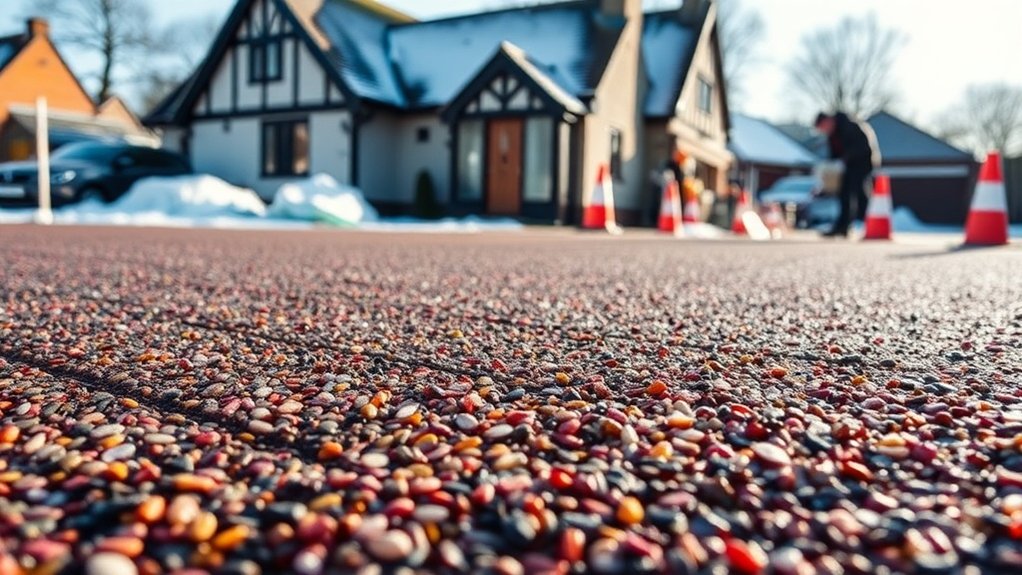
Generally, resin-bound driveways are considered permeable and usually don’t need planning permission under Sustainable Drainage (SuDS) guidelines, unless your property is in a conservation area or is a listed building.
However, if you’re changing the kerb or creating a vehicle crossing, you may require permission from the local highway authority.
Be mindful that resin-bonded systems can be seen as impermeable, particularly during seasonal changes, which might necessitate additional drainage solutions.
Given Nottinghamshire’s clay soils, ensure your installation complies with local regulations regarding subbase permeability to avoid issues like frost heave and poor drainage.
Always check local guidance before you begin your project.
Cost Implications of Winter Resin Driveway Installations

Installing a resin driveway in winter can significantly affect your costs due to several factors related to materials and labour.
Here’s what to consider:
- Material Costs: Winter additives and primers can increase material costs by a few percent per square metre, which can add up to your overall budget.
- Labour Rates: Typical labour rates range from £150 to £250 per day. Adverse weather can slow down progress, which may lead to higher total labour costs.
- Seasonal Surcharges: Many contractors impose a surcharge of 5% to 15% because of longer installation times and inefficiencies linked to cold conditions.
Understanding these factors will help you plan and budget effectively for your resin driveway installation in winter.
Risks of Poor Installation Conditions

Given the challenges posed by winter weather, poor installation conditions can significantly jeopardise resin driveways. Factors such as low temperatures and moisture can lead to surface defects, while unstable subbases heighten the risk of cracking. Here’s a brief overview of the key risks:
| Risk Factor | Description | Impact |
|---|---|---|
| Surface Defects | Low temperatures and moisture can trap air. | Weak bond and visible blemishes. |
| Frost Movement | A frozen subbase can displace materials. | Cracking and de-bonding. |
| Weather Constraints | Limited installation days increase risks. | Higher chance of contamination or defects. |
These challenges underscore the need for careful evaluation of conditions to ensure the longevity and performance of your resin driveway.
Benefits of Expert Installation Crews

Choosing expert installation crews for your resin driveway ensures high-quality workmanship that prolongs the life of your surface.
Their problem-solving abilities allow them to address issues quickly, even in challenging winter conditions.
This expertise not only boosts the durability of your driveway but also protects your investment for years to come.
Quality Assurance Practices
The appeal of resin driveways is strong, but the importance of skilled installation teams can’t be overlooked.
They ensure quality control and compliance with installation standards, which are vital for durability.
Here are three main advantages of hiring professionals:
- Accurate Material Choice: Experts utilise frost-resistant materials and anti-freeze resin technology to endure harsh winter conditions.
- Expert Techniques: Skilled teams prepare the ground carefully, preventing frost heave and ensuring a solid base for the resin.
- Increased Longevity: Professional installations lead to driveways that resist cracking, fading, and weathering, lasting over 15 years.
Efficient Problem-Solving Skills
Expert installation teams are skilled in efficient problem-solving, ensuring that resin driveways can withstand winter challenges. They use their specialised knowledge to prepare a solid base, opting for concrete or tarmac for added stability.
With their experience, they choose UV-resistant resins and high-quality aggregates to prevent fading and cracking. These professionals also implement innovative solutions for winter installations, like effective drainage design and salt-safe materials, ensuring long-lasting durability.
Quick curing times mean minimal project delays, allowing for immediate use of the driveway. By adapting their methods to seasonal challenges, expert crews ensure your resin driveway remains both functional and attractive, even during Nottinghamshire’s harsh winters.
This level of expertise helps protect your investment for the long term.
Long-term Performance and Warranty Considerations
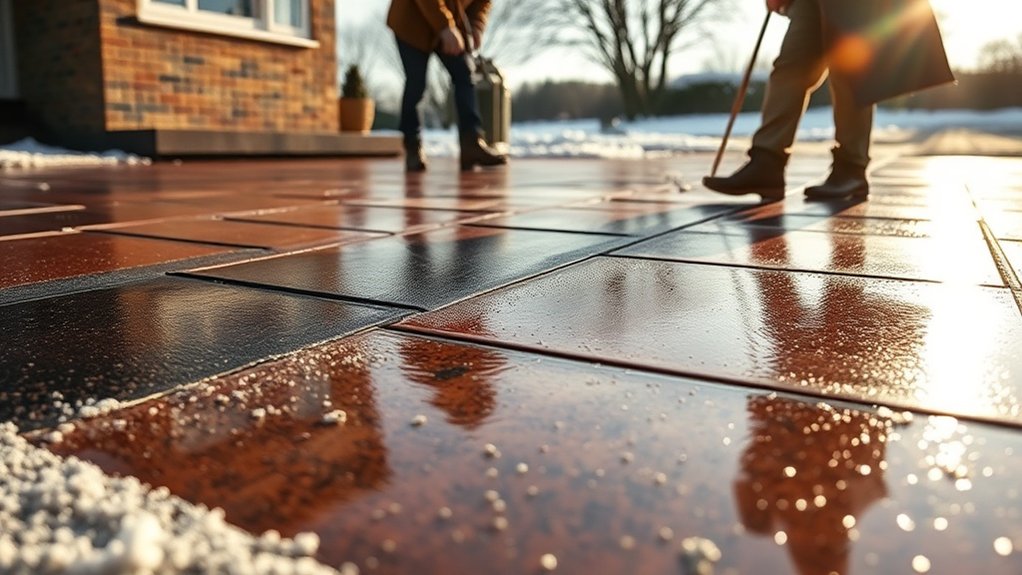
Understanding the long-term performance and warranty considerations of resin driveways is crucial for ensuring their durability and appearance over time. Here are some key points to consider:
- Longevity Factors: Ensure a quality sub-base and effective drainage to maximise lifespan. With high-quality materials, resin driveways can last over 20 years.
- Warranty Exclusions: Be mindful that damage from poor installation, excessive use, or unsuitable de-icers is usually not covered by the warranty.
- Maintenance Requirements: Regular inspections and maintenance are vital to maintain warranty validity and performance standards.
Frequently Asked Questions
Can I Install Resin Driveways Myself in Winter?
You can install resin driveways yourself in winter, but it’s crucial to use the right preparation techniques and be mindful of the weather. For instance, temperatures below 5°C can lead to bonding issues and an unstable surface. If you’re unsure about the process, it might be best to wait for milder weather or consult a professional.
What Are Common Mistakes During Winter Resin Installations?
A common mistake is thinking you can install resin in freezing temperatures. It’s crucial to consider the temperature; not keeping an eye on cold conditions can cause improper curing, leading to a weak and uneven driveway surface. For example, if you attempt installation when it’s below 5°C, you risk the resin not setting correctly, which can lead to costly repairs later on.
How Do I Choose a Contractor for Winter Installs?
To choose a contractor for winter installations, ensure they have the right qualifications and experience with projects in cold weather. It’s important they follow proper installation standards. Look for tips specific to winter installations, such as using suitable materials and techniques to ensure optimal performance in low temperatures. For instance, ask about their approach to sealing and insulating to prevent heat loss.
Are There Specific Tools Needed for Winter Resin Installation?
For winter resin installation, you’ll require key tools such as low-temperature resin, heated mixing equipment, frost blankets, and site heaters. These items ensure the right conditions for curing and safeguard your installation against severe winter weather.
How Long Will a Winter Resin Installation Typically Last?
A winter resin installation can last between 10 to 20 years when carried out correctly. The durability of the resin depends on optimal winter conditions, like proper curing and managing moisture. This ensures your driveway can endure the challenges of the season, such as frost and heavy rain.
Conclusion
In summary, you can install resin driveways in winter in Nottinghamshire, but it’s important to consider the weather and choose the right products. Is it worth compromising on quality for convenience? By hiring skilled professionals and following proper guidelines, you can ensure a durable installation. Remember to prioritise maintenance and care to enhance the lifespan and performance of your driveway.

Compare resin and concrete driveways to discover which option provides superior durability and value, but the answer may surprise you.

The rise of resin-bound driveways is transforming outdoor aesthetics, but what hidden advantages might make them the perfect choice for Read more

Get the facts on resin vs. concrete driveways and discover which option could save you money in the long run. Read more