

Resin Bound Vs Bonded for Colour Retention
When comparing resin bound and resin bonded surfaces for colour retention, resin bound systems stand out. They offer better pigment integration and UV stability, which means they keep their vibrancy longer and are less likely to fade. In contrast, resin bonded surfaces can show uneven colour and may deteriorate more quickly when exposed to sunlight. This distinction is important for the aesthetic appeal and durability of your project. By understanding these differences, you can make a more informed choice for your surface application.
Key Takeaways
- Resin bound surfaces retain their colour integrity for up to 30% longer than resin bonded options, thanks to superior pigment integration.
- UV-stable resins used in resin bound systems help prevent fading, whereas bonded systems tend to degrade more quickly in sunlight.
- The durability of resin bound surfaces also means they hold their colour better over time, reducing wear and fading.
- Resin bonded surfaces can trap moisture, which may weaken the bond and lead to uneven colour and increased wear.
- While regular maintenance is important for both systems, resin bonded surfaces often require more frequent care to keep their colours vibrant.
Understanding Resin Bound Surfaces
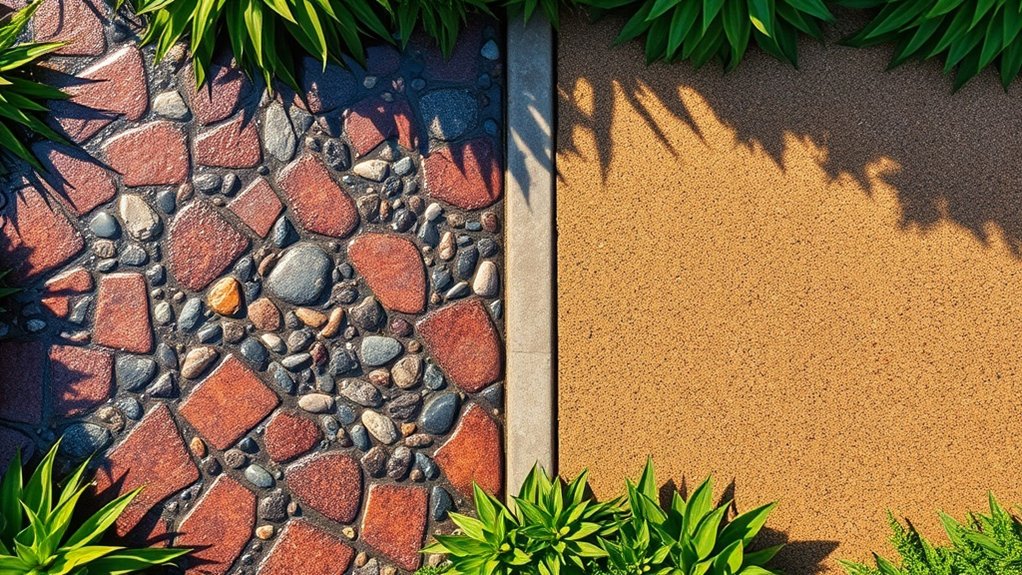
When it comes to resin bound surfaces, it’s important to grasp their make-up and how they’re installed. The resin consists of natural stone aggregates mixed with a clear, UV-stable resin binder. This blend is prepared in a forced action mixer to ensure consistency. Additionally, the resulting surface has excellent slip resistance, making it a safe choice for various applications. The durability of resin-bound driveways is enhanced by the strong bond between the resin and aggregates, ensuring they withstand harsh conditions.
During installation, the mixture is applied to a well-prepared surface, often using a geotextile membrane and compacted hardcore base for added stability and drainage. After laying down the mixture, it’s trowelled to create a smooth, even finish that allows water to drain through effectively. This process also helps meet Sustainable Drainage System (SuDS) standards, preventing surface water build-up and enhancing the durability of the surface. This careful installation sets resin bound surfaces apart from traditional resin bonded systems.
Understanding Resin Bonded Surfaces
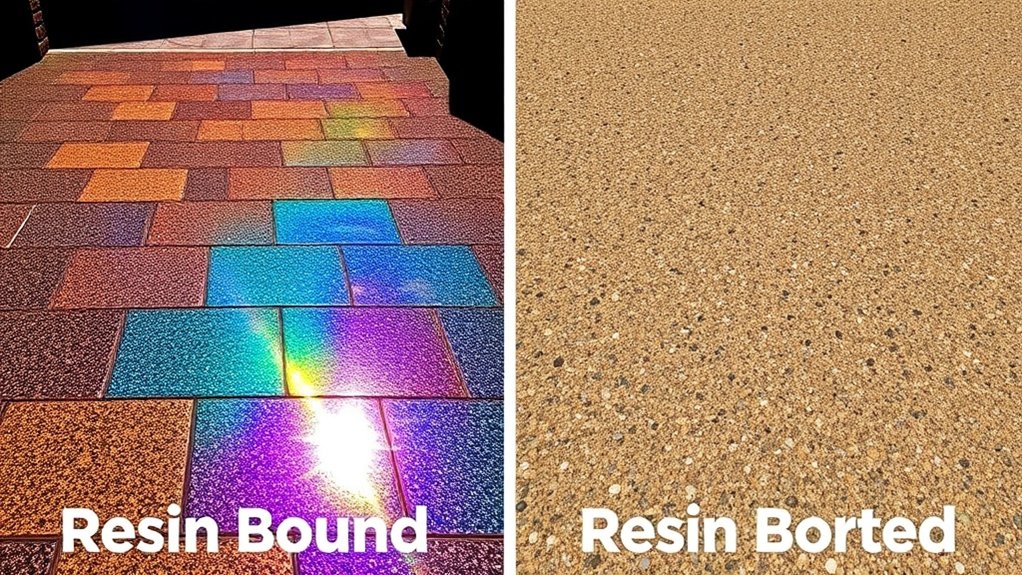
Resin bonded surfaces provide a practical alternative to resin bound systems, differing mainly in their composition and installation method. Their straightforward installation makes them suitable for various applications, particularly due to their rougher texture.
Here are three key points to consider:
- Cost-Effective: They come with lower upfront costs, making them a viable option for many projects.
- Quick Installation: Installation is faster as it requires less precise application compared to other methods. Additionally, resin bonded surfaces can be utilized in situations where permeable surfaces are not critical.
- Enhanced Slip Resistance: The textured finish offers improved traction, which is particularly beneficial for pathways. Additionally, resin bonded surfaces create a non-permeable surface that can lead to stones loosening over time.
However, it’s important to note that while resin bonded surfaces can be attractive and functional, they’re generally less durable than resin bound options.
Maintenance can also be more challenging, as flaking may occur over time. Being aware of these factors will help you make informed choices for your surface requirements.
Colour Vibrancy and Longevity
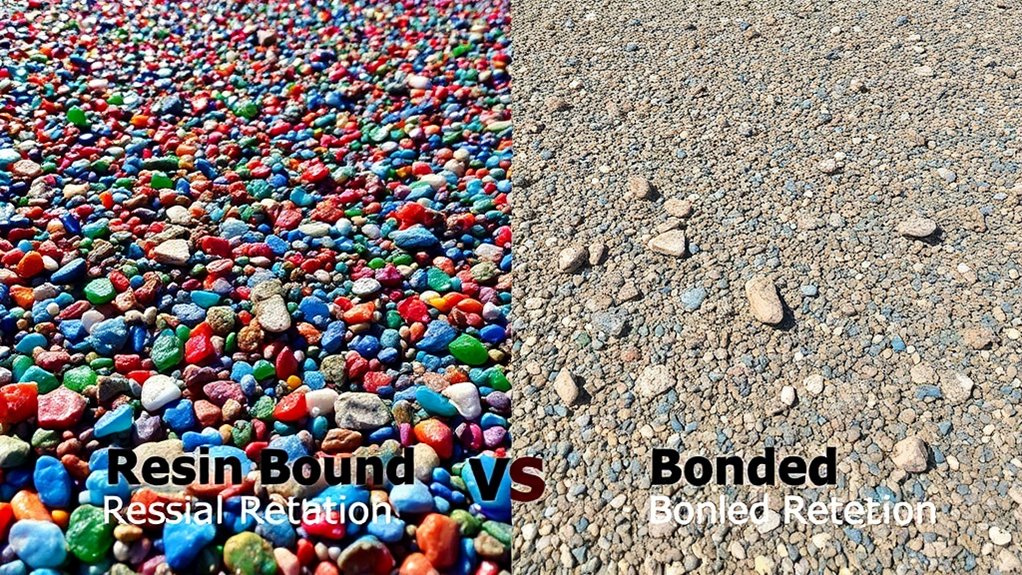
When comparing resin bound and resin bonded surfaces, you’ll notice clear differences in colour vibrancy and longevity. Resin bound systems offer consistent colour quality thanks to better pigment integration, whereas resin bonded surfaces can fade and show uneven colour depth over time. Additionally, the durability of resin bound surfaces contributes to their ability to maintain colour integrity over a longer period. Knowing these factors will help you choose the right option for your project’s look and durability. Proper preparatory work is essential to ensure the longevity of the installation, further enhancing the vibrancy of the surface.
Consistent Colour Quality
The longevity and vibrancy of colour in surfacing materials are crucial for both aesthetics and functionality. Opting for resin bound rather than resin bonded ensures better colour stability and consistency.
Here are key points to consider:
- Smooth Finish: Resin bound surfaces offer a seamless appearance, which enhances colour vibrancy.
- Full Encapsulation: The resin fully encases aggregates, minimising their exposure to environmental factors.
- Extended Lifespan: Resin bound surfaces can keep their colour for up to 30% longer than resin bonded ones.
Choosing resin bound is a smart investment for maintaining a visually appealing and durable surface.
Fading Resistance Factors
When it comes to durability and aesthetics, resin bound and resin bonded surfaces differ significantly in their resistance to fading.
Resin bound systems use UV-stable resins that help prevent fading, keeping colours vibrant for longer. The aggregates are fully encapsulated, which secures their stability and reduces colour loss.
On the other hand, resin bonded surfaces have loose aggregates, making them more vulnerable to sunlight. This exposure can lead to quicker degradation and fading.
Their non-permeable nature also traps moisture, which can weaken the resin bond and increase wear. Additionally, the smooth finish of resin bound surfaces reflects light evenly, enhancing colour vibrancy, whereas the textured surface of resin bonded systems can dull the original hues, leading to faster colour fading.
Factors Affecting Colour Retention
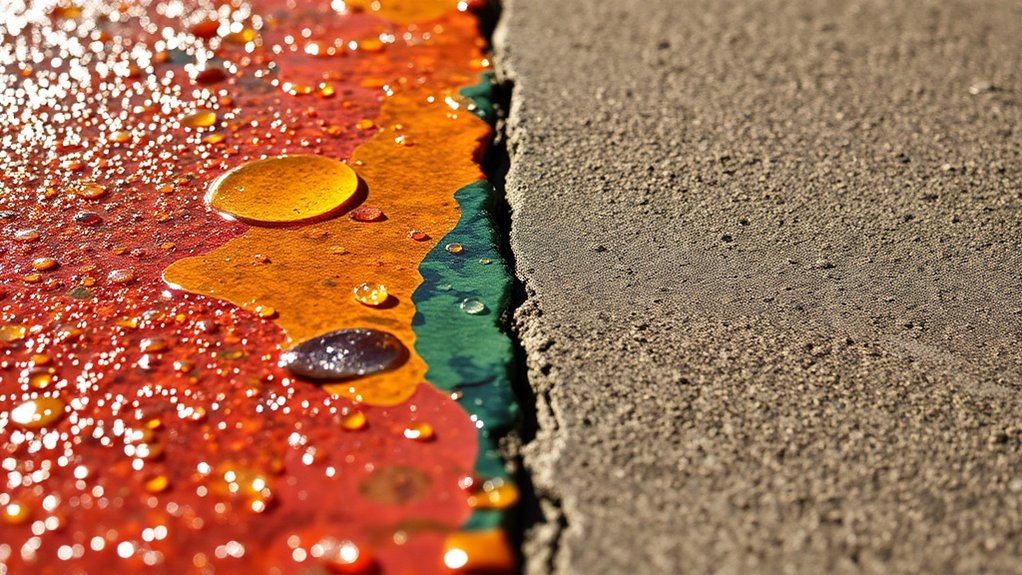
Understanding the factors that affect colour retention in resin bound and bonded surfaces is crucial for making the right choice for your project. Here are the main influences to consider:
- Types of Aggregate: In resin bound systems, aggregates are fully embedded, which offers better colour stability compared to the exposed stones found in bonded surfaces. For example, a resin bound driveway will maintain its hue longer than a bonded one.
- Properties of Resin: UV-stabilised resins used in bound systems provide superior protection for pigments. In contrast, bonded systems use resin that leaves aggregates exposed to harmful UV rays, leading to quicker fading.
- Environmental Exposure: Resin bound surfaces are more resistant to pollutants and chemicals, helping to preserve colour. Bonded surfaces, however, may easily absorb stains from oils or other substances, affecting their appearance.
These factors significantly affect the longevity and vibrancy of your selected surface, influencing both maintenance requirements and durability over time.
Performance in Different Weather Conditions
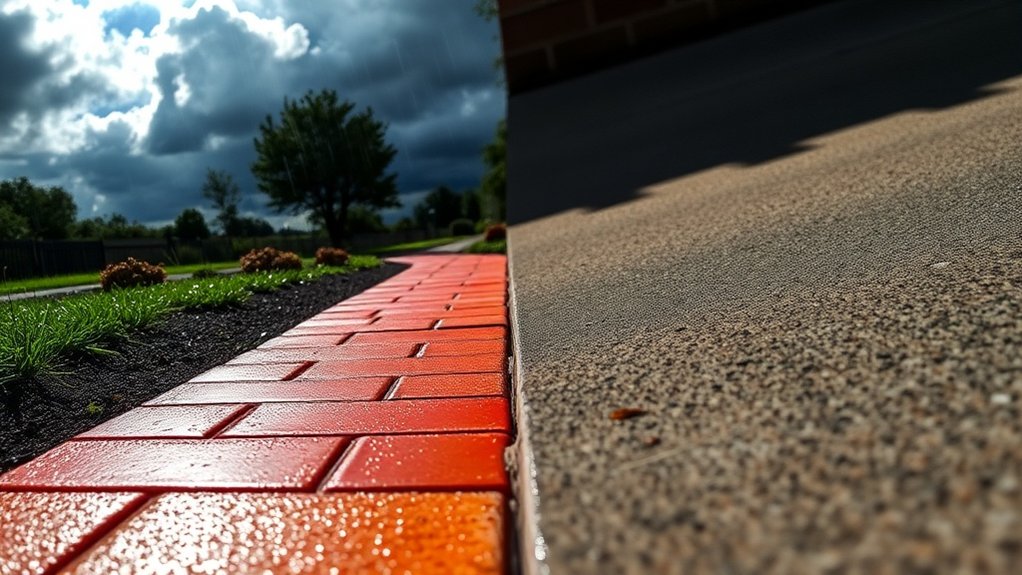
When comparing resin bound and resin bonded surfaces in different weather conditions, there are notable differences in their performance.
Resin bound systems are particularly good at maintaining their colour due to effective moisture drainage and strong UV resistance.
In contrast, resin bonded surfaces can struggle with moisture build-up and may fade more quickly.
It’s important to consider these factors when choosing the right surface for your needs, ensuring it remains vibrant and durable over time.
Weather Resistance Comparison
When comparing the weather resistance of resin bound and resin bonded surfaces, consider their performance in different weather conditions. Here are three important factors to think about:
- Freeze-Thaw Resistance: Resin bound surfaces are superior, as they minimise cracking and maintain their integrity. In contrast, resin bonded surfaces can suffer damage from water freezing within them.
- Rainwater Drainage: The permeability of resin bound systems allows water to drain away, preventing puddles and enhancing durability. On the other hand, resin bonded surfaces are impermeable, which can lead to flooding.
- Temperature Fluctuation Performance: Resin bound surfaces handle temperature changes better, reducing the risk of stress cracking. Resin bonded systems, however, are more susceptible to damage during temperature shifts.
UV Exposure Effects
Both resin bound and resin bonded surfaces encounter challenges from UV exposure, but their performance differs significantly.
Resin bound systems, especially those designed for UV stability, resist degradation effectively, keeping their colour and mechanical properties intact for longer.
On the other hand, resin bonded surfaces, which have partially exposed aggregates, tend to fade more quickly and need more frequent upkeep.
The aromatic polyurethane binders in some bonded systems can break down under UV light, resulting in brittleness and cracks.
In contrast, aliphatic polyurethane resins used in UV-stable bound systems provide greater longevity and flexibility.
For optimal colour retention across various weather conditions, opting for a UV stable resin bound system is crucial for lasting performance.
Aesthetic Preferences and Visual Appeal

Aesthetic preferences play a significant role in choosing between resin bound and resin bonded surfaces, as each has unique visual traits. Here’s a quick overview:
- Resin Bound: Offers a smooth, seamless finish, giving a contemporary stone-carpet appearance that enhances modern spaces.
- Resin Bonded: Resembles loose gravel, providing a textured, rugged look that suits rustic designs.
When it comes to customisation, resin bound surfaces allow for vibrant blends of aggregates, creating distinctive colour palettes.
In contrast, resin bonded surfaces have limitations in achieving smooth transitions.
Your choice should reflect the visual appeal you desire and how well these surfaces match your property’s style.
Understanding these differences will help you select the best option for your project.
Maintenance and Care for Colour Preservation
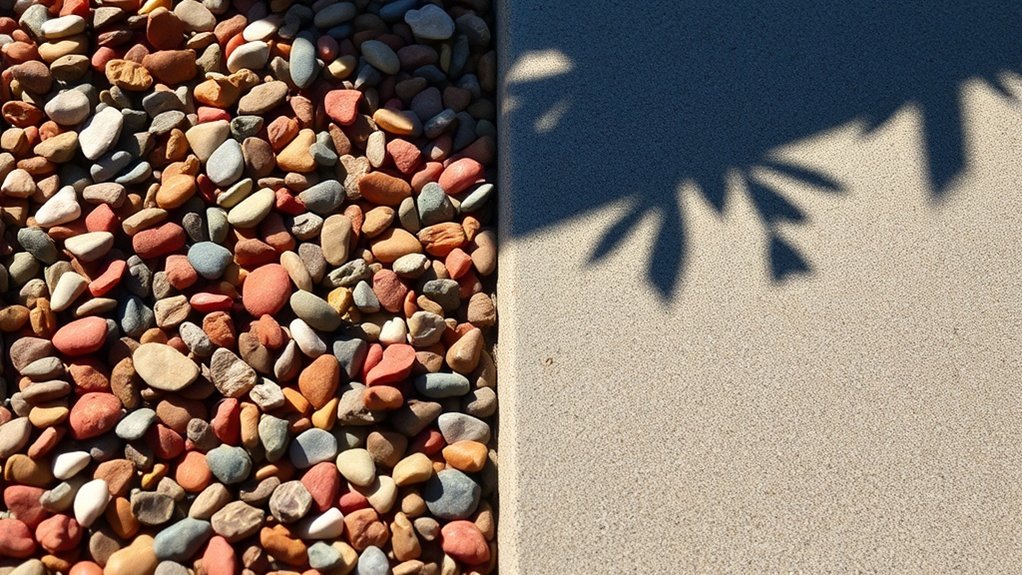
To ensure colour preservation of resin surfaces, proper maintenance is crucial. Regular cleaning, such as sweeping away debris and washing with mild detergents, helps keep colours bright.
It’s advisable to check your surfaces visually for wear or fading regularly. Address spills promptly to prevent staining, particularly on resin-bound surfaces, which are generally more resistant to UV degradation.
Keep in mind that resin-bonded systems may need more frequent upkeep due to their textured finishes that can trap dirt.
Choosing the Right Option for Your Project

Choosing the right resin for your project requires careful consideration of durability, appearance, and environmental impact. Here are three key points to keep in mind:
- Durability: Resin bound surfaces can last 20-30 years, whereas bonded surfaces typically last 10-15 years. This difference can significantly affect long-term costs and maintenance.
- Appearance: If you want a sleek, polished finish, resin bound systems deliver a smooth, uniform look. On the other hand, bonded options provide a more natural, textured surface that some may find appealing.
- Environmental Impact: Resin bound is fully permeable, allowing for effective drainage and promoting sustainability. In contrast, bonded systems are non-permeable, which can lead to water pooling.
Frequently Asked Questions
Can Colour Fading Occur in Shaded Areas?
Yes, colour fading can happen in shaded areas because differing light levels affect UV exposure. For instance, materials like resin bonded systems may hold onto moisture for longer, which can lead to dirt build-up and biological growth, making the surface look dull.
How Does UV Exposure Affect Colour Retention?
UV exposure significantly affects the stability of pigments, resulting in chemical breakdown of resins. This often leads to fading and yellowing, especially in lighter colours. For instance, a pale blue paint exposed to sunlight might lose its vibrancy over time, while a deeper shade may retain its colour better. Being aware of how UV affects materials can help you select options that will remain vibrant and durable in the long run.
Are There Eco-Friendly Colour Options Available?
Yes, there are eco-friendly colour options available that use sustainable pigments and natural dyes. These choices not only look great but also minimise environmental impact, providing vibrant and long-lasting colours without harmful chemicals. For example, many brands now offer paints made from plant-based ingredients, which are a safer option for both your home and the planet.
Can I Change the Colour of an Existing Surface?
Yes, you can change the colour of an existing surface. Start by cleaning it thoroughly to ensure even colour application. Using a suitable primer and opting for epoxy-based paints can improve adhesion and durability. For example, if you’re refreshing a wooden table, a good sand down followed by a primer can make a significant difference in the final look.
What Impact Do Temperature Fluctuations Have on Colour?
Temperature extremes significantly impact colour stability. Changes in temperature can lead to mechanical stress, resulting in cracking and the degradation of pigments. For instance, leaving a painted surface in direct sunlight during hot weather can cause the paint to blister. To keep colours vibrant and extend the lifespan of your surfaces, it’s crucial to maintain a stable environment.
Conclusion
In summary, the choice between resin bound and bonded surfaces depends on your priorities for colour retention and aesthetics. Research shows that resin bound surfaces can keep their vibrant colours for over 10 years with proper maintenance, while bonded surfaces typically last around 5 years. This notable difference highlights the importance of choosing the right option for lasting visual appeal. Consider factors like local weather and upkeep to ensure your project stays attractive for years to come.

Maximize your project's efficiency by understanding the installation times of resin-bound and resin-bonded systems, but which one truly suits your Read more
With strategic planning and budgeting, you can enhance the durability of your resin surfaces—discover the essential costs you need to Read more

How do resin-bound driveways balance beauty and functionality, and are they the right choice for your home? Discover the pros Read more

