

Installation Time: Resin-Bound Vs Resin-Bonded
When comparing installation times, resin-bound systems generally require 24 to 48 hours before they can be walked on, whereas resin-bonded surfaces allow for quicker access after application. Resin-bound installations are more labour-intensive, needing careful preparation and a precise mix. On the other hand, resin-bonded installations are simpler and can be completed more swiftly. Understanding these differences is crucial for making the right choice for your project. For further insights on preparation and other factors, feel free to explore more.
Key Takeaways
- Resin-bound installations require 24 to 48 hours before they can bear traffic, whereas resin-bonded systems allow for quicker access after application.
- You can walk on resin-bound surfaces after 4 to 6 hours, with vehicle traffic supported within 24 to 36 hours.
- Resin-bonded surfaces allow foot traffic within 16 to 24 hours, needing at least 24 hours before vehicles can use them.
- Curing times for both systems are influenced significantly by environmental conditions.
- Generally, resin-bound installations are more labour-intensive and time-consuming compared to the quicker and simpler resin-bonded methods.
Overview of Resin-Bound and Resin-Bonded Systems

When choosing a surfacing system, it’s important to grasp the differences between resin-bound and resin-bonded options.
Resin-bound systems mix resin with aggregates before application, creating a smooth, fully permeable surface. This prevents loose stones and delivers a modern, glossy finish that suits various aesthetic preferences. Additionally, resin-bound surfaces are SUDS compliant when laid on a permeable base, which helps reduce flooding risk. Moreover, these systems are known for their weed-resistant surfaces, making them a practical choice for low-maintenance driveways.
On the other hand, resin-bonded systems involve applying resin over a base and then scattering loose aggregate, resulting in a textured, non-permeable finish that looks like loose gravel.
Both systems utilise natural stone aggregates for durability, but resin-bound surfaces are superior for drainage and long-term maintenance.
Conversely, resin-bonded surfaces offer better slip resistance, making them ideal for areas where safety is paramount.
Understanding these distinctions will help you choose the right option for your project needs.
Installation Time Factors
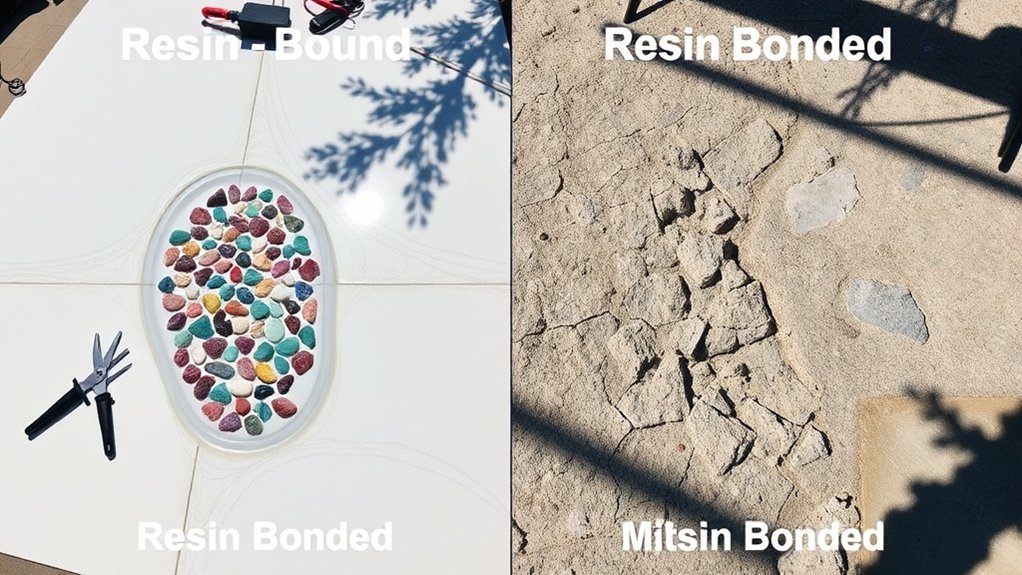
Understanding installation time factors is crucial for effective project planning, as both resin-bound and resin-bonded systems come with their own set of challenges.
Resin-bound installations usually take longer due to the labour-intensive processes and curing times, often requiring 24 to 48 hours before they can bear traffic again. On the other hand, resin-bonded systems are generally quicker to install, allowing for faster access post-application. Additionally, the lower maintenance needs of resin-bound driveways can offset the longer installation time when considering long-term value.
Weather also plays a significant role in both systems; high temperatures can speed up curing, while poor weather can cause delays.
Equipment handling is another important consideration; precise mixing is vital for resin-bound installations to prevent setbacks, whereas resin-bonded applications are simpler and more straightforward.
Preparation Requirements for Each System
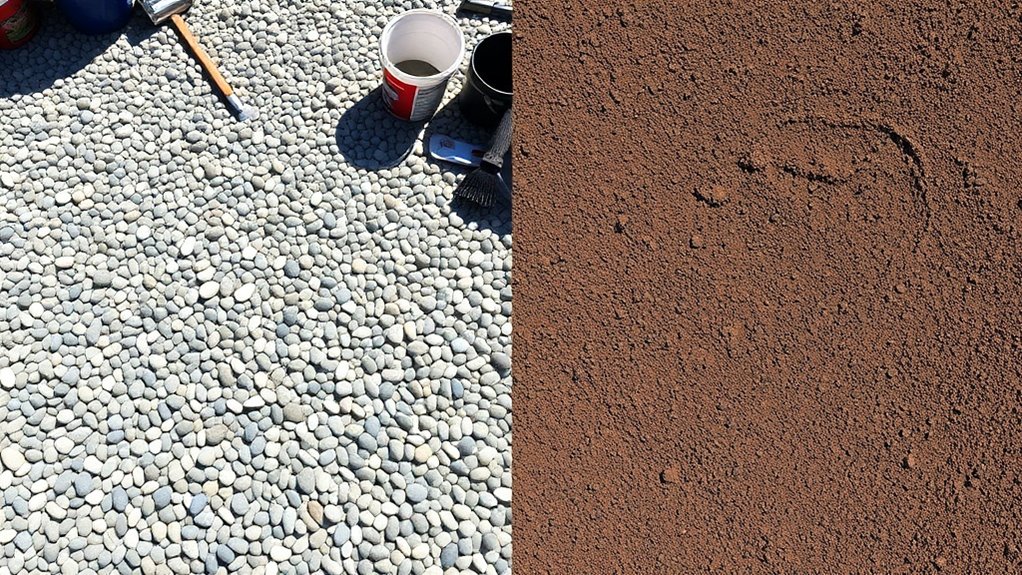
Effective preparation is essential for the success of both resin-bound and resin-bonded systems. A solid checklist is crucial to ensure optimal results.
| Aspect | Resin-Bound | Resin-Bonded |
|---|---|---|
| Base Material | Use stable materials like concrete or tarmac | Must be clean, dry, and structurally sound |
| Surface Cleaning | Pressure wash to remove contaminants | Clear away debris and dust |
| Surface Testing | Fill in holes and ensure a smooth, level surface | Compact using a whacker plate |
| Priming | Essential for better adhesion | Priming is needed for both old and new concrete |
| Weather Conditions | Ensure dry conditions and avoid rain | Check that the temperature is above 3°C |
Both systems necessitate thorough surface cleaning and a dry base to avoid curing problems. Proper preparation is key to achieving effective bonding and long-lasting results for your project. Additionally, ensuring a well-compacted base is crucial for resin bound installation to provide stability and durability over time. It is also important to assess the integrity of the existing surface to prevent potential cracks during the installation process.
Labour and Equipment Needs
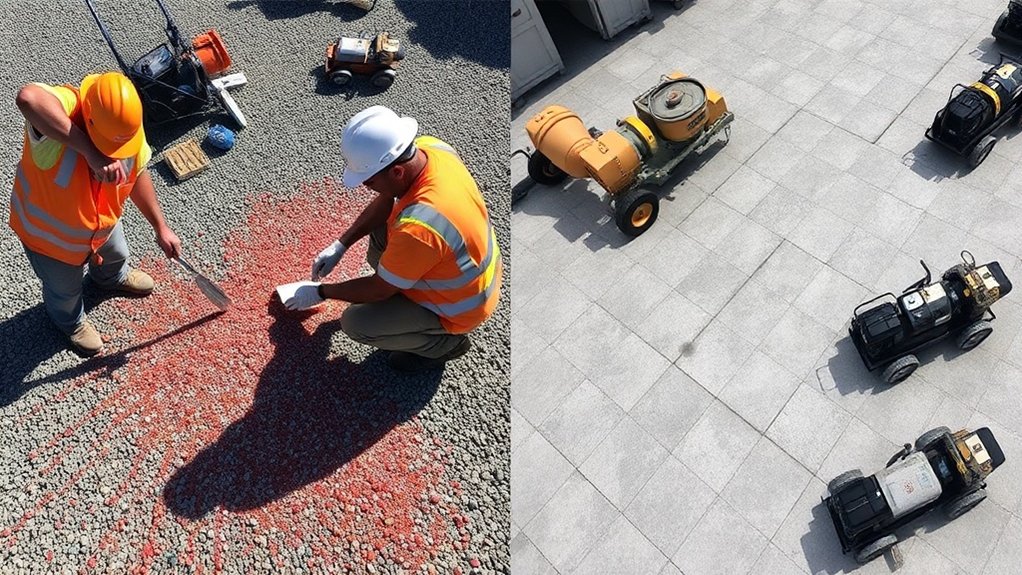
Choosing between resin-bound and resin-bonded systems significantly affects your labour and equipment requirements.
Resin-bound installations demand skilled workers due to the careful mixing and trowelling needed for a smooth finish, making them more labour-intensive and costly. For example, a resin-bound driveway might take longer to complete but usually looks more polished.
On the other hand, resin-bonded systems can be carried out by less experienced workers, leading to quicker installations and reduced labour costs. This makes them a popular choice for budget-conscious projects.
When it comes to equipment, resin-bound systems require specialised mixing tools and finishing equipment, which can increase your initial investment.
In contrast, resin-bonded installations need only basic tools, making them more accessible and economical. Additionally, the choice of system can impact maintenance requirements, with resin-bound driveways generally needing less upkeep over time.
Ultimately, your choice should weigh the necessary skill levels, equipment costs, and project timelines to ensure it meets your objectives.
Impact of Weather Conditions
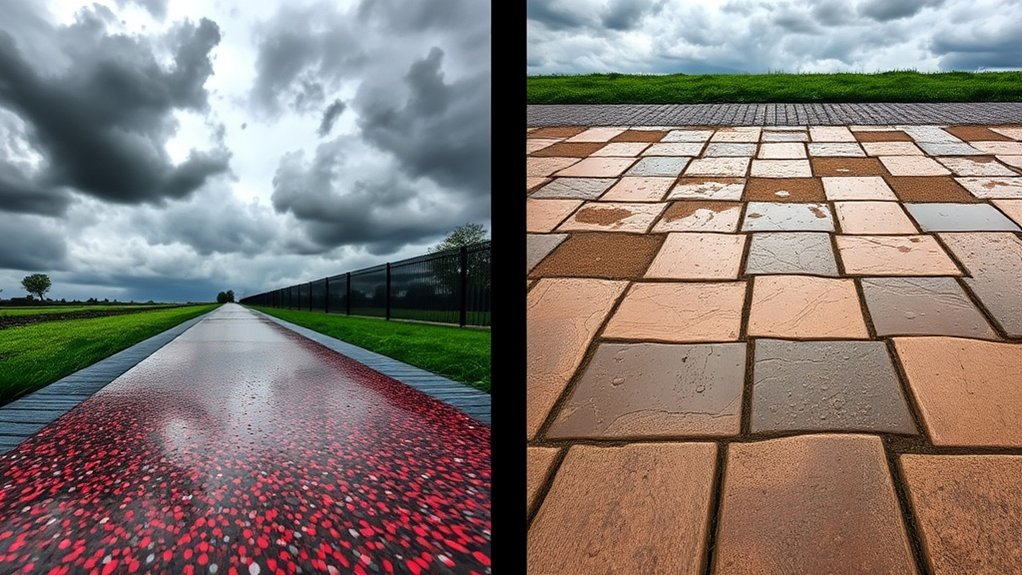
When planning your resin installation, it’s essential to consider the weather, as it significantly impacts both the process and the final result.
Accurate weather forecasts are crucial; resin-bound and resin-bonded systems work best in temperatures between 5°C and 25°C. Cold temperatures can cause moisture damage, while excessive heat can lead to uneven finishes.
High humidity can prolong curing times and create cloudy surfaces, so aim for moderate humidity levels. Wet conditions are particularly risky—any water contact during curing can jeopardise the installation.
Spring and autumn are typically the best seasons for resin work, helping you avoid temperature extremes.
Curing Time Comparison
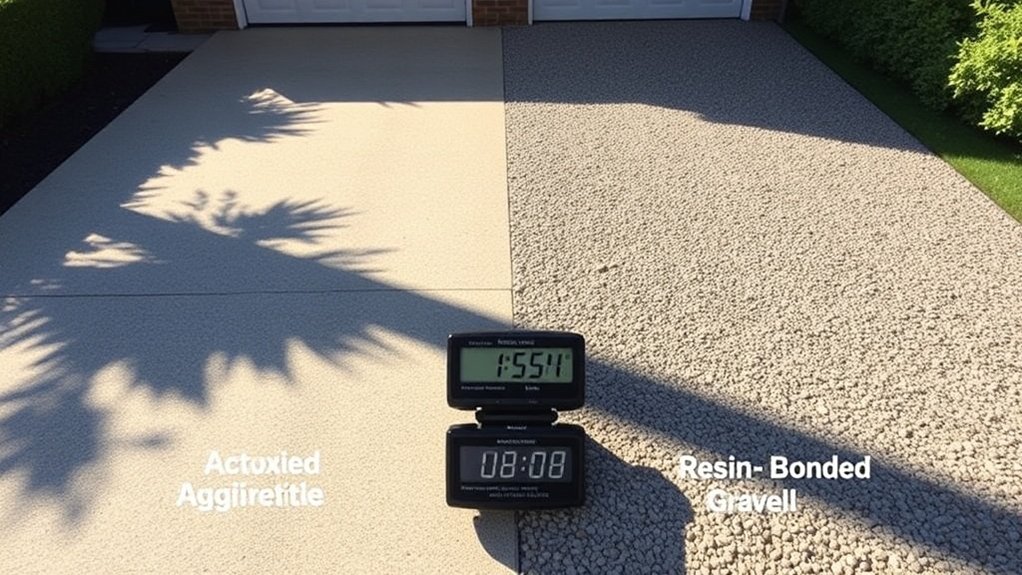
When comparing curing times, there are notable differences between resin-bound and resin-bonded systems.
Resin-bound surfaces can be walked on just 8 hours after application and can support vehicle traffic within 24 hours.
In contrast, resin-bonded surfaces take longer due to extra application steps.
Additionally, environmental conditions play a crucial role in how quickly each system cures and becomes usable.
Foot Traffic Curing Duration
When comparing resin-bound and resin-bonded systems, their foot traffic curing durations vary significantly.
Resin-bound surfaces can typically be walked on after about 4 to 6 hours, reaching optimal durability in around 8 hours. However, colder temperatures can prolong this curing period.
On the other hand, resin-bonded systems usually allow foot traffic within 16 to 24 hours, depending on the type of resin used and the surrounding conditions.
The curing methods play a crucial role in determining how quickly each surface can be safely used, with resin-bound systems being more stable and less likely to be disturbed.
It’s important to check the ambient temperature and moisture levels to avoid delays in curing.
Additionally, proper surface preparation is essential for effective curing and can influence when foot traffic can safely commence.
Vehicle Traffic Curing Duration
Curing durations for vehicle traffic vary significantly between resin-bound and resin-bonded systems, affecting when these surfaces can be used.
Resin-bound surfaces generally require 24 to 36 hours to cure, although warm weather can reduce this to just 6 to 12 hours. Good surface preparation can further speed up the curing process, allowing quicker vehicle access.
In contrast, resin-bonded surfaces need a minimum of 24 hours to cure, but their curing time is highly dependent on the substrate conditions. For example, concrete may require at least 7 days for proper curing.
The curing methods for resin-bonded applications highlight the necessity of a well-cured base to prevent bond failure.
Understanding these differences is crucial for effectively planning and scheduling vehicle traffic on newly installed surfaces.
Environmental Impact on Curing
Environmental factors play a significant role in the curing times of resin-bound and resin-bonded surfaces, affecting their performance and usability. Here are key points to consider:
- Temperature: Warmer conditions can shorten curing time to around 6 hours, while colder temperatures may extend it to 48 hours.
- Humidity: High moisture levels can hinder the curing process, particularly in resin-bonded systems.
- Surface Preparation: Ensuring a clean and dry surface is critical for proper adhesion and effective curing.
- Drainage: Good drainage is essential to prevent moisture retention, which can compromise curing quality.
- Ambient Conditions: High humidity can lead to a tacky surface, while low temperatures slow down chemical reactions in both systems.
Installation Complexity
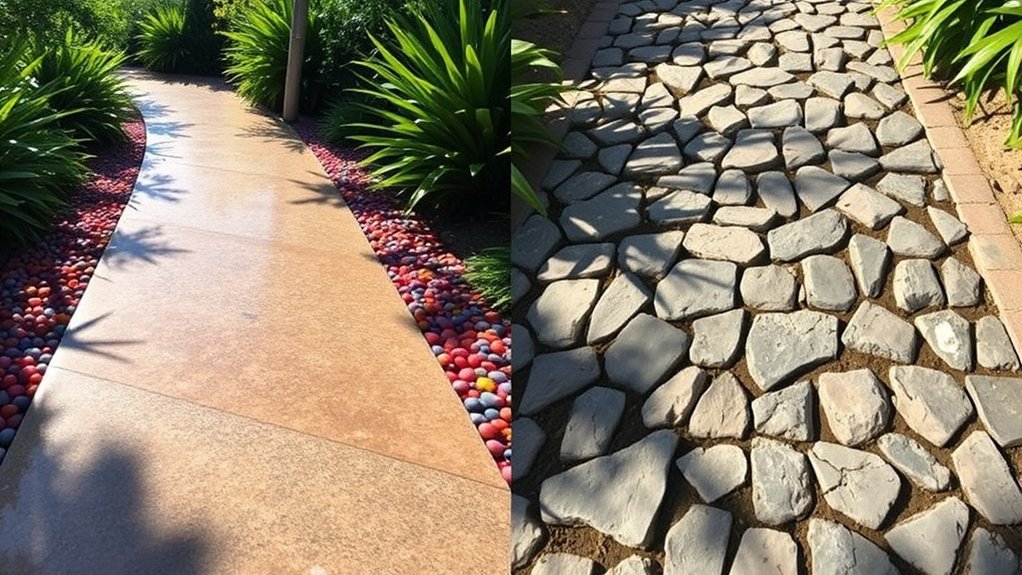
When it comes to installation complexity, resin-bound and resin-bonded systems are quite different.
Resin-bound installations require careful preparation, with a precise mix of resin and aggregate to ensure good adhesion and prevent defects. This method demands a higher level of skill, making it more labour-intensive and time-consuming.
On the other hand, resin-bonded systems are more straightforward. They involve applying resin to a clean existing surface and then broadcasting loose stones, which simplifies the process and reduces both labour costs and installation time.
While both methods need attention to weather conditions, the ease of the resin-bonded technique allows for quicker project completion, making it a better choice for less experienced installers.
Ultimately, your decision may depend on your skill level and how quickly you want the project finished.
Maintenance Needs and Durability
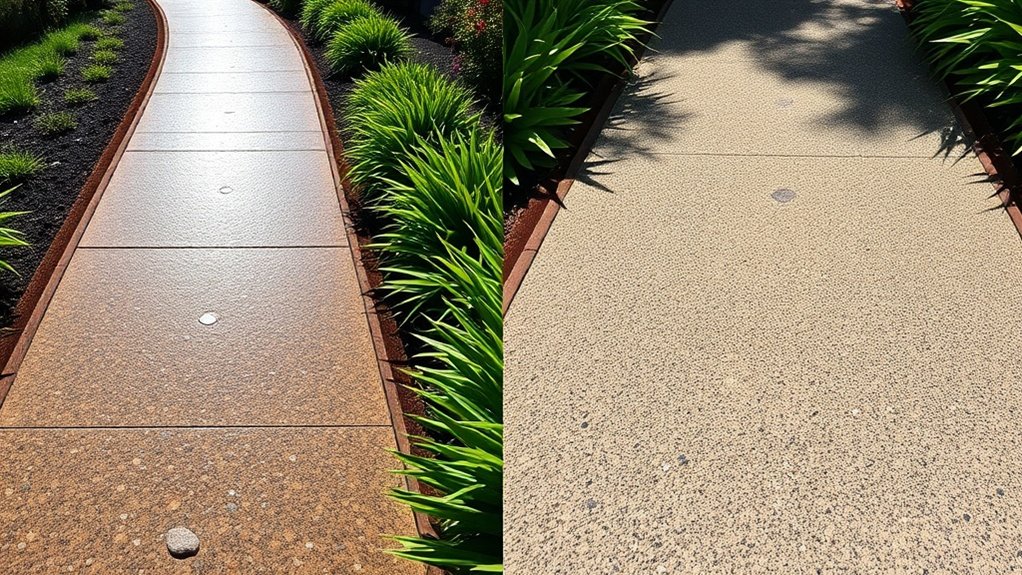
When considering installation complexity, it’s crucial to evaluate the maintenance needs and durability of resin-bound versus resin-bonded surfaces.
Resin-bound systems are built to last, offering a lifespan of 20 to 30 years with minimal upkeep. In contrast, resin-bonded surfaces generally last around 10 to 15 years and require more frequent maintenance.
Here are the key differences:
- Resin-bound surfaces require less maintenance due to their sealed design.
- Keeping resin-bound areas tidy usually involves regular sweeping and the occasional pressure wash.
- Resin-bonded systems need more attention, including frequent brushing to prevent stones from loosening.
- It’s important to keep an eye on loose aggregate for the durability of resin-bonded surfaces.
- Resin-bound surfaces are also weed-resistant, which helps reduce maintenance tasks.
Ultimately, your choice between these systems will affect how often you need to maintain them and their long-term durability.
Cost Implications
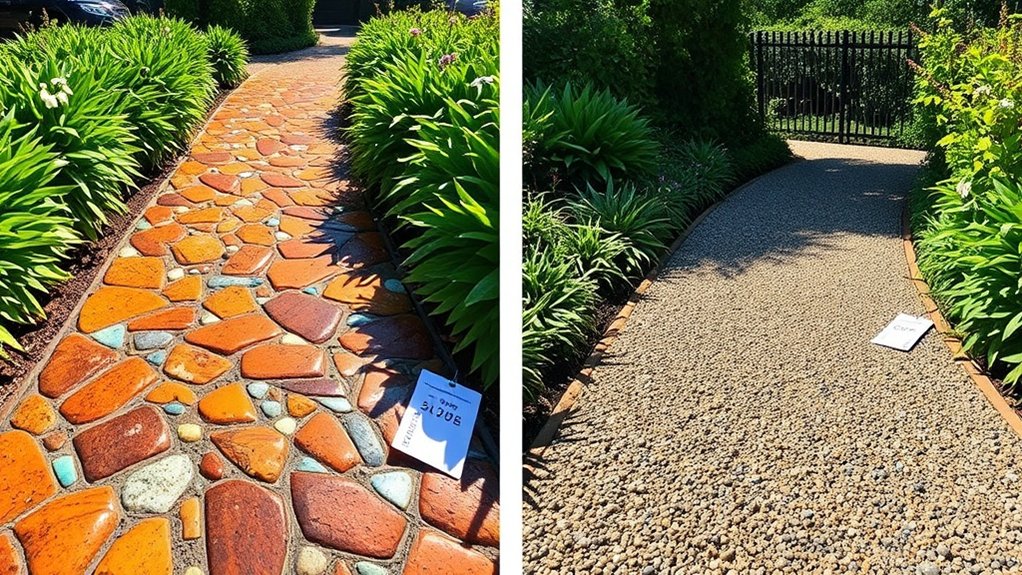
Understanding the cost implications of resin-bound versus resin-bonded surfaces is crucial for making an informed choice.
Resin bonded driveways typically cost between £4.36 and £6.58 per square foot. In contrast, resin bound systems tend to be more expensive due to their superior durability and material quality.
Installation costs for resin bonded systems are lower, ranging from £11 to £17 per square foot, thanks to quicker installation times.
However, resin bound surfaces can save you money in the long run due to reduced maintenance and greater longevity. Although the initial outlay is higher, the improved performance may outweigh future repair costs.
Ultimately, your decision should consider not just upfront expenses but also potential long-term financial benefits.
Long-Term Efficiency
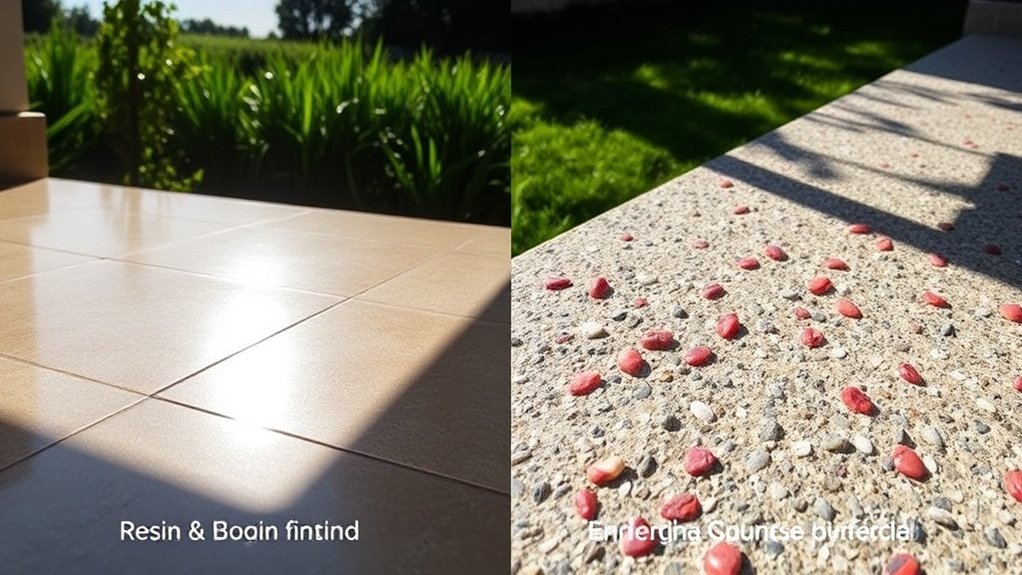
When comparing resin-bound and resin-bonded surfaces, their long-term efficiency varies significantly, affecting your overall investment.
Here are key points to consider for lasting durability:
- Resin-bound surfaces can last between 20 to 30 years, whereas resin-bonded surfaces typically last only 8 to 15 years.
- The solid structure of resin-bound systems prevents stone loss, which enhances their longevity.
- Maintenance is simpler with resin-bound surfaces, leading to lower long-term upkeep costs.
- The permeability of resin-bound systems helps manage water damage, keeping the sub-base intact.
- In contrast, resin-bonded surfaces are more susceptible to wear and may require earlier replacement.
Aesthetic Considerations
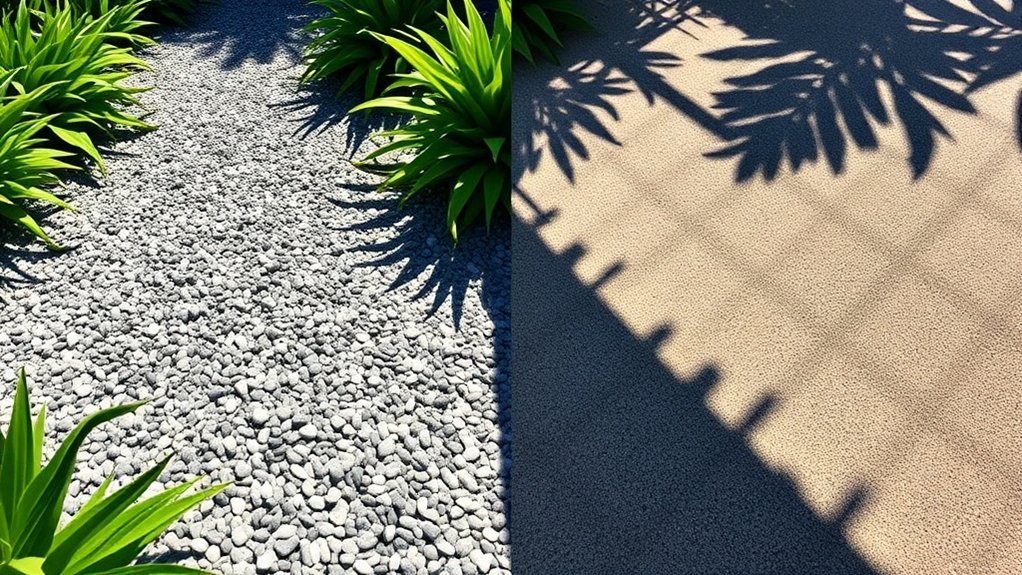
Long-term efficiency is important for your investment, but aesthetic appeal can significantly impact your satisfaction with resin surfaces.
Resin Bound offers a smooth, seamless finish that looks modern and sleek, making it ideal for contemporary designs. With a wide range of colour options, you can achieve vibrant, consistent hues and creative patterns, giving you great design flexibility.
On the other hand, Resin Bonded provides a rough, textured surface that resembles natural gravel, adding character to rustic settings. While it has a unique tactile quality, its colour consistency can be less reliable.
Ultimately, your choice between these surfaces depends on whether you prefer a polished, high-end appearance or a more natural, textured look that enhances outdoor environments.
Practical Applications and Suitability
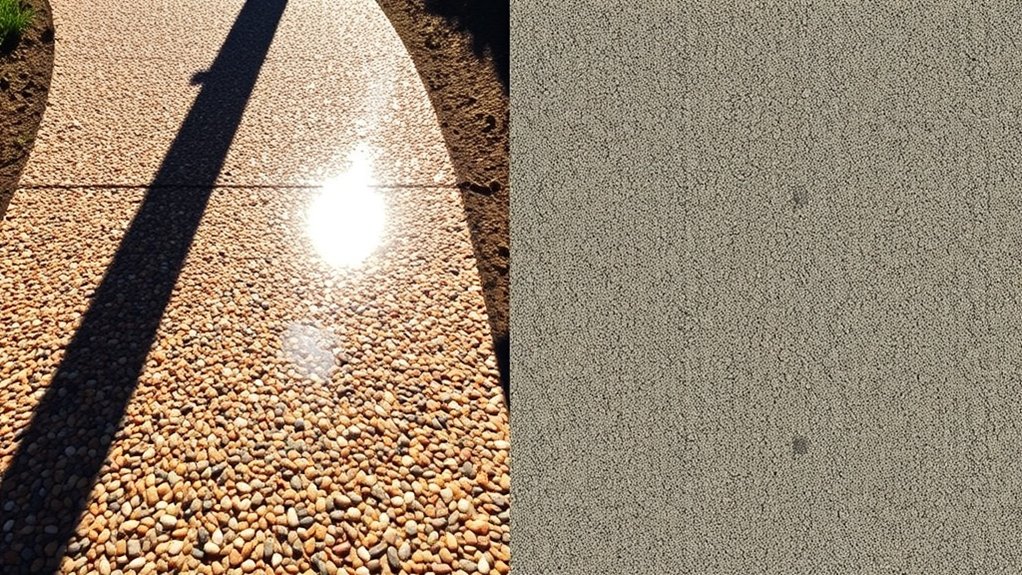
When choosing between resin-bound and resin-bonded surfaces for your project, it’s important to consider the specific requirements of your site and the expected usage.
- Resin Bound: This option is best for high-traffic areas like driveways and commercial spaces, thanks to its strong durability.
- Resin Bonded: Ideal for lighter use areas, such as garden paths or decorative borders.
- The textured surface of resin bonded provides better slip resistance in wet conditions.
- Resin bound offers a seamless finish that supports heavier loads with reduced risk of damage.
- For areas where vehicles will be present, avoid resin bonded surfaces to prevent stones from becoming loose.
Make your choice based on the intended use and the environment to ensure the best outcome.
Frequently Asked Questions
What Are the Environmental Impacts of Resin Systems?
When assessing the environmental impacts of resin systems, it’s important to explore eco-friendly alternatives. A lifecycle analysis shows that permeable resin-bound surfaces can aid groundwater replenishment and minimise runoff. In contrast, resin-bonded options can contribute to surface water issues and require more maintenance.
How Do Resin Systems Affect Local Wildlife During Installation?
During installation, resin systems can temporarily disrupt local wildlife, but their design ultimately supports habitat protection. Techniques that minimise noise and vibration help reduce disturbance for local animals. For example, by improving soil aeration and moisture retention, these systems create a better environment for plants and wildlife alike.
Can Resin Systems Be Recycled After Their Lifespan?
Resin systems present recycling challenges because of their polymer structure. An assessment of their lifespan shows that there are limited recycling methods available. However, ongoing research is working towards developing more recyclable formulations. This effort aims to improve sustainability and reduce environmental impact once these materials reach the end of their life. For example, new techniques are being explored that could enable the breakdown of resins into reusable components, making recycling more feasible in the future.
What Safety Measures Should Be Taken During Installation?
During installation, it’s essential to wear personal protective equipment such as gloves, goggles, and suitable clothing. Ensure the installation site is well-prepared by checking that surfaces are dry, monitoring the weather, and avoiding any moisture to ensure proper adhesion and quality.
Are There Any Health Risks Associated With Resin Systems?
Yes, there are health concerns linked to resin exposure. It’s important to take safety precautions, such as wearing personal protective equipment (PPE) and ensuring good ventilation. This can help reduce the risks of skin irritation, respiratory issues, and potential long-term allergic reactions during installation.
Conclusion
To summarise, when choosing between resin-bound and resin-bonded systems, installation time is a crucial factor. Resin-bound systems can usually be installed in a single day, whereas resin-bonded systems may require several days due to extensive preparation. With careful planning, you can reduce delays and ensure a lasting finish. Ultimately, your choice should reflect your timeline and project needs, balancing efficiency with quality.

How do resin-bound driveways balance beauty and functionality, and are they the right choice for your home? Discover the pros Read more

Get the scoop on the pros and cons of resin-bonded driveways and discover what makes them a popular choice for Read more

See how resin bound surfaces outperform resin bonded ones in colour retention, revealing crucial insights that could impact your project's Read more