Can You Use Salt on Resin Driveways in Nottinghamshire Winters?
Yes, you can use salt on resin driveways during winters in Nottinghamshire, but you need to be careful. While salt helps prevent ice, too much can damage the driveway’s surface and lead to expensive repairs. It’s best to apply salt sparingly and clean up any leftover salt afterwards to reduce long-term damage. You might also consider alternatives like sand or calcium chloride, which can provide traction without harming the appearance of your driveway. There are effective ways to keep your driveway looking good and functional throughout the winter.
Key Takeaways
Using salt on resin driveways can cause cracking and discolouration, which can damage the surface over time. Additionally, salt runoff may contaminate groundwater, posing environmental risks in Nottinghamshire.
To prevent scratches on the resin surface, snow should be cleared promptly using plastic shovels. Instead of salt, consider safer alternatives like sand or calcium chloride for traction and ice management.
Regular maintenance and careful application of any de-icing products are crucial to keeping your driveway in good condition throughout the winter months.
Understanding Resin Driveways
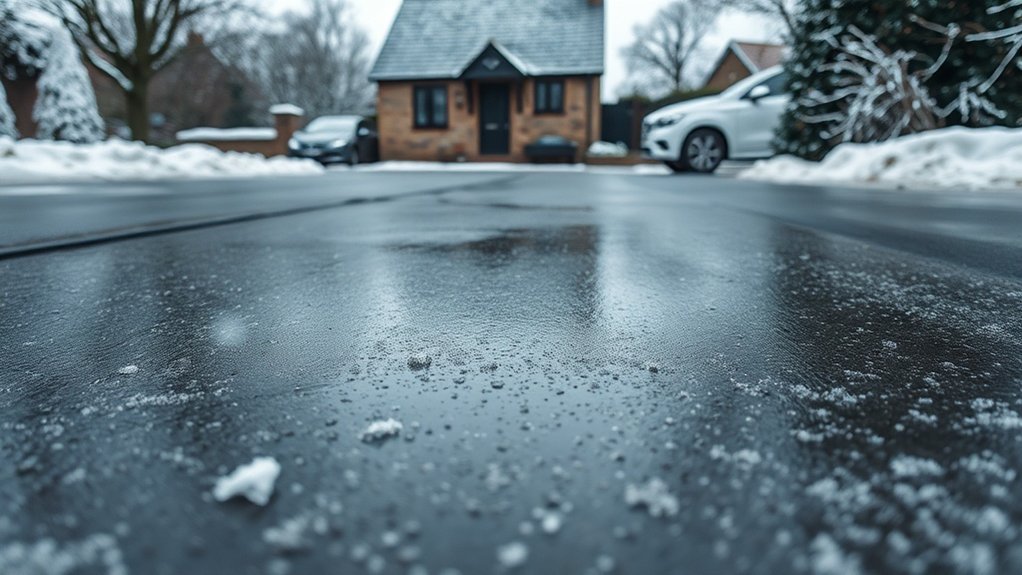
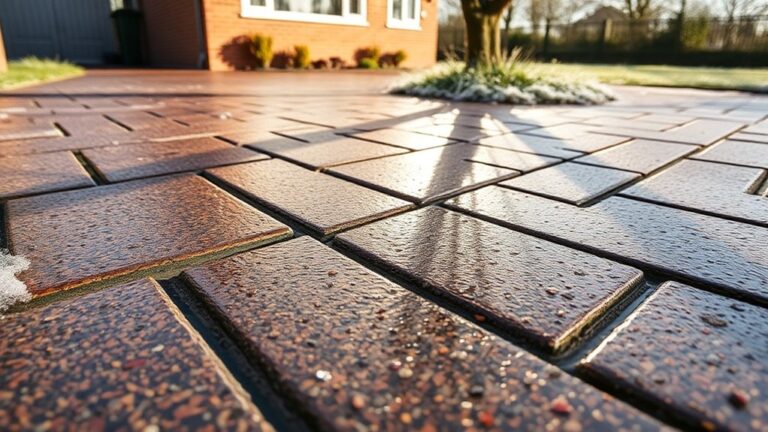
When looking for a driveway that combines style and practicality, resin driveways are an excellent choice. These driveways mix aggregate materials like stone or gravel with a clear resin binder, resulting in a seamless surface that’s both attractive and functional. With a wide range of colours and styles available, you can easily enhance your home’s appearance while enjoying the benefits of resin. Resin driveways are durable, lasting up to 20 years, and they resist cracking, fading, and staining, making them low-maintenance. Their permeable nature allows for effective water drainage, helping to reduce the risk of flooding. Additionally, the quality of project execution significantly impacts the longevity of the driveway. In short, resin driveways offer a great balance of longevity and style, making them a worthwhile investment for any homeowner. Regular cleaning is essential to maintain the value of the driveway and preserve its beauty and integrity.
The Role of Salt in Ice Prevention
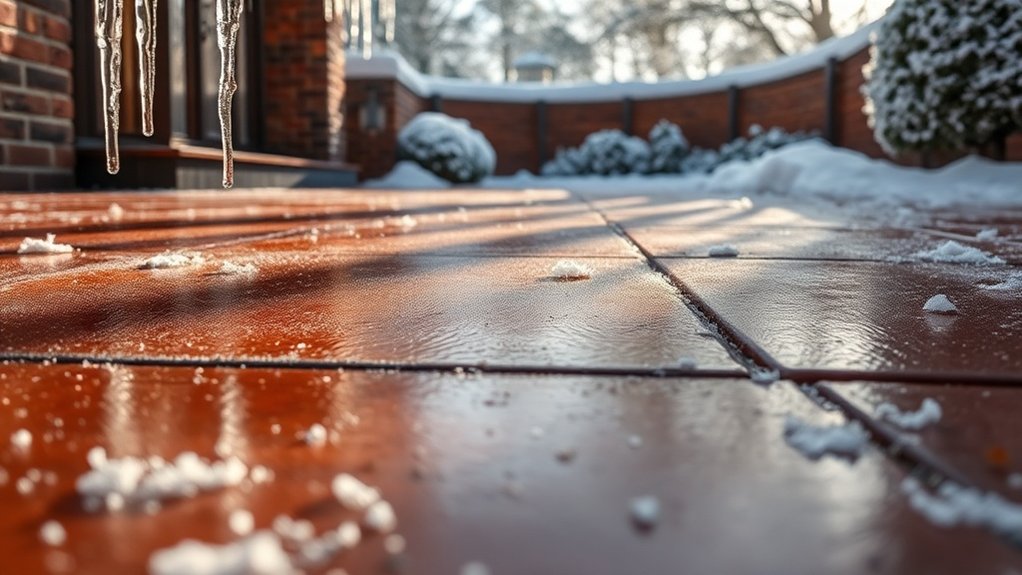
As winter approaches, it’s important to understand how salt helps prevent ice on driveways. Salt works by lowering the freezing point of water, which creates a brine that stops ice from forming and reduces the risk of slips. Applying salt brine to surfaces before snow arrives can enhance this effect and prevent frost. However, keep in mind that salt is less effective in colder temperatures, particularly below -1°C (30°F). For optimal safety, apply salt before ice forms and do so sparingly; too much can harm the environment. Pre-treatment before snow is essential for maximizing the effectiveness of salt in preventing ice formation. Additionally, using eco-friendly alternatives can provide a safe option for maintaining your driveway during winter. When used wisely, salt can significantly decrease the likelihood of ice-related accidents, keeping your driveway safe and accessible all winter long.
How Salt Reduces Ice Formation

Understanding how salt reduces ice formation is key to keeping driveways safe during winter. The effectiveness of salt relies on its unique chemical properties, which disrupt ice formation in several ways:
- Ion Dissolution: When salt dissolves, it breaks into sodium and chloride ions, which interfere with the hydrogen bonds in water.
- Freezing Point Depression: These ions lower the freezing point of water, allowing it to remain liquid even below 0°C (32°F). This phenomenon is known as freezing point depression, which enhances the melting effects of salt.
- Ice Crystal Disruption: Salt ions weaken the ice structure, increasing the movement of water molecules, which helps to melt the ice further.
- Temperature Limitations: Salt is effective down to about -9°C (15°F); below this temperature, its ability to melt ice significantly diminishes.
Using salt can be a straightforward and efficient way to manage icy conditions, but it’s important to use it wisely given its limitations in extremely low temperatures.
Controlled Application of Salt
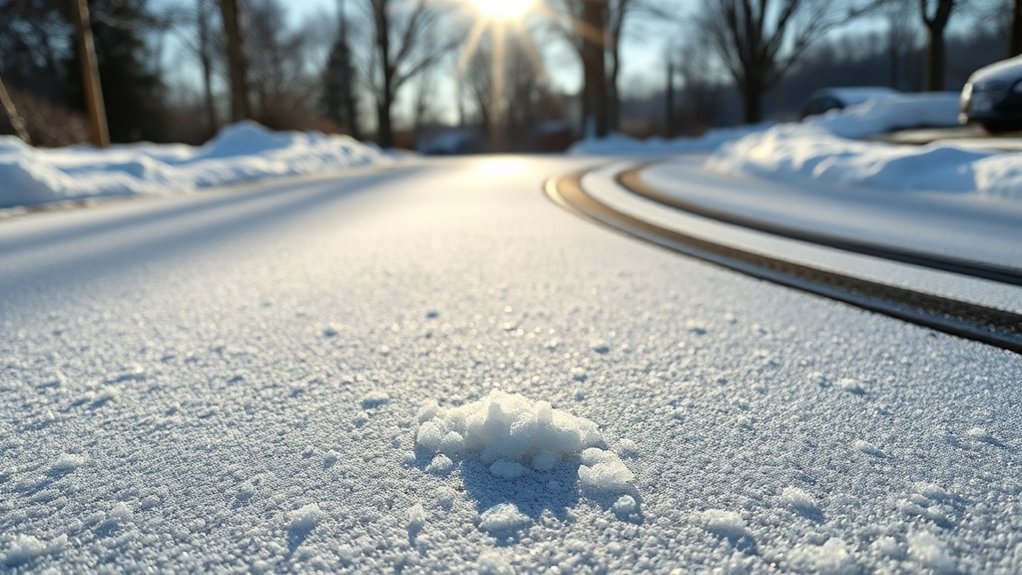
Controlled application of salt is crucial for protecting resin driveways during winter. Limit your usage to a maximum of one cup of white rock salt for every ten paving slabs. When ice is present, use between one and one and a half cups to effectively prevent it. Timing is key; apply the salt one to two hours before the weather turns, particularly when pavement temperatures are above -9°C (15°F). For better adhesion and to lessen environmental impact, consider pre-wetting the salt with a brine solution. After application, always sweep away any leftover salt to avoid long-term damage. This careful approach helps maintain the durability and appearance of your resin driveway throughout harsh winter conditions, especially when considering effective drainage solutions to manage any potential runoff during thawing.
Risks of Overusing Rock Salt
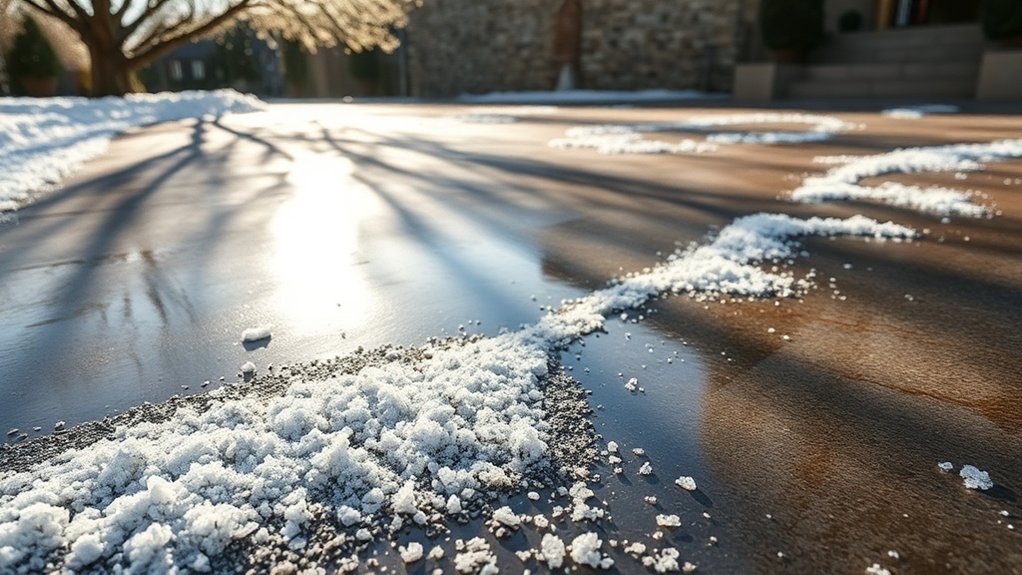
Overusing rock salt can lead to significant long-term damage to your resin driveway.
Here are four key concerns:
- Chemical Reactions: Rock salt can react with concrete, leading to cracking and unsightly discolouration.
- Corrosion: Excessive salt exposure can corrode any metal reinforcements, jeopardising the driveway’s structural integrity.
- Environmental Impact: Salt runoff can contaminate groundwater and disrupt local ecosystems, posing risks to wildlife and plant life.
- Health Hazards: Higher salinity in drinking water can be harmful to vulnerable groups, and salt residues can create slip hazards.
Consider using salt alternatives to reduce these risks and protect both your driveway and the environment.
Alternatives to Rock Salt
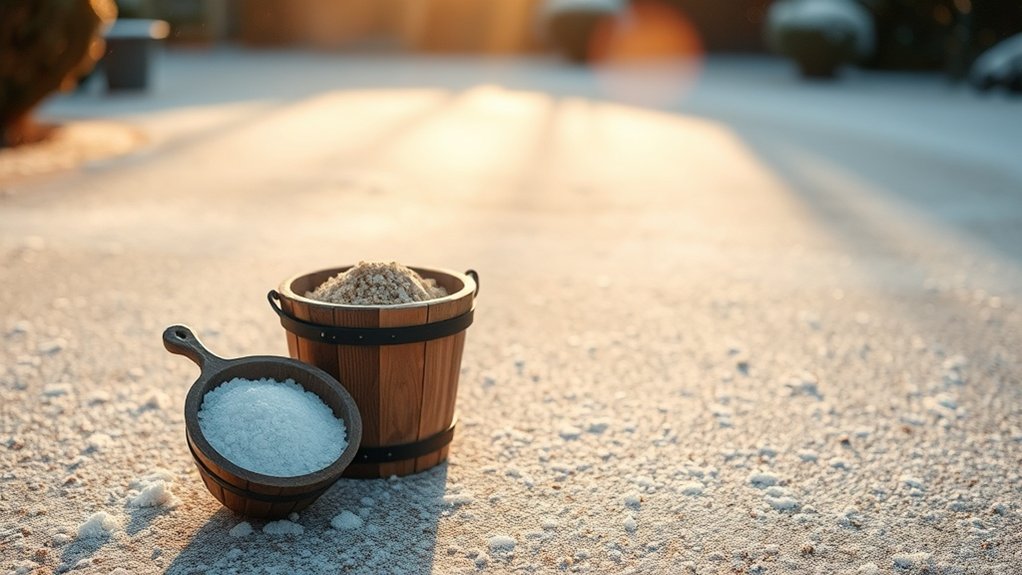
When looking for alternatives to rock salt, consider using sand for traction; it won’t melt ice but offers a stable surface for walking and driving.
Calcium chloride is another option, particularly effective in very cold conditions, as it significantly lowers the freezing point of water.
Each alternative has its advantages, so you can select the one that best fits your resin driveway while being mindful of the environment.
Sand for Traction
When winter weather turns your driveway into an icy hazard, sand is a reliable alternative to rock salt for improving traction. Its gritty texture offers excellent grip without damaging your surfaces.
Here are the key benefits of using sand for traction:
- Instant Traction: Sand enhances grip on icy surfaces, helping to prevent slips and falls.
- Environmental Safety: Unlike salt, sand doesn’t harm your driveway or surrounding plants.
- Durability: Sand is reusable and doesn’t break down like chemical de-icers.
- Ease of Use: Sand works immediately and can be applied easily.
Using sand not only boosts safety but also protects your driveway and the environment, making it a smart choice for winter in the UK.
Calcium Chloride Benefits
If you’re seeking an effective alternative to rock salt for de-icing your driveway this winter, calcium chloride could be your ideal choice. Its superior melting efficiency allows it to work effectively in harsh conditions, melting ice down to -32°C. Calcium chloride acts 2 to 13 times faster than rock salt, achieving clear pavement in 85% of applications around 0°C. Additionally, it is less corrosive and poses less risk to plants and pets.
| Feature | Calcium Chloride |
|---|---|
| Melting Point | -32°C |
| Speed of Action | 2-13 times faster than salt |
| Environmental Impact | Less harmful to plants |
| Cost Efficiency | Requires one-third the amount |
Best Practices for Salt Application
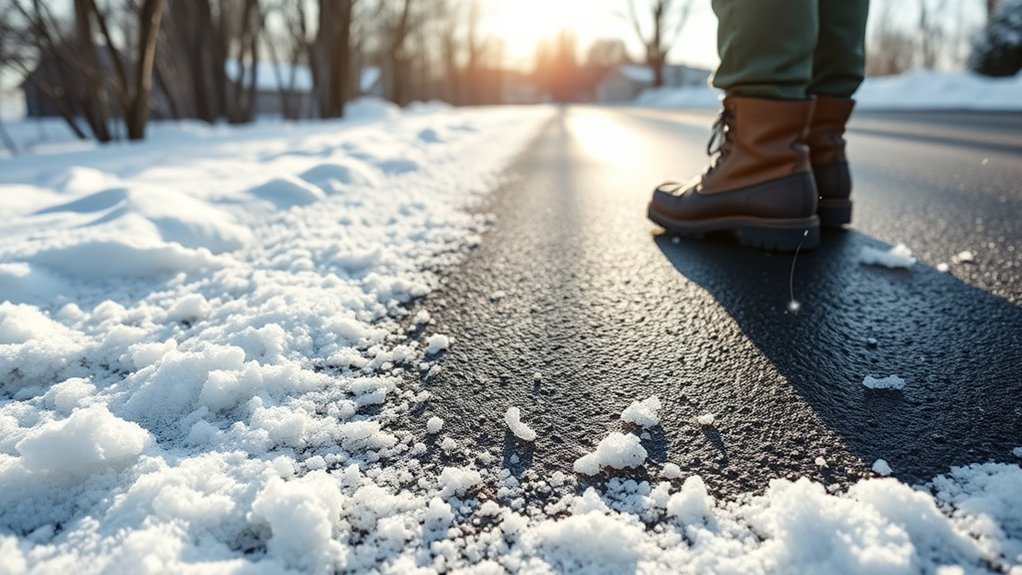
To ensure effective and safe salt application on resin driveways, it’s important to follow these best practices:
- Apply Sparingly: Use about a 340-gram coffee mug of salt for every 46 square metres to prevent excessive build-up.
- Timing is Key: Apply salt before ice forms or as soon as ice appears for optimal results.
- Use Proper Equipment: Use handheld or mechanical spreaders for even distribution, ensuring the salt makes contact with the ice.
- Remove Snow First: Clear away loose snow with a plastic shovel to improve the effectiveness of the salt and protect your driveway.
Maintenance of Resin Driveways in Winter
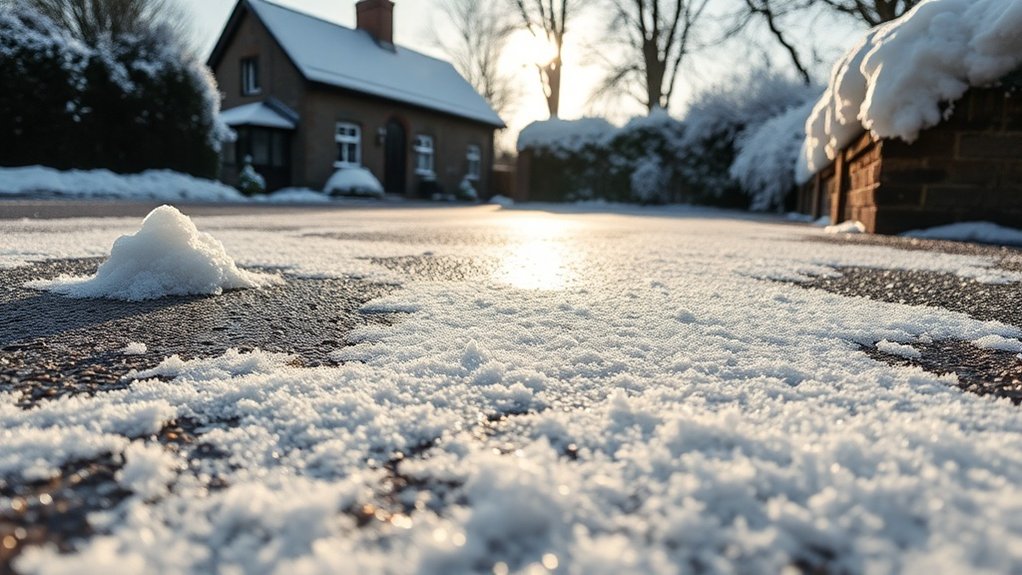
Maintaining your resin driveway in winter is crucial for its durability and appearance.
Use plastic shovels for snow removal to avoid damaging the surface.
Regularly clean it with appropriate products to keep it free from debris and stains.
If you’re not confident in handling the upkeep yourself, consider hiring professionals who specialise in winter maintenance for resin driveways.
Snow Removal Techniques
Winter brings the beauty of snow, but it also presents challenges for maintaining resin driveways.
Here are key snow removal techniques to ensure your driveway stays in good condition:
- Use plastic shovels: These prevent scratches and chips on the resin surface.
- Clear snow in layers: This approach reduces the risk of damaging the driveway while ensuring thorough removal.
- Remove snow promptly: Don’t let it compact; this helps prevent ice formation and keeps your driveway safe.
- Use soft-bristled brushes: Ideal for light snowfall and debris, they won’t cause surface abrasion.
Cleaning Solutions for Resin
As winter approaches, it’s crucial to keep your resin driveway clean and well-maintained to preserve its appearance and functionality.
To start, sweep away any salt residue with a stiff broom after bad weather. Then, give it a gentle wash with warm water and a mild washing-up liquid to remove any lingering salt that could damage the resin.
If you opt for pressure washing, ensure you use a low-pressure setting and keep a safe distance from the surface to prevent any harm.
Regularly check for and promptly remove debris to protect the resin and keep your driveway looking its best throughout the winter.
Professional Maintenance Services
Regular cleaning is essential for maintaining resin driveways, but professional maintenance services take that care to the next level, particularly during winter.
By hiring experts, you ensure your driveway stays in top condition, boosting its appearance and longevity.
Here are four key advantages of using professional services:
- Seasonal Inspections: Regular checks can spot potential problems before they become serious.
- Winter Sealant Application: Professionals apply sealants that improve resistance to freeze-thaw cycles.
- Safe Salt Removal: Experts remove salt build-up safely after winter, protecting the surface.
- Restorative Cleaning: They rejuvenate your driveway’s look, ensuring it remains attractive all year round.
With professional maintenance, you safeguard your investment and keep your driveway looking its best, even in tough weather conditions.
Cleaning Residual Salt After Winter
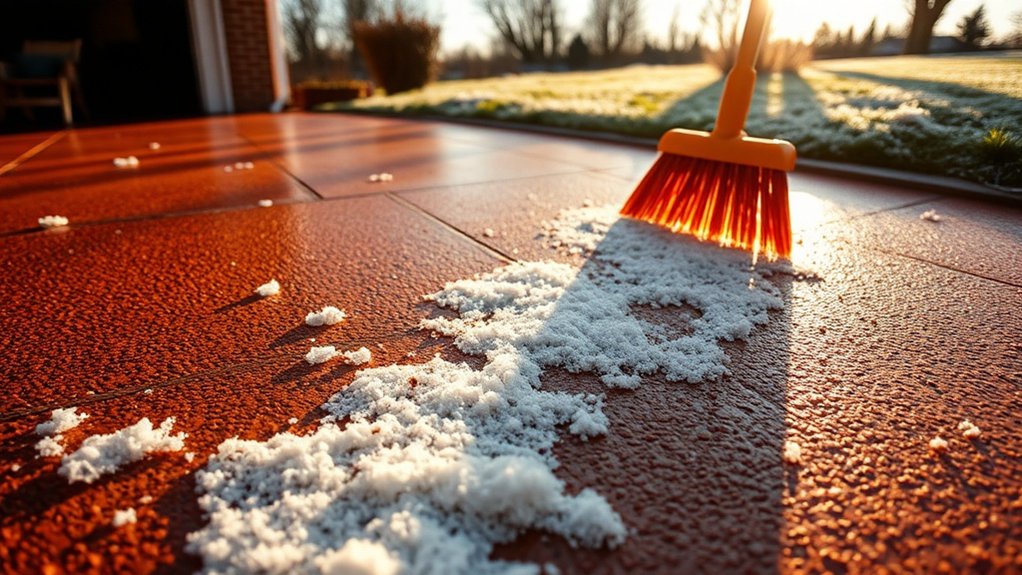
After winter, it’s essential to clean the residual salt from your resin driveway to keep it looking good and in good condition.
Salt can dull the surface and attract moisture, which may lead to staining and discolouration.
Begin by using a stiff broom to sweep away any loose salt, then follow up with a pressure washer for tougher deposits.
For a thorough clean, mix a mild detergent with water or use a vinegar solution to tackle mineral build-up.
Timing is key—clean as soon as temperatures rise above freezing to stop the salt from penetrating deeper.
Regularly check your driveway after winter storms to spot any problem areas.
Environmental Considerations of Using Salt

Using salt to manage your resin driveway in winter might seem practical, but the environmental impact is significant and often overlooked.
Here are some key ecological concerns to keep in mind:
- Water Contamination: Salt runoff can raise sodium and chloride levels in nearby water bodies, posing a threat to fish and other aquatic life.
- Soil Damage: Excessive salt can harm plant roots, stunt growth, and disrupt local ecosystems, making it harder for plants to thrive.
- Wildlife Hazards: Contaminated areas can lead to health problems in wildlife, such as birds and small mammals, affecting their survival.
- Infrastructure Issues: Salt accelerates corrosion in metal structures and damages permeable surfaces, leading to higher maintenance costs over time.
With these environmental impacts in mind, consider whether the short-term benefits of using salt are worth the long-term consequences for our ecosystem.
Safety Tips for Winter Driveway Care
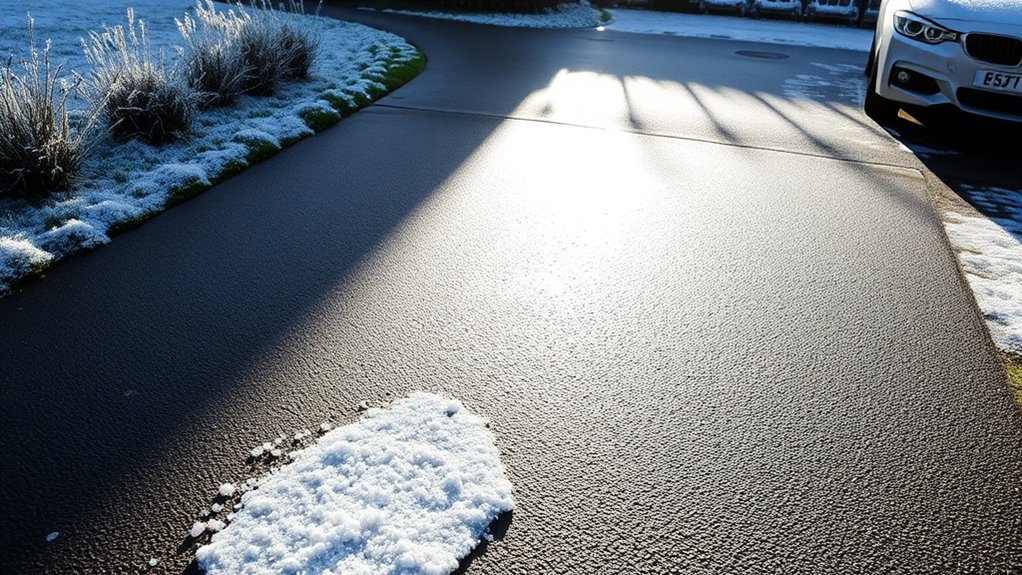
When it comes to winter driveway care, managing salt application is crucial for protecting your resin surface.
Opt for safer alternatives like calcium chloride or natural materials for traction to reduce potential damage while effectively tackling ice.
Regular maintenance, such as thorough cleaning and prompt snow removal, can significantly improve safety and extend the lifespan of your driveway.
Controlled Salt Application
To maintain your resin driveway during winter, it’s vital to apply salt carefully. Here are some straightforward tips for controlled salt application:
- Use the Right Amount: Apply about 60 grams (1/4 cup) of rock salt per square metre to prevent damage.
- Timing is Key: Spread salt before snow or ice settles to stop it from bonding, which helps to reduce the amount needed.
- Spread Evenly: A spreader is ideal for even coverage; don’t pile salt in one area, as this can cause erosion.
- Clean Up Residue: Once the ice has melted, sweep away any leftover salt to lessen long-term damage.
Safe Alternative Materials
As winter approaches, it’s important to choose safe alternative materials for de-icing your resin driveway to maintain its integrity. Instead of using salt, opt for sand, which provides traction without damaging the resin.
Calcium and magnesium chloride are effective at lower temperatures and are gentler on your driveway. Urea is another option, but it’s not as efficient in extreme cold.
A grit salt mix can also be useful, as it reduces environmental impact while improving safety. Regularly brushing off snow and gently shovelling can help keep your driveway clear without causing harm.
Regular Maintenance Practices
Maintaining a resin driveway during winter is crucial for its durability and appearance, especially after considering safe alternatives for de-icing.
By taking preventative steps and making seasonal adjustments, you can significantly improve your driveway’s resilience. Here are some key practices to follow:
- Inspect and Repair: Check for any cracks or chips and seal them before winter sets in.
- Apply Sealant: Use a sealant designed for winter conditions to guard against moisture.
- Clear Debris: Regularly remove leaves and dirt to keep the surface permeable.
- Timely Snow Removal: Clear snow promptly to prevent ice formation.
Following these straightforward steps will help ensure your resin driveway remains in excellent condition throughout the winter months.
Professional Maintenance Options for Resin Driveways
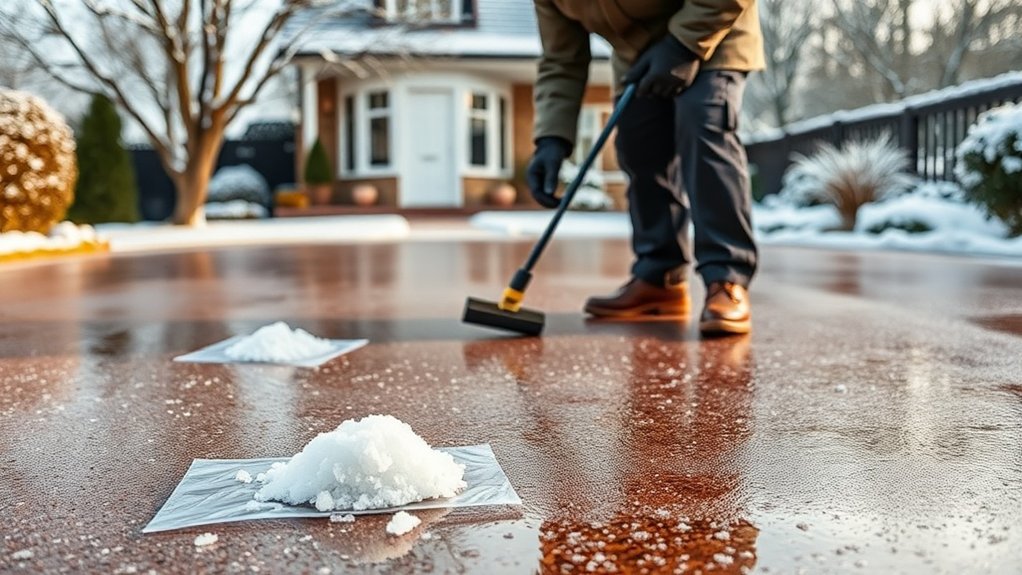
As winter approaches, it’s crucial to consider professional maintenance for your resin driveway to ensure its durability and appearance.
Expert services offer tailored maintenance plans suited to your driveway’s condition and local weather. Regular inspections allow for quick repairs of any cracks, while specialised treatments provide added protection against winter weather.
Professionals can evaluate drainage systems and apply coatings that improve resistance to freeze-thaw cycles, preventing damage that could mar your driveway’s look.
With their help, you can establish a consistent maintenance schedule to catch issues early and keep your driveway in top shape.
This proactive approach not only maintains the visual appeal of your driveway but also extends its lifespan, making it a smart investment as temperatures drop.
Frequently Asked Questions
How Often Should I Apply Salt During Winter?
You should apply salt regularly during winter whenever ice appears, especially early on to prevent it from bonding to surfaces. It’s also important to wash away any leftover salt after thawing to maintain your driveway’s condition and appearance.
Can Salt Damage My Driveway in the Long Term?
Yes, salt can cause long-term damage to your driveway. The chemical reactions from salt exposure can lead to erosion and surface wear, potentially increasing repair costs by as much as 50%. Using salt sparingly or opting for alternatives can help preserve your driveway’s condition.
What Are the Signs of Salt Damage on Resin Driveways?
Signs of salt damage on resin driveways include white streaks, flaking, and cracks. It’s important to address these issues quickly to maintain the durability of your driveway and ensure effective winter maintenance, preventing further damage.
Is It Safe to Use Salt on New Resin Driveways?
Yes, you can use salt on new resin driveways to improve their durability during winter. Just apply it sparingly and follow good winter maintenance practices to prevent long-term damage and keep the surface looking good.
How Can I Protect My Driveway From Winter Damage?
To protect your driveway from winter damage, regular maintenance is key. Clear snow promptly using a plastic shovel to avoid scratches. Consider applying anti-slip treatments to prevent ice build-up. Taking these simple steps will help ensure your driveway endures the harsh winter conditions and stays in good shape.
Conclusion
In winter, it’s essential to keep your resin driveway safe. While salt can help prevent ice, it’s crucial to use it sparingly; too much can make your driveway look like a salt flat! Be sure to wash off any leftover salt after the season to keep your driveway in good condition. If you’re unsure, consider professional maintenance to ensure your driveway remains in top shape for winter after winter.

Keep your driveway safe this winter with effective ice removal techniques that won't cause damage—discover the best methods today!

Compare resin and concrete driveways to discover which option provides superior durability and value, but the answer may surprise you.

The rise of resin-bound driveways is transforming outdoor aesthetics, but what hidden advantages might make them the perfect choice for Read more