
Should I Choose Resin or Tarmac in Nottingham?
When deciding between resin and tarmac for your Nottingham driveway, consider the benefits of each option. Resin is known for its durability, lasting up to 25 years with minimal maintenance. It also offers a range of design choices, which can enhance your home’s appearance and potentially boost its value. On the other hand, tarmac is more affordable but comes with limited design options and requires regular upkeep. In the long run, resin may prove to be the smarter investment. Weigh these differences carefully to make the best choice for your needs.
Key Takeaways
- Resin driveways provide a more attractive finish with customisable designs, boosting your property’s kerb appeal and resale value.
- Tarmac is usually more cost-effective initially but may need more frequent upkeep and repairs in the long run.
- Resin surfaces are durable and weather-resistant, lasting up to 25 years with proper maintenance, whereas tarmac typically lasts around 20 years.
- The permeable nature of resin reduces surface water runoff and flood risks, making it a more eco-friendly choice for Nottingham’s weather.
- You can often install resin driveways yourself, while tarmac requires professional installation for the best results.
Cost Comparison: Resin vs. Tarmac

When choosing between resin and tarmac for your driveway in Nottingham, it’s important to understand the costs involved.
Resin typically costs between £80 and £120 per m², while tarmac ranges from £45 to £100 per m². For a small driveway, you could expect to pay around £2,000 to £3,500 for resin, compared to £700 to £2,400 for tarmac.
Don’t forget to factor in excavation and sub-base costs, which can add £16 to £30 and £14 to £25 per m², respectively. Installation duration for resin driveways can take between 2 to 5 days, depending on complexity, which is an important consideration for your project timeline. Resin driveways also offer long-term savings due to their durability and lower maintenance needs.
Labour and plant hire will also influence the total cost. Although resin has a higher initial price, it usually requires less maintenance over time.
It’s crucial to weigh the upfront investment against future maintenance costs to make an informed choice.
Durability: Lifespan and Performance

When it comes to durability, resin surfaces significantly outlast tarmac, with lifespans reaching up to 25 years when properly maintained. In contrast, tarmac typically lasts around 20 years but tends to show wear more quickly, especially under heavy traffic and adverse weather conditions. Opting for resin not only boosts longevity but also keeps the surface looking good and functioning well for longer than tarmac. Additionally, resin driveways are resistant to UV rays, which helps prevent fading over time, and the quality of materials used in resin bound driveways plays a crucial role in their durability.
Resin Lifespan Advantages
Resin bound driveways are a top choice for durability, lasting between 20 to 25 years. With proper installation on a solid porous base, they can even reach up to 30 years when made with quality materials. The use of UV-stable resins and premium aggregates helps prevent fading and wear over time. Regular maintenance, like cleaning twice a year and occasional resealing, can significantly enhance their lifespan. Additionally, high-quality materials play a critical role in the overall durability and performance of resin driveways. The expertise of the installer plays a critical role in the installation quality.
Tarmac Durability Limitations
Resin driveways are celebrated for their durability, but tarmac surfaces come with certain limitations. Typically, tarmac lasts between 15 to 20 years, and with quality installation and regular maintenance, it can last up to 25 years.
However, poor installation, especially insufficient sub-base preparation, can significantly shorten its lifespan. Using quality materials and hiring professionals can boost durability by as much as 50%.
Environmental factors also play a role; freeze-thaw cycles and heavy rainfall can hasten deterioration.
If you’re thinking about tarmac, routine maintenance is crucial—applying sealant every 2-3 years helps prevent potholes and extends its life.
It’s important to consider your expected traffic and local weather conditions when making your choice.
Aesthetic Appeal: Design Choices

Selecting the right surface material for your driveway significantly influences its aesthetic appeal and design options.
Resin provides a broad range of decorative colours and custom textures, making it easy to align with contemporary design trends and colour psychology. With bespoke blends, borders, and unique patterns, resin can create stunning visuals that boost your home’s curb appeal.
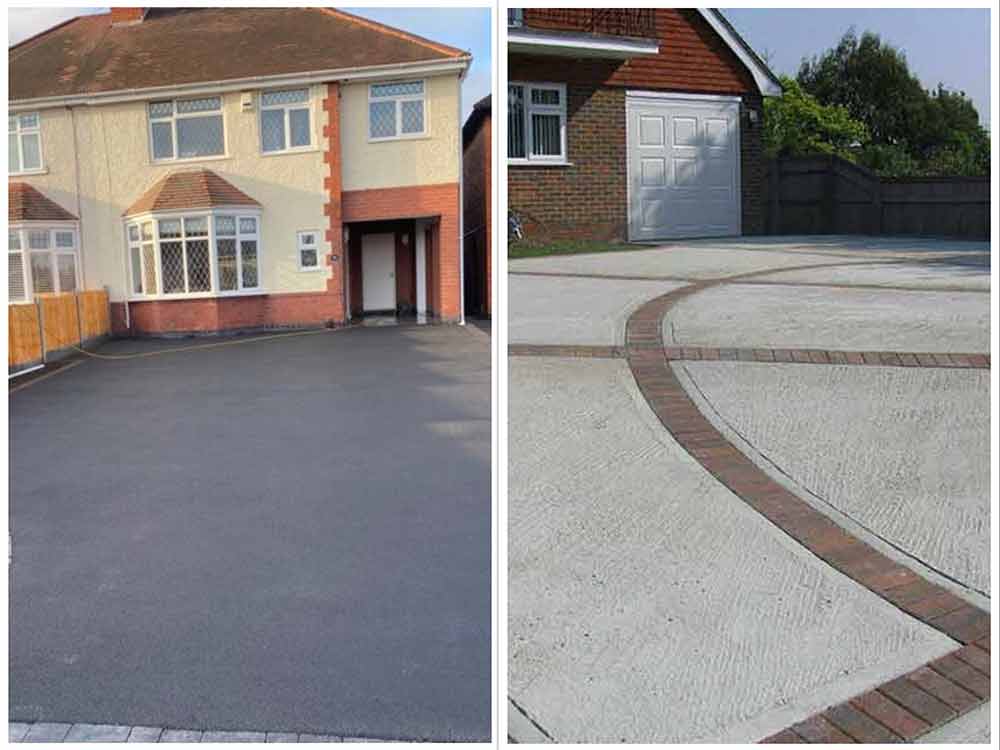
In contrast, tarmac offers a more functional finish in black or dark grey, which can limit your design possibilities. While tarmac is practical, it often lacks the intricate detailing and visual flow associated with resin.
If you’re looking for a striking, modern appearance that complements your property’s architecture, resin’s versatility can greatly enhance your home’s value and overall charm.
Choose a style that reflects your taste and elevates your property.
Maintenance Requirements: Long-term Care

When it comes to long-term care, resin surfaces have clear maintenance benefits over tarmac.
Resin generally requires less regular upkeep, whereas tarmac often suffers from cracks and needs frequent resealing.
For instance, if you want a surface that stays looking good with minimal effort, resin is a strong choice.
Understanding these differences can help you make a better decision for your property.
Resin Maintenance Advantages
Opting for resin surfaces can significantly reduce your maintenance efforts.
Here are some key benefits of maintaining resin:
- Cleaning is a breeze—simply sweep and pressure wash when necessary.
- A protective sealant applied every few years helps prevent fading and shields against stains.
- The robust surface is resistant to cracking and prevents biological growth, ensuring it lasts.
With resin, you can enjoy a stunning surface without the hassle of constant upkeep.
Tarmac Upkeep Challenges
Tarmac surfaces are tough but require regular upkeep to ensure they last. To avoid issues like cracking, potholes, and surface raveling, routine maintenance is essential.
Start by cleaning the surface regularly to remove debris that can trap moisture. Seal the tarmac every few years to prevent oxidation and hardening. It’s crucial to fix minor cracks quickly to stop water from seeping in and causing further damage.
After winter, check for any freeze-thaw damage and ensure proper drainage to prevent standing water. By sticking to a proactive maintenance plan, you can significantly extend the life of your tarmac, saving you money on expensive repairs or resurfacing in the future.
Permeability and Drainage Benefits

Opting for resin instead of tarmac for your surface can significantly improve permeability and drainage.
Resin-bound surfaces offer enhanced drainage and effective water management. Here are some key benefits:
- Reduces surface water runoff during heavy rain, helping to minimise flood risks.
- Encourages natural groundwater recharge, which benefits local ecosystems.
- Prevents puddles and soil erosion, leading to a safer and more resilient surface.
In contrast to tarmac, which is impermeable and can worsen flooding, resin allows water to percolate through, cutting local flooding risks by over 50%.
This environmentally friendly choice aligns with Sustainable Urban Drainage Systems (SUDS) and eases the burden on municipal drainage.
Choosing resin is a smart move for sustainable water management on your property.
Installation Process: Time and Expertise

When planning your surface installation, it’s important to understand the time and expertise needed for resin and tarmac. Each option has its own installation methods and skilled professionals that can influence the success of your project.
| Surface Type | Timeframe |
|---|---|
| Resin | 1-5 days |
| Tarmac | 1-7 days |
Resin installations usually take 1-2 days to complete, while tarmac can take longer, especially in colder weather. Resin requires experienced teams for mixing and application, ensuring a smooth finish. On the other hand, tarmac needs professional contractors for proper compaction and layering of asphalt. Adequate preparation and expertise are crucial in both methods to avoid future issues, so weigh these factors carefully when making your decision.
Weather Resistance: Adapting to Conditions

When choosing a surface for your driveway or pathway, consider Nottingham’s unpredictable weather.
Resin is adaptable, coping well with temperature changes and resisting cracks, whereas tarmac can struggle in harsh conditions, leading to quicker wear and tear.
Resin’s Flexibility Benefits
Resin surfaces provide excellent flexibility, allowing them to adapt well to Nottingham’s changing weather. This flexibility is crucial for durability throughout the year, particularly during extreme temperatures.
- Freeze-thaw resilience reduces cracking during freezing cycles.
- Porous design allows for effective drainage, helping to prevent flooding and water pooling.
- UV stability ensures colours remain vibrant and the surface stays intact even in sunlight.
With its ability to handle a wide range of temperatures without softening, resin outperforms traditional materials like tarmac. Its frost-resistant properties mean it can endure harsh winters without structural issues.
Opting for resin is a smart investment, ensuring long-lasting performance irrespective of the weather and saving you from expensive repairs or replacements in the future.
Tarmac’s Weather Vulnerability
Tarmac surfaces have notable vulnerabilities when it comes to Nottingham’s unpredictable weather, affecting their overall performance. For instance, during hot weather, tarmac can soften, leading to rutting, particularly under heavy vehicles. In colder months, the freeze-thaw cycles can result in micro-cracking, especially if water seeps into the surface. Below is a summary of tarmac’s weather-related vulnerabilities:
| Weather Factor | Impact on Tarmac | Mitigation Strategies |
|---|---|---|
| High Temperatures | Softening and rutting | Use modified binders |
| Freeze-Thaw Cycles | Micro-cracking | Opt for dense, low-permeability mixes |
| Rain and Drainage | Binder stripping | Ensure proper drainage |
| Cold Temperatures | Increased cracking risk | Design for local winter minima |
Being aware of these factors will help you make a more informed decision.
Longevity in Extreme Conditions
Selecting the right surface material for your property is crucial, especially in harsh weather conditions. Resin-bound systems are highly durable and can endure extreme climates, making them a smart investment.
- Flexible resin polymers help prevent cracking during freeze-thaw cycles.
- UV-stabilised formulations keep their integrity despite temperature changes.
- Adequate base layers and joint details reduce thermal stress.
These features make resin a strong option against severe weather, unlike traditional tarmac, which can deteriorate quickly.
Environmental Impact: Sustainability Factors

When assessing the environmental impact of surfacing options in Nottingham, it’s important to consider factors such as carbon footprint, permeability, and durability.
Resin surfaces provide notable environmental advantages due to their permeability, which allows rainwater to seep through and reduces surface runoff, helping to alleviate flood risks. In contrast, traditional tarmac is impermeable and often leads to increased runoff unless designed to be porous.
Moreover, resin surfaces generally have a longer lifespan and require less maintenance, promoting sustainability by decreasing material usage over time.
Both options can also utilise recycled materials, enhancing their eco-friendliness. Ultimately, choosing the right surface not only affects your property but also supports wider environmental sustainability efforts within your community.
Noise Reduction: Managing Sound Levels

Choosing the right surfacing material is crucial, not just for environmental reasons but also for managing noise levels.
In a bustling city like Nottingham, resin-bound surfaces offer clear benefits:
- Their smooth, joint-free finish reduces gaps, minimising noise transmission.
- The slightly porous structure absorbs sound, acting as an effective barrier.
- It lowers friction and acoustic feedback from vehicles.
In comparison, tarmac tends to create more vibration and friction noise due to its solid surface.
Although it can support heavy traffic, it lacks the natural sound absorption found in resin, resulting in higher noise levels.
If your aim is to reduce disturbances, especially during late-night or early morning hours, resin is the better option for a quieter environment.
Resale Value: Impact on Property

Choosing the right driveway material can significantly improve your property’s resale value, especially in competitive markets like Nottingham.
Resin driveways stand out with their seamless finish and customisable designs, enhancing kerb appeal in line with modern trends. Buyers tend to favour UV-stable resin that resists fading, ensuring your driveway looks good for years.
While tarmac is a budget-friendly option, it doesn’t offer the same level of sophistication as resin. In fact, a resin driveway could potentially add 5-10% to your property’s value, appealing to buyers looking for durability and low maintenance.
This investment not only boosts your home’s appearance but also reassures buyers that they won’t incur future repair costs, making it a sensible choice for resale.
Local Regulations and Permitting Considerations

Navigating local regulations and permitting requirements is crucial for homeowners in Nottingham looking to install a driveway. Understanding these rules can save you time and help you avoid potential legal issues.
- You can only use impervious surfacing up to 5 m² without needing a full planning application.
- Ensure your driveway complies with drainage regulations by directing surface water to permeable areas or soakaways.
- Be mindful of any restrictions if your property is near listed structures or within conservation areas.
Before you begin, check for any Article 4 directions or local constraints.
Keep in mind that obtaining permission for a dropped kerb will cost you a non-refundable fee of £52 and might require planning approval if your road is classified.
Always opt for SUDS-approved materials to meet current drainage standards.
Frequently Asked Questions
Can I Install Resin or Tarmac Myself?
You can attempt DIY installation, but proceed with caution. Resin requires accurate mixing and careful application, while tarmac needs a professional touch for proper preparation. Weigh the costs; while DIY may save you some cash, ensure you have the skills to achieve a high-quality finish.
How Does Each Material Handle Extreme Temperatures?
When it comes to extreme weather, resin stands out with excellent temperature resistance, maintaining its integrity in both heat and cold. In contrast, tarmac can crack and deform under harsh conditions, making resin the better choice for durability. Choose wisely for lasting results.
What Is the Average Lifespan of Installation Warranties?
Average installation warranties usually last between 2 to 10 years, depending on the materials used and the contractors involved. To ensure your installation lasts, it’s important to fully understand the warranty details, including any exclusions and maintenance requirements. This knowledge will help you safeguard your investment effectively.
Are There Colour Options for Tarmac Driveways?
Yes, there are vibrant tarmac colours available, such as red, blue, and green. With proper maintenance, these options can last over 25 years, boosting your home’s curb appeal and adding a distinctive touch.
How Do Resin and Tarmac Impact Property Insurance?
Resin drives are permeable, which helps reduce surface water runoff, potentially lowering the risk of flooding and insurance premiums. In contrast, tarmac can increase flood exposure, making properties more vulnerable. It’s crucial to ensure proper installation of either material, as this can impact insurance coverage, particularly regarding claims for subsidence and maintenance issues. For example, a poorly installed tarmac driveway might lead to cracks and water pooling, resulting in higher repair costs and insurance claims.
Conclusion
Choosing between resin and tarmac in Nottingham ultimately depends on your needs and preferences. Remember, “you get what you pay for.” Resin is durable and visually appealing, while tarmac is a more budget-friendly option. Consider factors like maintenance, permeability, and environmental impact to make a well-informed choice that not only enhances your property’s value but also meets your practical requirements.

Are you planning to resurface your driveway? Tarmac is a popular choice, but how much does it cost per square Read more
Choosing the right material for your driveway is a crucial decision that can have a significant impact on your home's Read more

The importance of permeability in construction has become increasingly recognised in recent years due to growing concerns over the impact Read more