
Resin Installation for Wheelchair Access
Resin installation for wheelchair access provides a safe, durable, and non-slip solution that improves mobility. With a smooth, gradual slope, it reduces the risk of falls and meets UK regulations. Ensure the ramp is at least 1 metre wide and includes level landings for safety. Regular maintenance checks are crucial, especially in busy areas. By opting for resin ramps, you enhance independence and security for users. Learn more about the installation process and features to maximise benefits.
Key Takeaways
- Ensure your ramp meets UK Building Regulations, aiming for a slope ratio of 1:12 for optimal safety and accessibility.
- Opt for durable, non-slip resin materials to guarantee a safe surface, no matter the weather.
- Install handrails and level landings at both ends for extra safety and ease of use.
- Carry out inspections and maintenance checks every three months to keep the ramp safe and effective.
- Keep a record of installation and maintenance activities to monitor compliance and quickly address any issues.
Benefits of Resin Ramps for Wheelchair Access

When considering accessibility for wheelchair users, resin ramps provide several key benefits that improve safety and mobility. Their design features a smooth, gradual slope, which helps reduce the risk of falls and injuries. The non-slip surfaces are particularly important, as they offer traction in wet or icy conditions, making them safer for wheelchair users, caregivers, and visitors alike by minimising tripping hazards. Moreover, resin ramps are made from durable materials that can withstand regular use, ensuring long-lasting safety. By enabling independent movement, they also contribute to users’ emotional well-being and encourage greater participation in the community enhanced independence. Their versatility allows for both indoor and outdoor installation, making them suitable for various environments. Additionally, resin ramps can be designed with effective weed prevention features that contribute to their overall safety and functionality. Plus, they require minimal maintenance, making resin ramps an effective solution for enhancing access and empowering users in their everyday lives.
Planning and Design Considerations for Resin Ramps
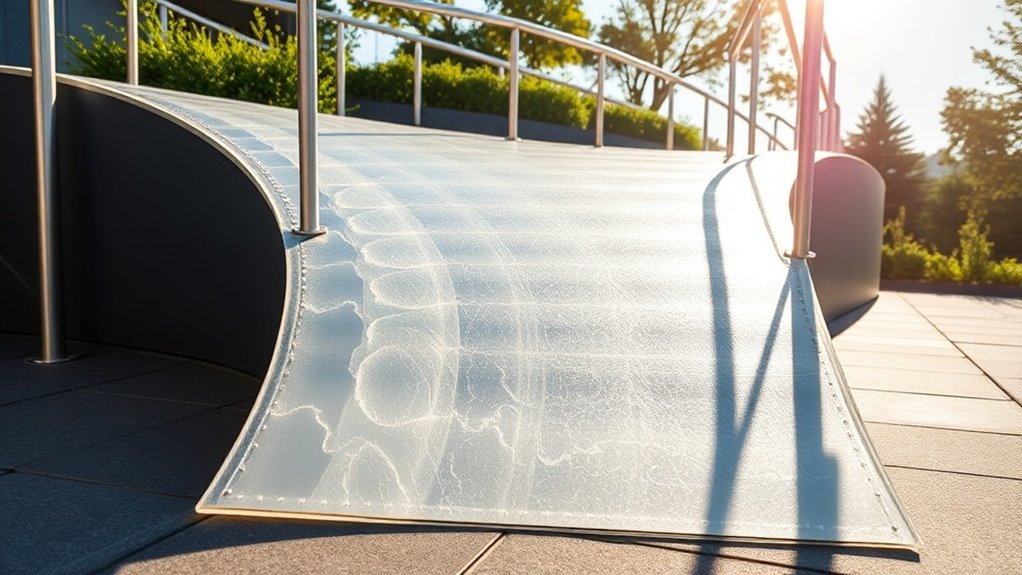
To ensure effective wheelchair access, careful planning and design of resin ramps is crucial. Start by following the UK’s Building Regulations, which recommend a slope ratio of 1:12. This means for every inch of height, you need 12 inches of length; accurate slope calculations are essential. ADA standards emphasize that a maximum run of 30 feet is required before needing a rest or turn platform, which aligns with the need for thoughtful design.
Additionally, it is important to consider compliance with accessibility regulations to ensure equal access for individuals with mobility limitations. Avoid continuous ramps that exceed a rise of 30 inches without a landing. Ensure the ramp width is at least 1 metre (about 39 inches) to allow for easy passage. Include level landings at both ends and intermediate landings for longer ramps to reduce user fatigue.
Additionally, select slip-resistant surfaces to improve safety, particularly outdoors. Thoughtful design not only enhances accessibility but also prioritises user safety and comfort.
Modular Ramp Installation Process
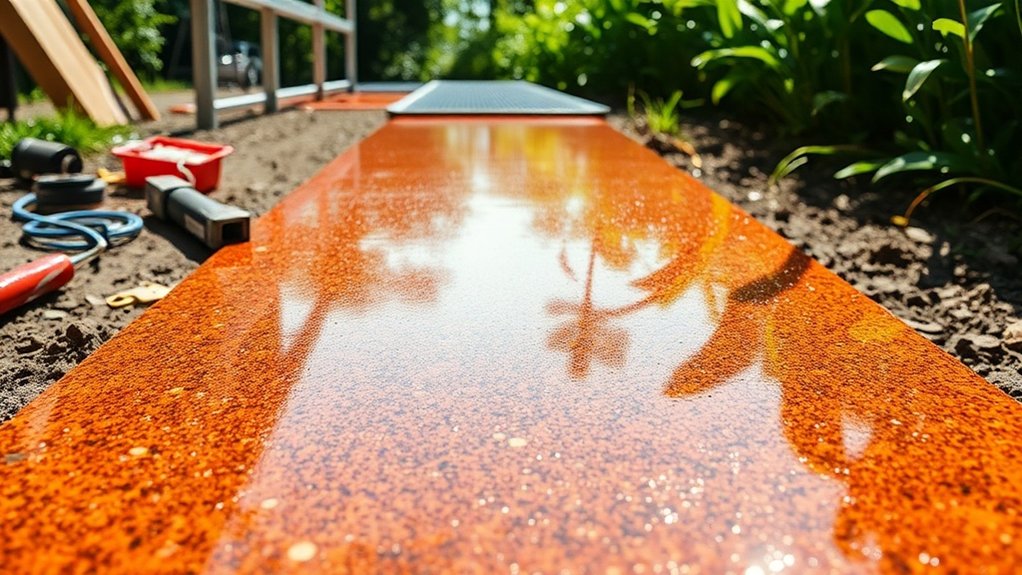
The modular ramp installation process involves several key steps to ensure a safe and effective solution for wheelchair access.
Start by unboxing and inspecting all ramp components for any damage. Lay out the sections for easy assembly and organise your tools.
Begin assembling the ramp from the upper end, connecting the sections with bolts but leaving them loose for alignment. Securely attach support legs and brackets to stabilise the ramp. Make sure to install legs according to the measured distance from the ground to the surface for optimal stability.
Install handrails, ensuring they comply with UK safety standards.
Finally, conduct a thorough inspection and perform usability tests to confirm that everything works as intended.
Don’t forget to provide documentation, including maintenance guidelines, to ensure the ramp remains compliant and functional for users.
On-site Installation Protocol for Resin Ramps

Before starting the installation of resin ramps, carry out a detailed site inspection to evaluate the ground conditions and accessibility requirements.
This ensures the ramp adheres to safety standards and provides a dependable route for users.
Once the site is ready, assemble the ramp components and conduct necessary tests to ensure stability and functionality.
Site Inspection Procedures
A thorough site inspection is crucial for a successful resin ramp installation.
Start with a detailed evaluation of the terrain and ground stability to ensure a solid foundation. Identify any underground utilities or obstructions that could hinder ramp access. Measure distances and slopes to ensure compliance with UK regulations, particularly the 1:12 slope ratio and a minimum width of 36 inches.
Assess approach and exit points to allow for smooth wheelchair transitions and note existing drainage to prevent water pooling. Ensure your proposed design meets local building codes and accessibility standards. Additionally, it is essential to verify that the ramp design aligns with Sustainable Drainage Systems (SuDS) regulations to effectively manage surface water runoff.
Keep a detailed record of your findings, as this will support both permit applications and the installation process, ensuring the ramp is accessible for all users.
Assembly and Testing
Before assembling and testing resin ramps, ensure all materials and equipment are on-site and ready for use to facilitate a smooth installation.
Check that the sub-base has been properly cured to support the resin’s durability. Mark out the ramp perimeter and establish clear work zones.
When applying the resin mixture, use trowels for a smooth finish and incorporate anti-slip aggregates for safety. Stick to the specified mixing ratios and curing techniques to strengthen the bond.
After application, conduct thorough inspections for any defects and test the slip resistance to comply with accessibility standards. Document your findings and address any issues immediately to ensure the ramp is safe and functional for users.
Measurement and Compliance for Wheelchair Access

When designing wheelchair access ramps, accurate measurement and compliance with standards are crucial for safety and usability.
Follow the UK guidelines, which recommend a maximum slope of 1:12 for public ramps, while residential ramps can have a 2:12 ratio.
Ensure the ramp’s minimum width is at least 90 cm to accommodate two-way traffic. If the vertical rise exceeds 76 cm, landings are necessary for rest.
Consistent slope and surface conditions are essential for accessibility, so avoid sudden changes.
Also, check local building regulations for any additional requirements to ensure your ramp provides safe and effective wheelchair access.
Safety Features of Resin Ramps

When looking at safety features for resin ramps, non-slip surfaces are crucial for preventing slips and falls.
Installing sturdy handrails provides essential support while using the ramp.
Regular maintenance checks are also important to ensure these safety features remain effective and keep users safe.
Non-Slip Surface Benefits
Ensuring safety on wheelchair ramps is crucial, particularly in unpredictable weather. Non-slip technologies play a vital role in preventing slips and falls, giving wheelchair users and their caregivers the stability and confidence they need. Textured materials, coatings, and treatments enhance surface durability, even in wet or icy conditions.
| Non-Slip Material | Benefits | Maintenance |
|---|---|---|
| Epoxy Resin Coatings | Durable, textured, slip-resistant | Annual reapplication |
| Silicone-Based Paint | Moisture-resistant | Requires dry preparation |
| Spray-On Traction | Long-lasting, warm application needed | Periodic reapplication |
| High-Traction Rubber | Increased grip | Regular inspections |
These surfaces not only reduce the risk of accidents but also accommodate various mobility devices, creating a safer environment for all users.
Handrail Safety Compliance
To ensure safe access for wheelchair users, it’s crucial to install handrails on resin ramps properly. Handrails should be positioned between 865 and 965 mm high, with smooth edges and a diameter that allows for a secure grip. This ensures comfort and safety.
Choosing the right materials not only boosts durability but also enhances the overall appearance of the handrails, marrying function with style.
Maintain a clearance of at least 38 mm from nearby surfaces to avoid pinching. Handrails should extend continuously along the ramp and have extensions at both ends to prevent snagging.
Regular Maintenance Checks
Regular maintenance checks are vital for ensuring the safety and functionality of resin ramps used for wheelchair access. Inspect your ramp at least every three months, or monthly if it’s in a high-traffic area or exposed to harsh weather.
Follow the manufacturer’s recommendations for maintenance based on your ramp’s material and design. Seasonal inspections are crucial, particularly after winter, to check for weather-related damage.
Use effective inspection techniques to spot cracks, corrosion, or loose fittings. Regularly clean the ramp with a mild detergent to prevent slippery surfaces, and keep it free of debris to maintain smooth access.
Maintain a detailed log of inspections and any issues to ensure your ramp remains safe and reliable for users. Prioritising these checks can help prevent hazards and improve overall accessibility.
Maintenance of Resin Ramps for Longevity

Maintaining resin ramps may seem minor, but it’s vital for their longevity and safety. Regular upkeep boosts durability and weather resistance, saving you from expensive repairs.
Here are essential maintenance tasks to consider:
- Carry out monthly inspections for cracks, loose fittings, and overall stability.
- Clean surfaces with a gentle detergent to remove debris that could cause slipping.
- Check non-slip surfaces and replace any worn materials without delay.
- Apply weatherproof sealants to shield against moisture and UV damage.
- Keep a detailed maintenance log to track inspections and repairs.
Taking these steps can significantly extend the life of your resin ramps.
Frequently Asked Questions
How Long Does It Take to Install a Resin Ramp?
Installing a resin ramp usually takes a few hours for the application itself. However, if you factor in time for ground preparation and curing, the process may extend to a full day. Regular maintenance of the ramp is essential to ensure safety and durability.
Can Resin Ramps Be Customized in Color or Design?
Yes, resin ramps can be customised with a range of colour options and design patterns. This not only improves their appearance but also ensures they meet your specific accessibility needs. For instance, you could choose a ramp in a colour that matches your home or opt for a unique pattern to make it stand out.
What Is the Weight Capacity of Resin Ramps?
Resin ramps usually support weights between 272 and 454 kg, depending on their design and materials. Regular maintenance is essential to ensure the durability of the ramp, so it remains safe and stable for your needs.
Are Resin Ramps Environmentally Friendly?
Yes, resin ramps are environmentally friendly. They are made from eco-friendly materials, which helps address sustainability concerns and reduce energy consumption. Their durability and modular design promote resource conservation, minimise waste, and ensure accessibility for all. For example, using these ramps can help create more inclusive spaces without harming the environment.
How Do I Report Issues With My Installed Ramp?
To report issues with your ramp, reach out to the installer or manufacturer via their official channels. Clearly document the problem and keep records for effective reporting and maintenance. For instance, if you notice a wobble or wear, take photos and note the date. Don’t hesitate to follow up to ensure a prompt resolution.
Conclusion
In summary, opting for resin ramps for wheelchair access is a significant improvement, offering exceptional durability and safety. By planning thoroughly and following installation guidelines, you ensure compliance and a seamless experience for users. Regular upkeep will keep your ramps in prime condition, prolonging their lifespan. With these benefits, resin ramps can genuinely enhance accessibility, making your space more inviting for everyone who needs it.
Are you thinking about installing a resin driveway but are unsure of the cost involved? You're not alone! Resin driveways Read more
Resin driveways, such as the ones offered by Nottinghamshire Driveways, are a popular choice for homeowners looking to enhance the appearance Read more

Are you considering a new driveway installation? Resin driveways have become increasingly popular for their attractiveness, durability, and low maintenance. But Read more